As an Amazon Associate I earn from qualifying purchases.
Finding loose skin on your iguana can raise questions: Is this a normal shed, or is something wrong? Lizards commonly shed in patches, but shedding does not rule out illness. The best approach is to observe the whole animal, note changes from its usual appearance and behavior, and contact a reptile veterinarian when something concerns you. This guide focuses on green iguanas where species-specific care is discussed.
What A Normal Shed Can Look Like
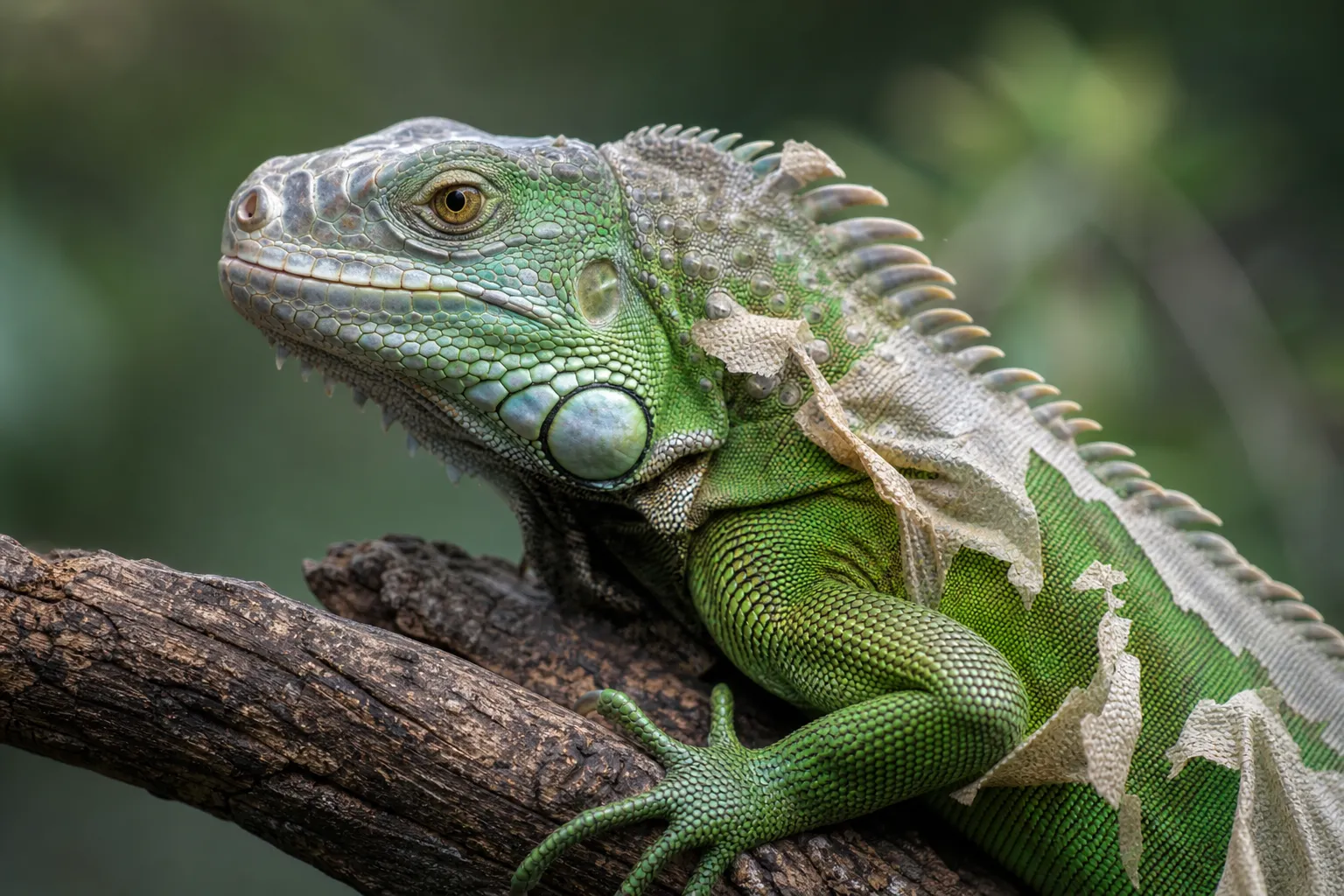
Shedding, also called ecdysis, is the loss of the outer layer of skin in response to growth or wear. Unlike snakes, lizards normally shed in patches rather than as one complete piece. Seeing separate sections of loose skin is therefore not, by itself, proof of a problem. The describes this patchy pattern. Observe which areas are shedding and what the surrounding skin looks like, rather than expecting the entire body to shed at once.
Notice Skin Changes Beyond Loose Patches
Look beyond the flakes themselves. VCA advises bringing any change in an iguana’s skin color or texture to a veterinarian knowledgeable in reptile medicine. Tan or yellow crusty lesions, for example, can occur with a fungal skin infection; advanced cases may have open, bloody lesions. A color or texture change alone cannot tell you the cause, and a shed should not be used as an explanation for every unusual mark. Describe what you see when you call, including where it is and whether the appearance has changed.
When Skin Appears To Remain Attached
Retained shed means old skin has not come away. Merck notes that environmental humidity plays a role in reducing the risk of retained skin. If an area appears to remain attached or you are unsure whether what you see is normal, ask a reptile veterinarian for advice rather than attempting to remove it yourself. Point out the location and describe any change in the skin underneath or nearby. Your vet can assess the concern in the context of the animal’s health and enclosure, rather than relying on the appearance of a single patch.
Watch Appetite And Energy Too
A skin check is only one part of observing your iguana. A lack of appetite and low energy can occur with several different illnesses, according to . Do not assume these changes are harmless because the animal is also shedding. Contact a reptile veterinarian promptly about a departure from normal appetite or activity. Explain both the skin changes and the behavioral changes, so the clinic can consider the complete picture when advising you about an examination.
Recognize Signs That Need Prompt Attention
Some problems are not limited to the skin. VCA lists nasal or eye discharge, bubbles in the mouth, unusually rapid or shallow breathing, gasping, and lethargy among possible signs of respiratory infection. Swelling of the jaw or hind limbs can also signal disease, and a bloated iguana needs veterinary evaluation. Call a reptile veterinarian promptly for these signs; if your iguana is gasping, seek urgent veterinary care. Tell the clinic what you have observed rather than trying to identify the disease from a list of symptoms.
Review The Environment Without Guessing
A suitable environment, diet, and ultraviolet light exposure all matter to iguana health. For green iguanas, LafeberVet describes a large enclosure with sturdy climbing structures and recommends cleaning drinking and soaking bowls at least daily. Merck also emphasizes a properly designed environment as part of reptile health care. If shedding or another change worries you, share your enclosure setup with your veterinarian instead of making a series of unplanned changes. You can also review the general iguana care guide alongside advice for your individual animal.
Keep A Simple Observation Record
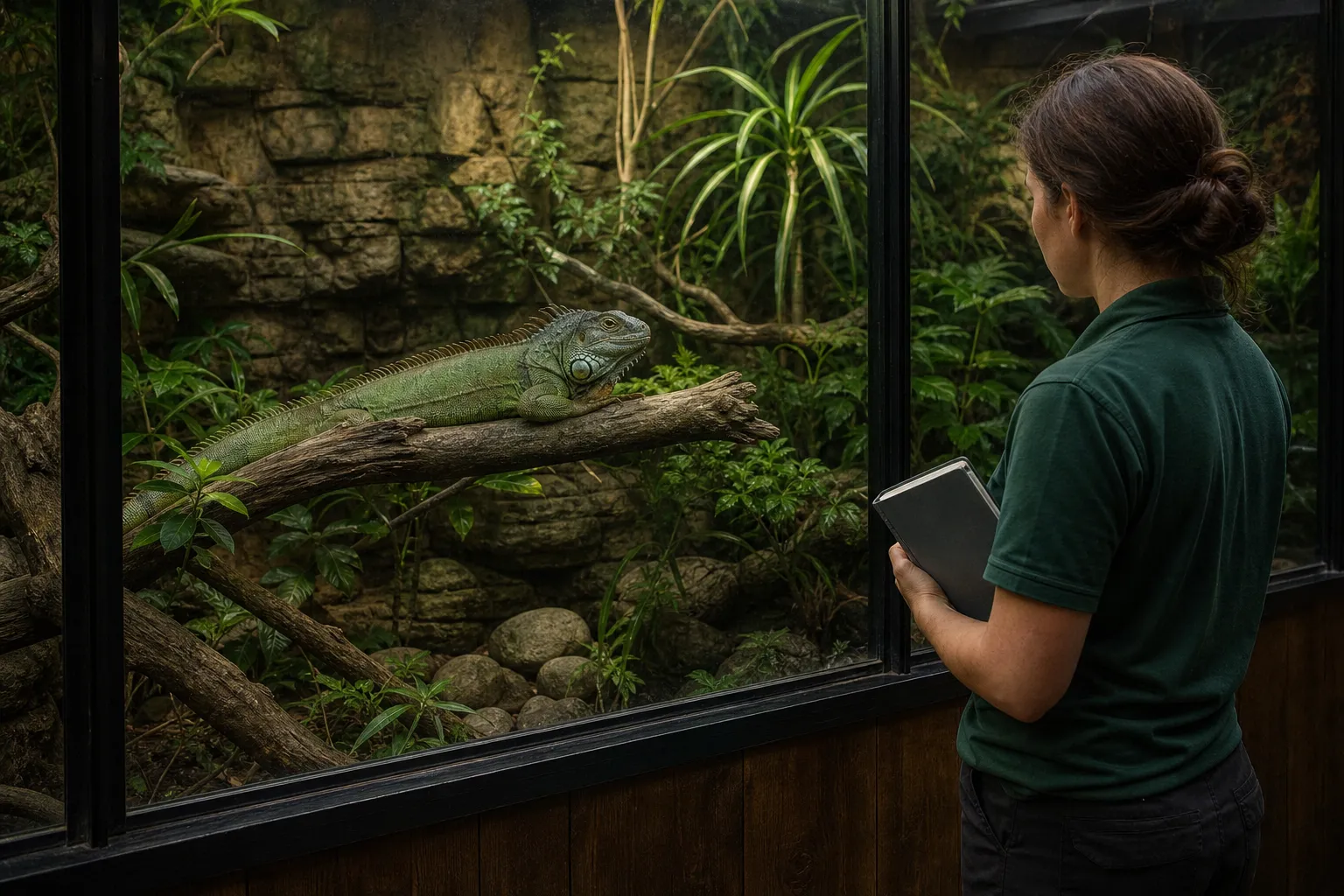
A short record can help you give the veterinary clinic a clear account. Note where you see loose skin or an unusual patch, along with changes in eating, energy, or breathing. Record what you observed rather than assigning a diagnosis. A notebook can keep these details together between routine checks and veterinary visits. If you want a dedicated place for notes, consider these pet health record notebooks; choose a format with enough space for dated observations.
Prepare For A Veterinary Conversation
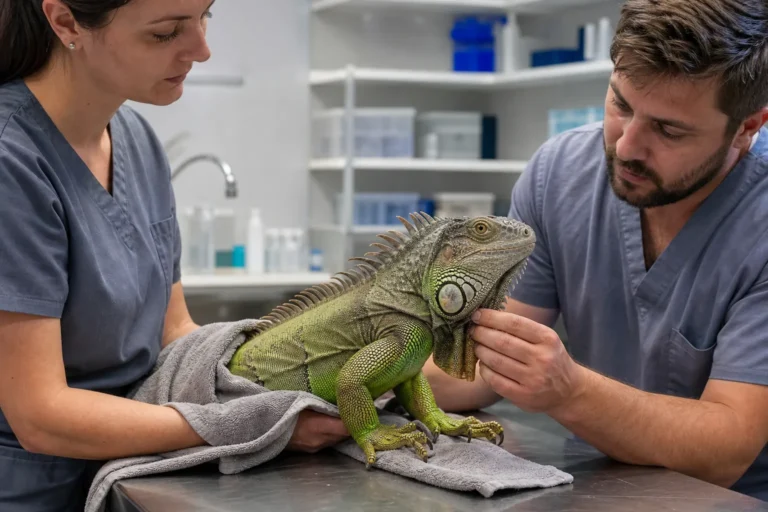
Choose a veterinarian with appropriate experience and interest in reptiles. Merck recommends an initial examination and an annual health check, which can establish and maintain a record of the animal’s condition. When you call about a concern, have your observations and enclosure details ready. Ask the clinic how soon your iguana should be seen and follow its guidance. For more species background, see the green iguana guide. Patchy shedding can be normal, but a new skin change or a change in overall health deserves attention.
Sources And Further Reading
- Merck Veterinary Manual — Reptiles Routine Health Care Of Reptiles
- VCA Animal Hospitals — Know Your Pet Iguanas Diseases
- lafeber.com — Vet Basic Information Sheet For Green Or Common Iguana
THE JUNGLE SUPPLY EDIT
Shop This Article
Tools For A Measured Water And Humidity Routine

Govee H5075 Bluetooth Hygrometer
A connected temperature and humidity meter for tracking conditions.
Check the listing’s pack size; protect this indoor unit from water.
View On Amazon (opens in a new tab)
Exo Terra Spray Bottle · 2 Quarts
A hand-operated sprayer for controlled, targeted misting.
Reserve it for reptile care and check your species’ humidity needs.
View On Amazon (opens in a new tab)
Exo Terra Water Dish · X-Large
A natural-look water dish to compare with your reptile’s size and layout.
Check actual dimensions and stability; the XL label is not a fit guarantee.
View On Amazon (opens in a new tab)
Zoo Med ReptiRain Habitat Mister
An automatic misting option for suitable reptile habitats.
Tune the schedule to measured conditions rather than running it constantly.
View On Amazon (opens in a new tab)Compare sizes, compatibility and current availability on Amazon. Choose what fits your existing setup.