As an Amazon Associate I earn from qualifying purchases.
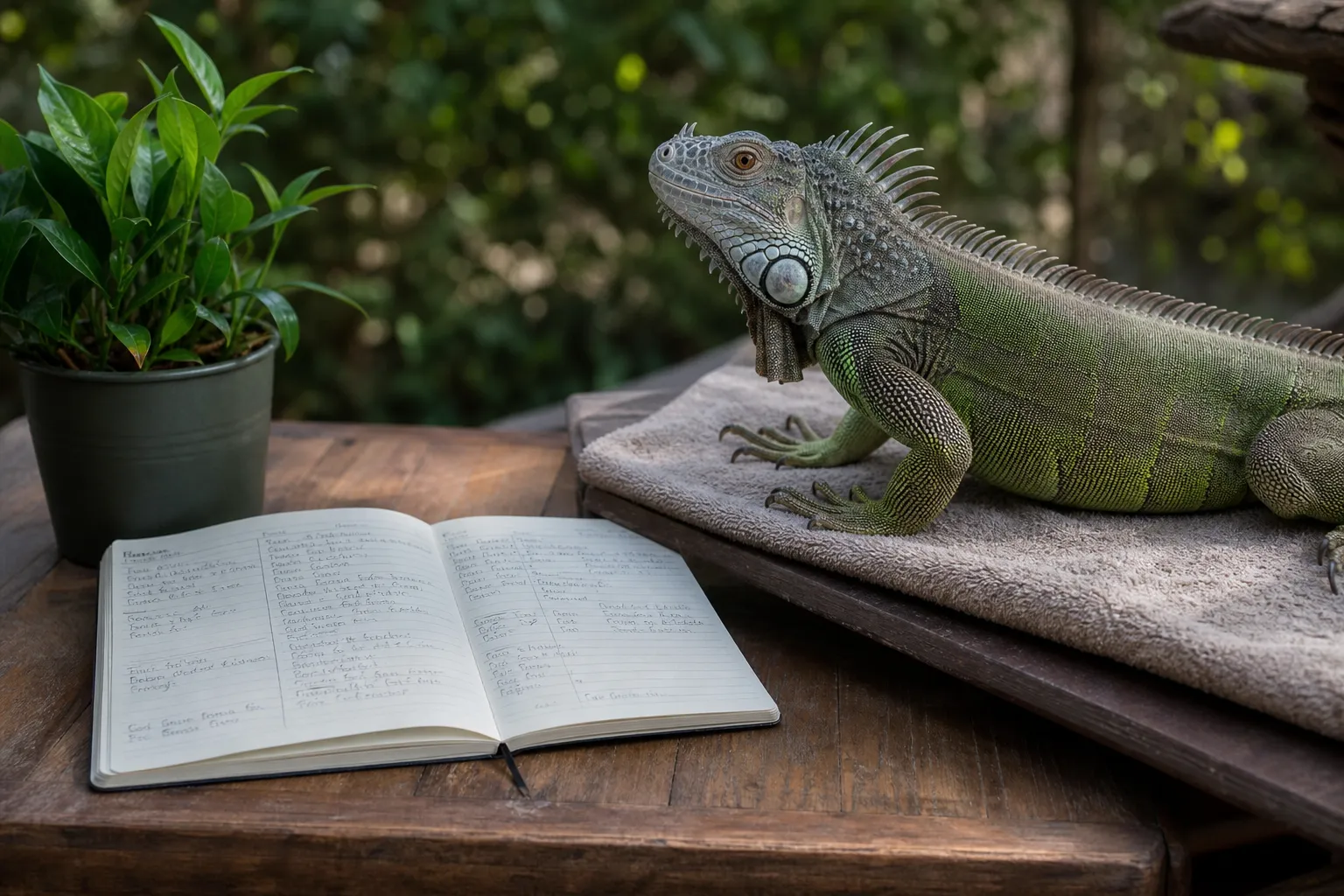
Keeping a concise health journal helps you spot trends before small problems become emergencies. Record weight, appetite, stool, activity and any skin or mouth changes. Use short daily notes and a weekly summary for trends. These records are especially important for young iguanas and when you change diet, lighting, or housing. A journal also makes vet visits faster and more useful. IguanaCare basics are a good starting reference.
What To Track First: The Core Columns
Create a simple layout with date, weight, appetite, feces, activity, shedding status, environment changes, and notes. Weight and appetite are the two most sensitive indicators of health. Appetite loss, called anorexia, plus lethargy or weight loss are non-specific signs that often prompt veterinary evaluation — record when they begin and any possible triggers like a diet change or cooler temperatures. Keep entries short: “ate 80% salad, active” or “no food, hiding.”
How And When To Weigh Your Iguana
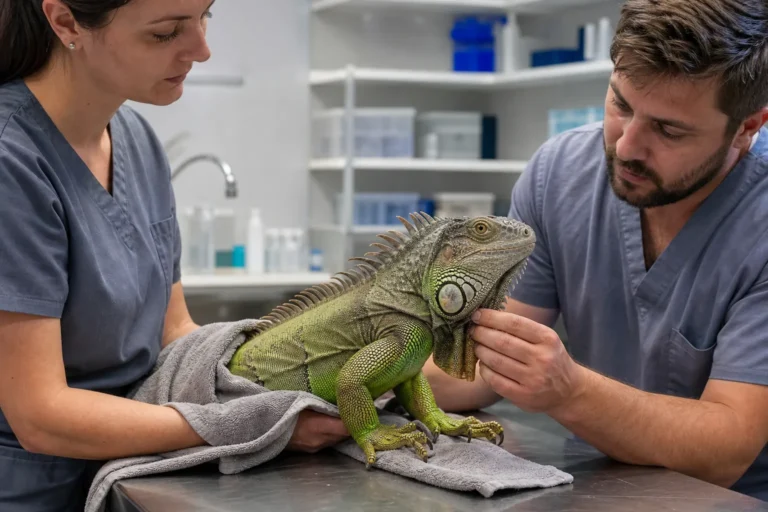
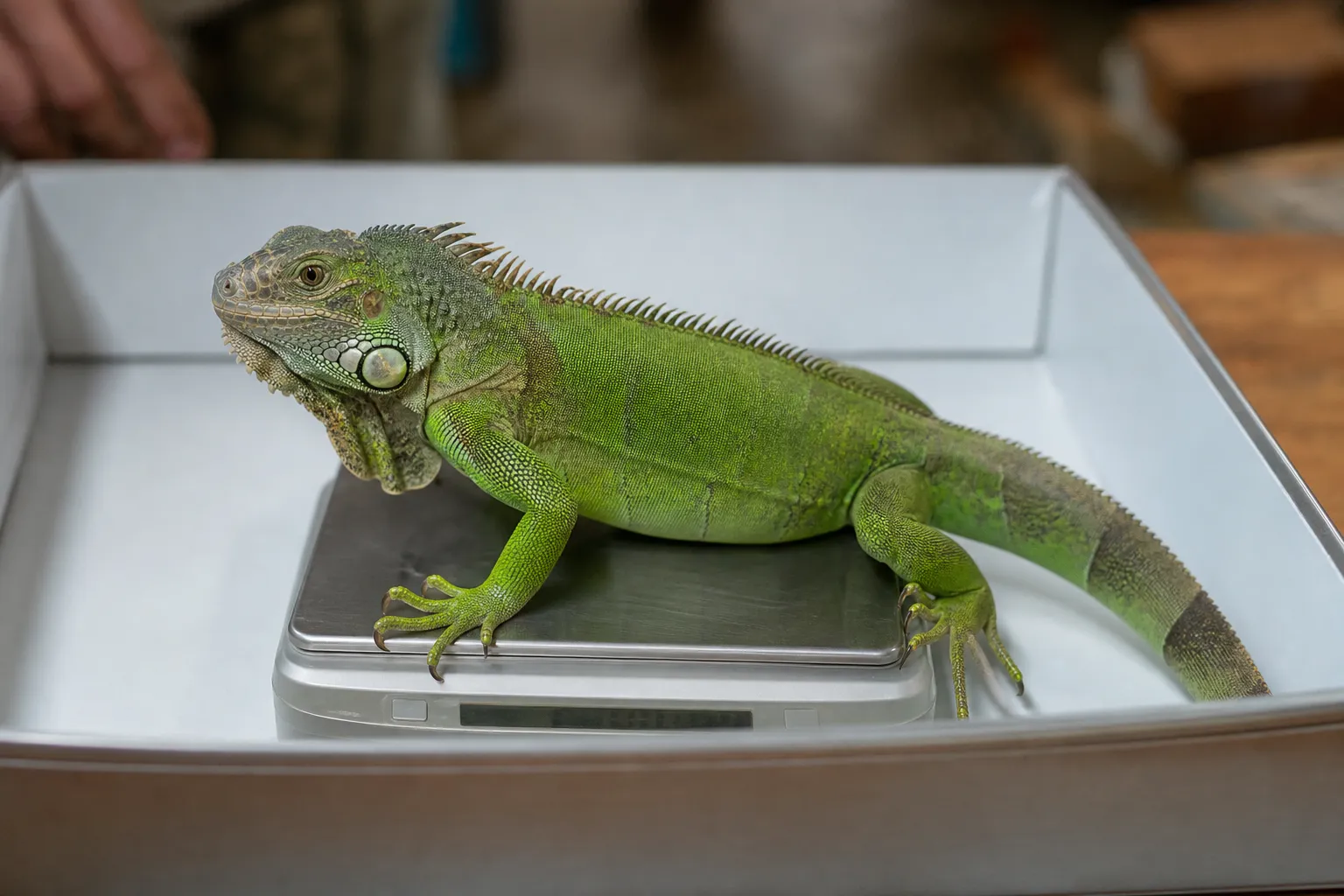
Weigh an iguana on the same scale, at the same time of day, and on the same days each week. Young iguanas often need weekly checks because they grow rapidly; adults can be weighed every 1–2 weeks unless issues appear. A veterinary exam should include a weight within 48 hours of acquisition, so an initial record is important. If you cannot handle the iguana safely, have a vet or experienced keeper assist for the first measurements.
Recording Appetite And Stool Patterns
Note daily whether your iguana accepts food, and roughly how much. Mark stool frequency and appearance—changes can indicate parasites, diet shifts, or dehydration. The VCA feeding guidance stresses that iguanas are primarily folivores and need mostly leafy greens; diet affects stool and appetite, so record menu items alongside intake. Sudden, persistent refusal to eat or ongoing loose stools should trigger a vet check.
Watching For Signs That Need Veterinary Assessment
Any consistent downward trend in weight, ongoing anorexia, dramatic lethargy, or changes in skin color or texture merit prompt evaluation. Metabolic bone disease (MBD) is the most common serious problem and is linked to poor diets and lack of UV-B lighting; signs include limb or jaw swelling and weakness. If you see swelling, tremors, unexplained fractures, or sustained appetite loss, contact a veterinarian familiar with reptiles right away.
Setting Up A Practical Journal Format
Use a simple paper notebook, a spreadsheet, or a notes app. Columns should match the core items: date, weight, appetite (percent or short note), stool (normal/soft/none), activity, shedding (yes/no), environment notes (lighting/temp changes), and action (e.g., called vet). Keep entries brief and consistent so trends are easy to scan. Add a weekly summary row to flag rising or falling trends for your vet to review.
How Diet And Supplements Affect Records
Because diet is central to iguana health, log meals and supplements. VCA recommends mostly dark leafy greens, limited fruit, and calcium-focused choices. Young iguanas often receive calcium supplements several times weekly and a multivitamin containing vitamin D periodically; note any supplement use in your journal. Diet changes commonly affect weight and stool, so record new foods and timing to link cause and effect.
Sharing Your Journal With A Reptile Veterinarian
Bring or email your journal before an appointment. A clear record of weight, appetite, and symptom onset helps the vet diagnose issues faster. VCA advises a post-purchase exam within 48 hours to detect problems early; your journal will document any changes since acquisition. If possible, note the first day you observed a problem and any treatments you tried. Good records reduce guesswork and speed appropriate testing or treatment.
Tools And A Small Equipment Tip
For accurate entries consider a small digital scale that reads grams and supports the load of your iguana. Search tools that list capacity and precision to match your pet’s size: lighter-capacity scales suit juveniles; larger models work for adults. Use a stable flat surface and a shallow box or towel to keep the animal calm while you weigh. Here is a common place to browse options: Search Digital Scales For Reptiles
Quick Record Examples And Red-Flag Notes
Make entries so a vet can scan one line per day and a one-line weekly summary. Example formats that stay brief: “Date | weight (units) | appetite (note or percent) | stool (normal/soft/none) | activity (active/low) | shedding (yes/no) | notes (supplements, lighting change).” Include supplement frequency in the notes section — VCA guidance shows young iguanas commonly receive calcium several times weekly and a multivitamin with vitamin D periodically, so recording those dates is helpful for diagnosis and prevention.
In weekly summaries, flag any steady weight decline, repeated appetite refusal, new swelling of jaw or limbs, tremors, breathing changes, or persistent diarrhea. These patterns are the kinds of non-specific signs that often lead to veterinary evaluation; MBD, respiratory infections, and other conditions can present first as appetite loss and lethargy. If you keep species notes (for example, for a green iguana) include age and any recent environmental changes so the clinician can interpret growth and weight trends accurately. Green Iguana Notes
If an entry shows sustained anorexia, a downward weight trend across weekly summaries, or new swelling/tremors/fractures, call a veterinarian experienced with reptiles promptly. Bring the journal or send photos of your entries ahead of the visit; a dated record of when symptoms began speeds diagnosis and helps the vet decide which tests or treatments to prioritize.
Conclusion
A simple, consistent health journal makes small problems obvious and helps your veterinarian act quickly. Track weight, appetite, stool, shedding, and any swelling or color changes. Update weekly summaries and share records at exams. Good records protect your iguana and make care decisions clearer for you and your vet.
Related Iguana Resources: Explore Iguana Care Topics.
Sources And Further Reading
- VCA Animal Hospitals — Know Your Pet Iguanas Feeding
- VCA Animal Hospitals — Know Your Pet Iguanas Owning
- VCA Animal Hospitals — Know Your Pet Iguanas Diseases
THE JUNGLE SUPPLY EDIT
Shop This Article
Practical Tools For Care Records And Daily Checks

Rite In The Rain Notebooks · 3 Pack
Weatherproof notebooks for temperature logs and daily care observations.
Use for records to discuss with your reptile veterinarian when needed.
View On Amazon (opens in a new tab)
Etekcity Stainless Steel Kitchen Scale
A digital scale for measuring meal ingredients and tracking portions.
Check capacity and platform size; it is not suitable for weighing every reptile.
View On Amazon (opens in a new tab)
Zoo Med Digital Combo Gauge
Remote-probe temperature and humidity monitoring in one unit.
Place each probe as instructed; keep the display away from splashes.
View On Amazon (opens in a new tab)
OXO Deep Clean Brush Sets · 3 Pack
Detail brushes for reaching corners on removable care equipment.
Dedicate brushes to reptile cleaning and store apart from food-prep tools.
View On Amazon (opens in a new tab)Compare sizes, compatibility and current availability on Amazon. Choose what fits your existing setup.