
As an Amazon Associate I earn from qualifying purchases.
Bringing a new iguana home calls for patience and predictable routines. Iguanas are large, arboreal herbivores with species-specific needs; some individuals—especially mature males or poorly socialized animals—can be territorial and defensive. Use careful observation first, then offer brief, voluntary interactions that let the iguana choose whether to engage. Routine makes it easier to spot health and behavior changes early.
Why Start With Observation
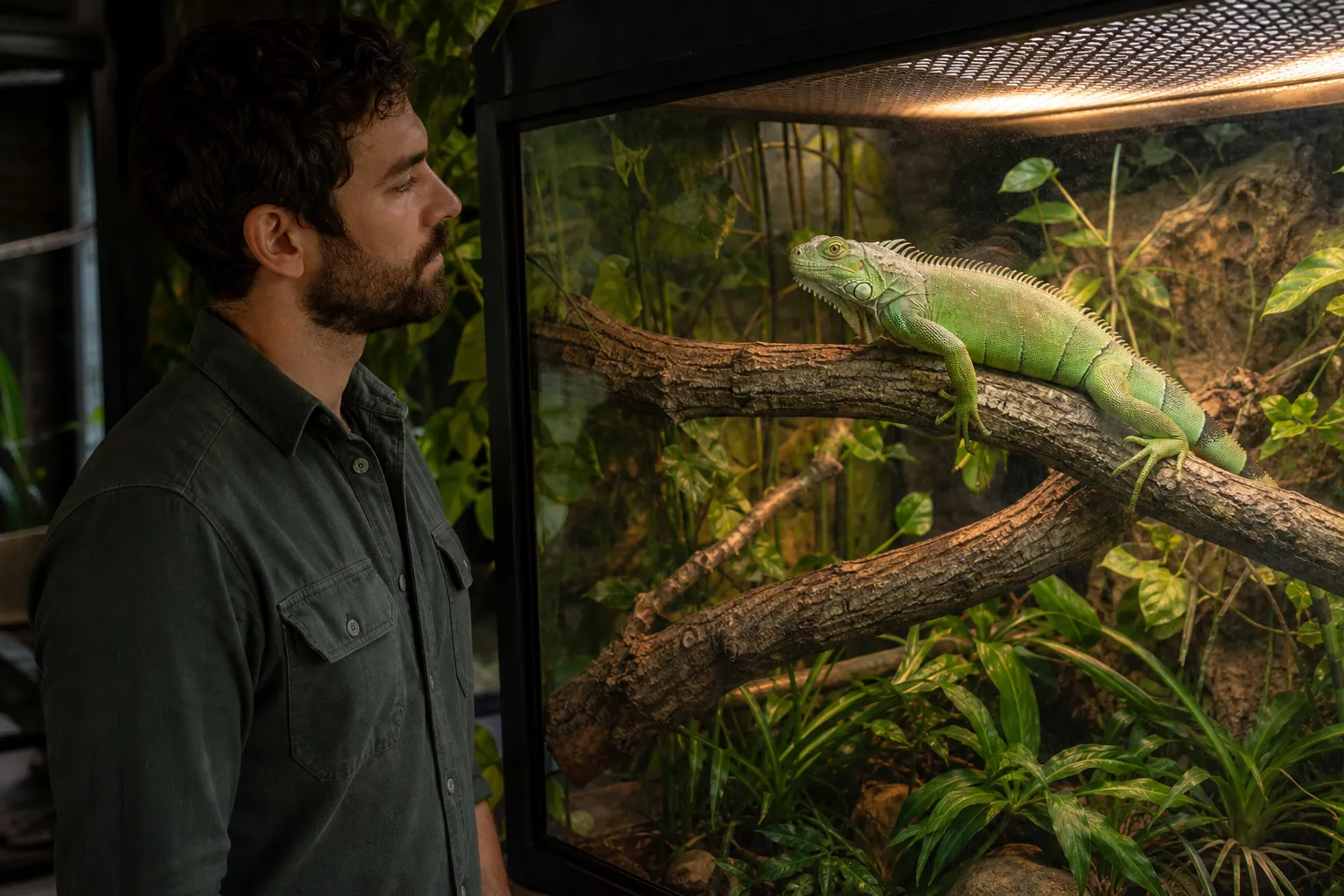
Begin by quietly watching the animal at regular times each day. The VCA notes healthy young iguanas are bright green, alert, and often push the chest and head upright; the tail should look plump rather than thin. Observing baseline activity, posture, and feeding at consistent times creates a reference you can compare to later, making subtle declines or changes easier to detect. Reliable observation supports safer, consent-aware handling decisions.
What Health Clues To Track
Track simple visual health clues: overall color, alertness, body condition, and cleanliness of the vent area. The VCA warns against thin, sunken tails, loose skin, sunken eyes, or sticky material around the mouth—all signs that merit veterinary attention. Recording these signs each day or week helps you notice trends and decide whether to postpone interactions and seek professional care. A veterinary exam soon after acquisition is recommended by the VCA.
Set A Predictable Daily Visual Schedule
Choose two or three consistent observation times—morning, midday and evening are common—and make short notes. Predictability helps the iguana learn keeper presence and lets you spot gradual shifts in appetite, activity, or posture. Keeping the same timing also simplifies communication with any co-keepers or a veterinarian, who may ask how the animal behaves at specific times of day.
Short, Choice-Based Interactions
Only attempt interactions when the iguana shows its usual alert, active signs. Because some iguanas that were wild-caught or poorly socialized can be aggressive or territorial, keep initial interactions brief and optional. Let the animal move away if it chooses. Favor passive presence—quiet company, light visual contact, or hand in view—rather than any attempt to force contact. These low-pressure contacts allow the iguana to become familiar with you without feeling trapped or provoked.
Read Species Signals Before Touching
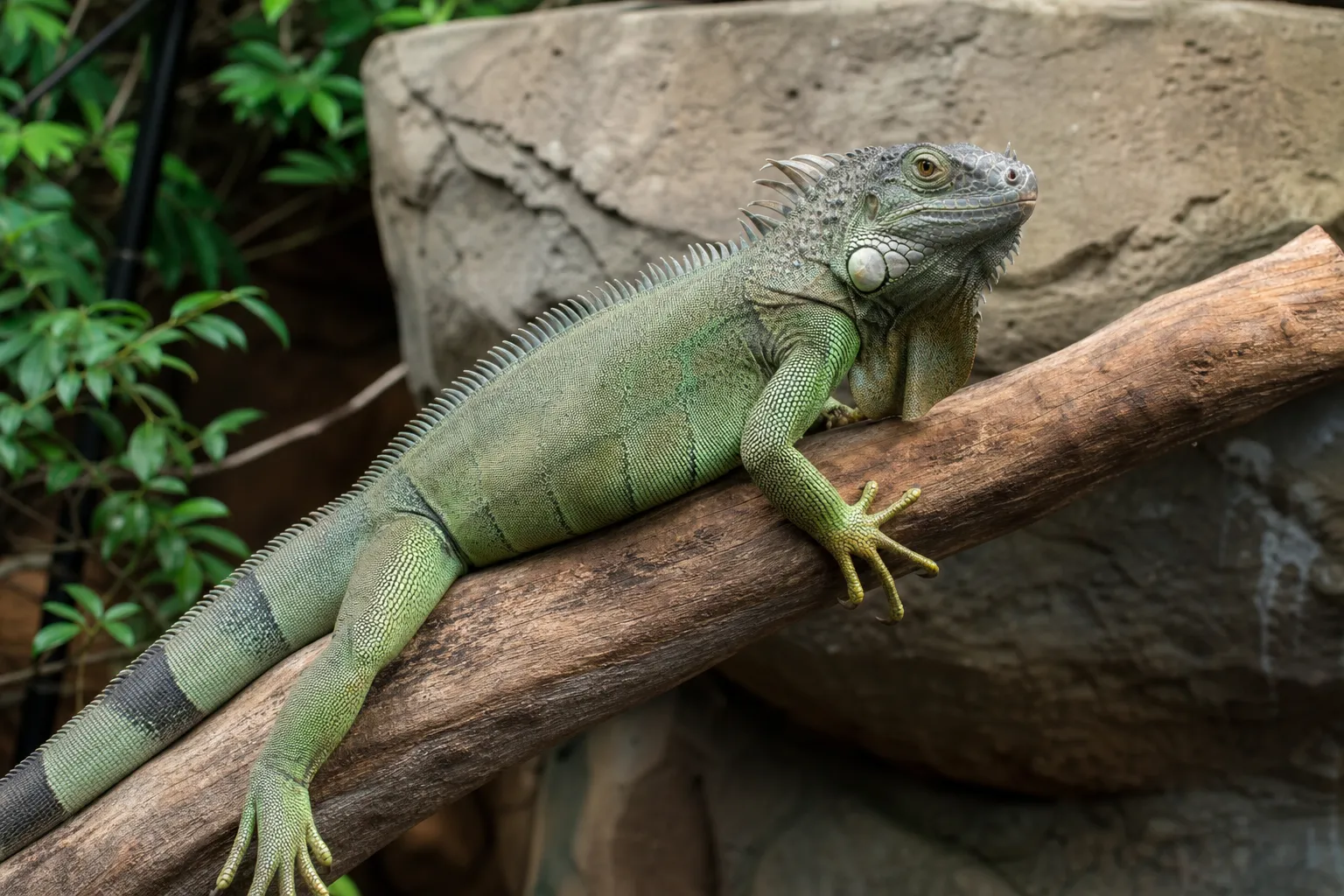
Iguanas explore with tongue-flicking, a calm investigative behavior the VCA describes as similar to sniffing. By contrast, the species also has defensive adaptations: a long tail used as a whip and long claws that can cause scratches. Use those natural cues to guide your decisions. If you notice tongue-flicking and relaxed posture, the animal is likely investigating. If you see tail movements that suggest whipping or overtly defensive postures, avoid direct contact and give space.
Set Gradual Handling Goals And Limits
Create tiny, measurable goals: consistent visual checks, brief voluntary approaches, and later short supervised handling only when the animal meets health and behavior criteria. Remember sexually mature males often show stronger territoriality; keep handling expectations modest for adults and plan for gradual progress over weeks or months. If the iguana was captive-raised and shows calm, you may slowly expand contact, always monitoring for signs of stress or aggression.
Record Changes And Know When To Seek Help
Keep dated notes and photos of posture, color, tail condition, and cloaca cleanliness. The VCA recommends a veterinary examination within 48 hours of purchase and emphasizes avoiding animals that appear thin, lethargic, or have abnormal oral or tail conditions. If your records show worsening appetite, sunken eyes, unusual mouth mucus, or sudden aggression, contact a veterinarian familiar with reptiles promptly.
Practical Recordkeeping Examples
Use a simple daily log or phone app and include: date and time, observed color and posture, feeding offered and estimated amount eaten, any signs at the vent or mouth, tail shape and fullness, and a quick photo from the same angle each week. The VCA notes veterinarians measure weight and check general condition during an exam, so keeping weekly or biweekly photos and weight notes makes changes easier to spot and report.
Stepwise Trust Timeline
Sample timeline: week 1—observation-only at predictable times; week 2—passive presence near the enclosure and offer food from a distance; week 3—short, voluntary approaches when the iguana is alert and feeding well; later—very brief supervised handling only if the animal consistently shows relaxed posture and normal appetite. Progress depends on the individual; some iguanas take months to feel secure. Always stop if the animal shows defensive signals.
Checking Mouth And Cloaca Safely
The VCA suggests a gentle method to check the mouth: tapping lightly on the snout often encourages the iguana to open voluntarily. Look for clear saliva and a bright pink tongue and oral cavity; cloudy mucus, cottage-cheese-like material, or oral redness can indicate mouth disease and require veterinary attention. Do not force the mouth open; use only gentle, consent-based cues.
Environment, Routine Tools, And Practical Aids
Stable environmental routines make handling safer. Iguanas need large enclosures and proper UV-B lighting to thrive; predictable feeding and lighting schedules help you detect deviations in behavior. Useful tools include a simple notebook or app for records, sturdy branches or platforms sized for your animal, and a reliable scale to monitor weight. Digital kitchen scales for tracking weight. For general care details, see our Iguana Care overview and the species page for the common green iguana at Green Iguana.
Building trust with a new iguana is a slow, observation-first process. Use routine to notice health and behavior, offer choice-based, brief interactions, and involve a reptile-savvy veterinarian when concerns arise. Predictability protects both keeper and animal as trust grows.
Sources and further reading
VCA Animal Hospitals — Iguanas: Owning:
Sources And Further Reading
THE JUNGLE SUPPLY EDIT
Shop This Article
Everyday Tools For A Thoughtful Care Routine

Rite In The Rain Notebooks · 3 Pack
Weatherproof notebooks for temperature logs and daily care observations.
Use for records to discuss with your reptile veterinarian when needed.
View On Amazon (opens in a new tab)
Zoo Med ReptiCare Day/Night Timer
A timer option for maintaining a consistent equipment schedule.
A timer controls on/off times; it does not regulate temperature.
View On Amazon (opens in a new tab)
Zoo Med Repti Rock Food Dish · X-Large
A broad food-dish option for comparing feeding space and placement.
Confirm dimensions on Amazon and choose a stable, accessible position.
View On Amazon (opens in a new tab)
Master Lock 630D Combination Lock
A small lock to compare for compatible cabinet or enclosure hardware.
Check shackle fit; a lock cannot make an unsuitable enclosure escape-proof.
View On Amazon (opens in a new tab)Compare sizes, compatibility and current availability on Amazon. Choose what fits your existing setup.