
As an Amazon Associate I earn from qualifying purchases.
Introduction
Finding a veterinarian who understands reptile biology before you need urgent care avoids delays and reduces stress for your iguana. Start early, ask specific experience questions, confirm emergency arrangements, and prepare clear records. A little preparation helps the clinic perform safer exams and makes triage faster when minutes matter.
Why Start Your Search Now
Begin your search while your iguana is healthy. Reptile exams may require special handling, weighing, and diagnostic tools that differ from cat and dog clinics. Knowing a clinic’s comfort with reptiles ahead of time speeds appointments and can reduce the need for sedatives during routine checks. Early contact also gives you a chance to meet staff, confirm basic safety and hygiene practices, and learn what the clinic expects you to bring for an initial visit. Learn more about baseline care and housing so your records are complete: Iguana Care.
Questions To Ask About Veterinary Experience
Ask whether the veterinarian treats reptiles regularly and how often they see iguanas specifically. Inquire about examples of common procedures they perform, such as physical exams, diagnostic imaging, or minor wound care. Ask if staff are trained to restrain and handle reptiles safely. These questions reveal practical experience without demanding specific credentials. A clinic that welcomes your questions and explains techniques shows transparency and a readiness to work with exotic pets.
Clinic Equipment And Diagnostic Skills To Check
Find out whether the clinic has reptile-appropriate tools. Important items include accurate scales, Doppler equipment for heart rates, and imaging equipment useful for reptiles. The ability to perform careful physical exams and appropriate diagnostics is central to good care. Accurate weight measurement is critical; overdoses of drugs, especially anesthetics, can be fatal, and serial weights help monitor growth or illness progression (see source).
Handling, Restraint And Sedation Practices
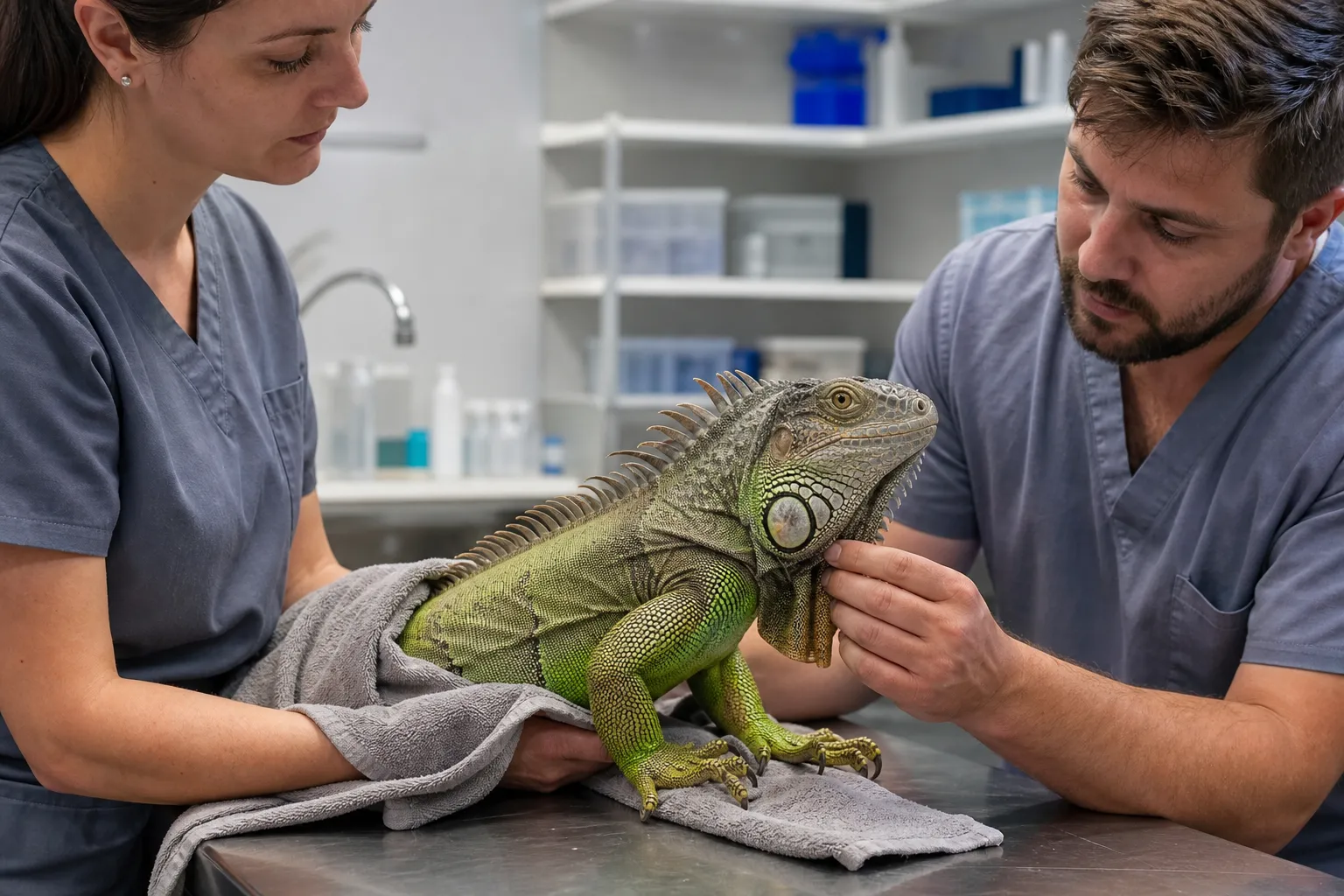
Ask how the clinic restrains reptiles and when they use chemical sedation. Reptiles can often be observed calm and unrestrained, but some species or situations need towels, clear containers, or sedation for safety. Sedatives and anesthetics can make procedures faster and less stressful, but they may also alter some test results. A clinic should explain risks and benefits and use restraint or sedation methods that minimize stress and protect staff safety.
What To Expect During An Exam
A good clinic will begin with observation. Many reptiles can be assessed while calm and in a familiar posture; watching demeanor and locomotion helps detect obvious problems such as lameness, paresis, paralysis, or head tilt. Expect the team to obtain an accurate weight every visit; serial weights allow the veterinarian to track growth or disease. For heart rate checks the clinic may use a Doppler device. For small lizards and snakes, clinics sometimes use transillumination (a cold light source) to help confirm suspected gastrointestinal impactions or foreign bodies. For larger or potentially dangerous patients, staff may rely on towels, restraint tubes, hooks, or even gauntlets. When chemical sedation or anesthesia is recommended, the clinician should describe how those drugs might influence test results and safety measures they will take (for example, monitoring and dosing based on precise weight).
Emergency Coverage And After-Hours Care
Clarify the clinic’s emergency plan: who to call after hours, whether they have on-call reptile-capable staff, and where your iguana would be referred for advanced care. If the clinic does not offer 24/7 reptile services, ask for recommended emergency centers nearby. Knowing transport time and the clinic’s triage procedures helps you act fast. Keeping a go-bag and clear directions to the clinic will save precious time in a crisis.
Preparing Records And A Visit Checklist
Bring concise, dated records: recent weights, diet history, enclosure temperatures and lighting schedule, last fecal tests if available, and photos of the enclosure and any recent changes. Serial weights are especially useful to track trends. Note any medications, supplements, or unusual behaviors. A short one-page timeline of recent problems helps the clinician prioritize diagnostics and treatment and avoids missing key details during a stressful visit. If you keep species-specific notes, add a quick note about husbandry items like UVB and temperature cycles so the clinician can assess environmental causes quickly. For species reference and identification tips you may also find helpful guidance at: Green Iguana.
Safe Transport And What To Bring
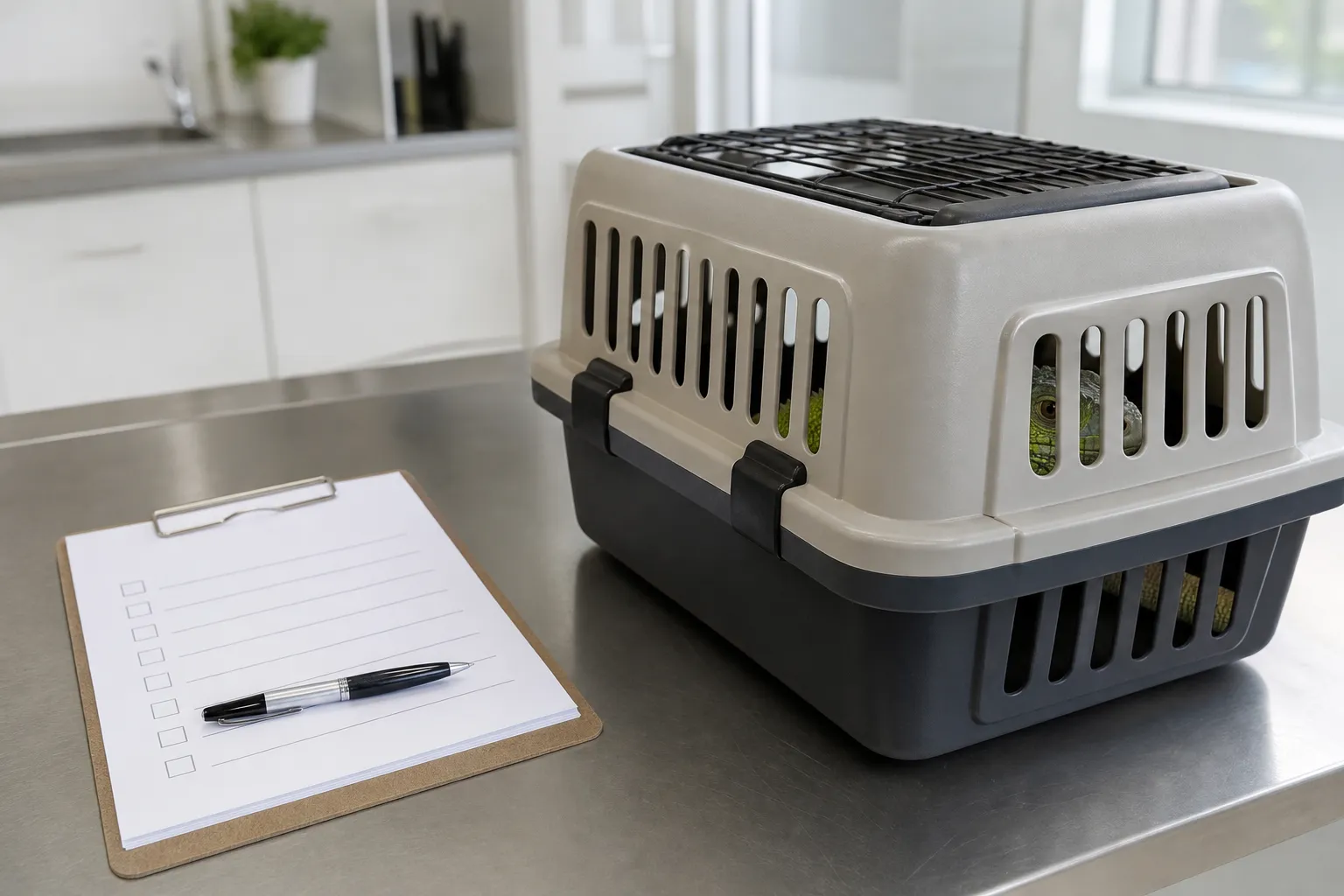
Use a secure, well-ventilated container that prevents escape and reduces movement. For many reptiles, a towel or soft padding helps stabilize the animal. Avoid stressful handling; keep your iguana warm but not overheated during transit. Bring a recent fecal sample if requested, and keep a copy of your records and photos. If your iguana is a species with special handling considerations, mention that when you call so staff can prepare appropriate equipment.
Supplies To Make Visits Easier
Basic tools help with routine monitoring and make visits smoother. A reliable scale for serial weights, a secure transport carrier, and a few syringes for measured oral medications can be useful. Consider comparing products before buying: search digital pet scales and search padded portable carriers. Choose tools with good reviews and sizes appropriate for your iguana.
Conclusion
Locating a reptile-capable veterinarian and preparing clear records and supplies reduces stress and improves outcomes. Ask practical questions about experience, equipment, restraint, sedation, and emergency coverage. Small actions—accurate weights, a visit checklist, and a safe carrier—make veterinary care faster and safer for your iguana.
Sources and further reading