
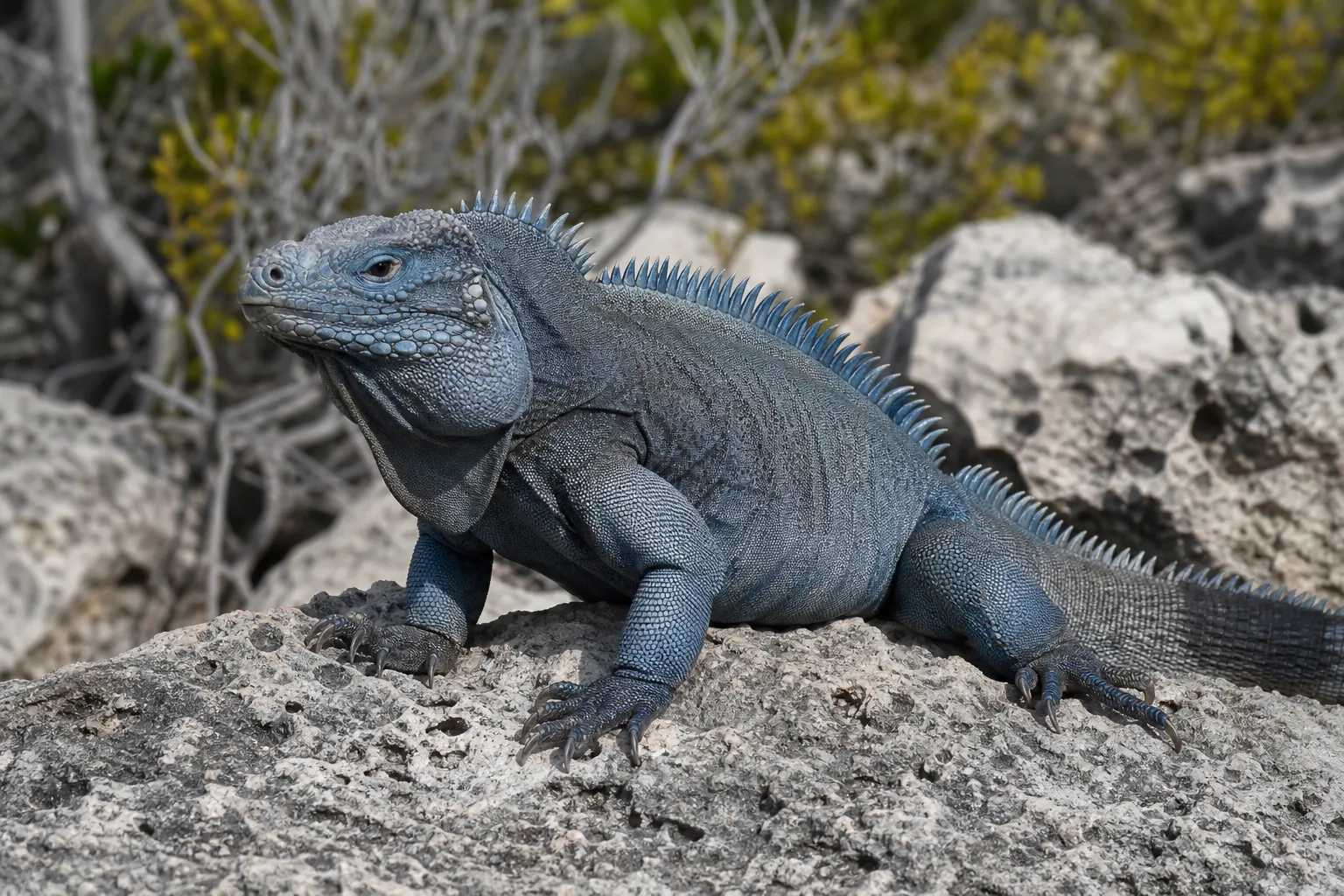
Many people see a bright blue lizard and assume it’s a “blue iguana.” In reality, a true Grand Cayman blue iguana is a distinct species, Cyclura lewisi, native only to Grand Cayman. Other iguanas, especially wild or captive green iguanas, can show bluish tones but differ in size, scales, range, and conservation status. This guide highlights clear identification points to avoid confusion.
Taxonomy And Official Name
The Grand Cayman blue iguana was long listed as Cyclura nubila lewisi but is now recognized as its own species, Cyclura lewisi. The U.S. Fish and Wildlife Service updated federal listings and nomenclature to reflect the accepted scientific name; this is a taxonomic correction, not a change in legal protection. Use the species name Cyclura lewisi when reporting sightings or researching conservation status.
Color Range Versus Species Color
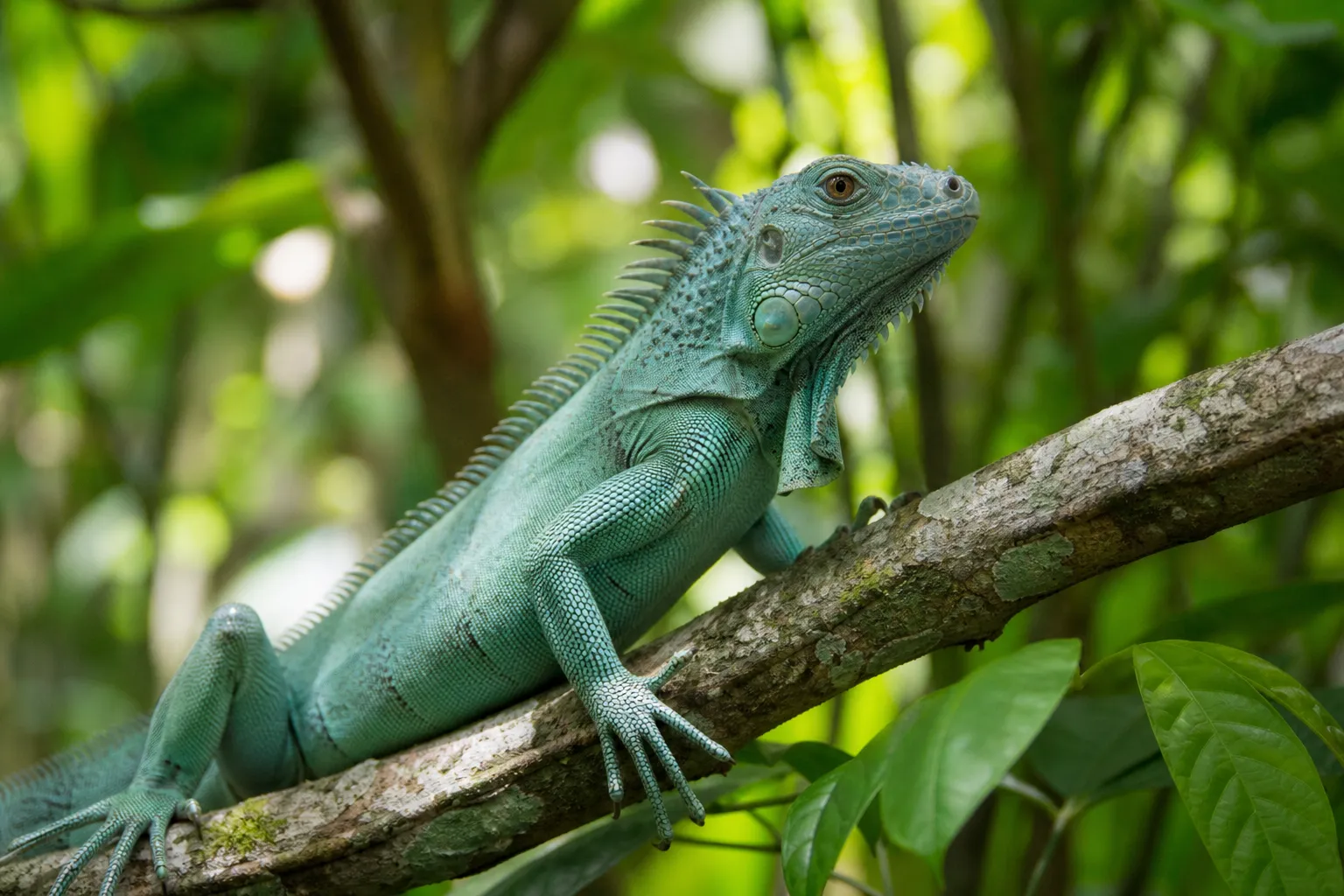
Color alone is an unreliable ID. Grand Cayman blue iguanas commonly range from gray to bright blue; males often become intensely blue during mating season. By contrast, green iguanas (Iguana iguana) are typically green to brown but sometimes show blueish hues, especially in juveniles or regional variants. Always pair color clues with other physical and range features before concluding species identity.
Size And Overall Body Shape
Grand Cayman blue iguanas are heavy-bodied rock iguanas. They can exceed 5 feet (1.5 meters) from nose to tail tip and may weigh more than 25 pounds (11 kilograms). These stout proportions and heavy heads distinguish Cyclura lewisi from many green iguanas, which are typically more slender and arboreal. Size is an especially useful clue when combined with habitat.
Head, Scales, And Dorsal Crest Features
Look closely at head shape and scales. Rock iguanas like Cyclura have robust, blocky heads and pronounced body musculature. They also show dorsal crests and cross-banding that can be faint. Green iguanas usually have slimmer heads, longer tails relative to body depth, and different crest and scale arrangements. These structural traits are reliable when viewed at close range or in clear photos.
Range And Habitat Clues
Geography is decisive: true Grand Cayman blue iguanas occur only on Grand Cayman Island and prefer dry, rocky coastal forests and scrub. If you see a blue-bodied iguana outside the Cayman Islands, it is unlikely to be Cyclura lewisi unless it is in captivity or part of a verified reintroduction. Use location as a first filter before laboring over subtle morphological differences.
Behavior And Daily Habits
Grand Cayman blue iguanas are ground-dwelling and diurnal; they bask on rocks or open soil at sunrise to warm up and shelter at night in crevices. Green iguanas are more arboreal and often rest higher in trees or on branches. Observing where an animal spends most of its time—ground versus tree—helps separate Cyclura from Iguana iguana in the field.
Reproduction, Lifespan, And Population Notes
Blue iguanas mature slowly—sexual maturity occurs between about four and nine years. Females dig deep nest cavities and lay multiple eggs; hatchlings face heavy predation. In the wild these iguanas can live decades. Conservation programs have improved numbers, but Cyclura lewisi remains an endangered island endemic and must not be collected or traded. These life-history traits are part of why accurate identification matters.
Legal Status And Conservation Implications
Grand Cayman blue iguanas are protected under international and U.S. conservation frameworks; the federal taxonomic correction did not change legal protections. Cyclura lewisi conservation includes captive breeding and habitat protection; illegal collection remains a concern. If you find a suspected Cyclura in the wild, contact local authorities or conservation organizations rather than attempting to handle or relocate the animal.
Practical Steps For Photographers And Observers
When documenting a blue iguana, get clear photos of head profile, dorsal crest, body proportion, and habitat. Note GPS coordinates or precise location. If you manage captive collections or reports, label records with the scientific name Cyclura lewisi only when the range and morphological features match authoritative descriptions. For care-related resources, see general husbandry guidance and species pages listed below. Green Iguana Info Blue Iguana Info Iguana Care
How To Report Suspected Sightings
If you believe you have photographed or found a Cyclura lewisi, record details that support identification and conservation. Include the exact location (GPS if possible), date and time, number of animals, and observed behavior (for example, basking on rocks or moving on the ground). High-resolution photos from multiple angles—head profile, full body, and tail—make later confirmation easier. Do not attempt to capture or move an animal; instead contact local wildlife authorities or conservation groups that handle island endemics. Clear documentation reduces the chance of misidentifying a blue-tinted green iguana as a protected Cyclura.
Common Misidentifications And Photo Tips
Many misidentifications come from single, poorly lit photos showing only color. To reduce errors, take a side profile showing head shape and crest, a dorsal shot to show body bands or cross-banding, and an environmental shot that captures substrate and nearby vegetation. Note whether the animal is on the ground or in a tree—ground-dwelling rock iguanas are more likely Cyclura. Also mention season or behavior; male Cyclura often appear brighter during mating periods, which can explain intense blue hues in some photos. These practical photo habits support accurate reporting and protect vulnerable populations.
Clear identification protects both people and vulnerable animals. Use color as a starting clue, then confirm with geography, size, head and scale anatomy, and behavior before deciding whether an animal is Cyclura lewisi.
Conclusion
Bright blue coloration does not automatically mean a Grand Cayman blue iguana. Cyclura lewisi is a distinct, large, ground-dwelling species restricted to Grand Cayman. Combine color with range, size, structural features, and behavior to make a reliable identification and always defer to conservation authorities for any intervention.
