
As an Amazon Associate I earn from qualifying purchases.
Green iguanas are folivores: they eat leaves. A balanced, varied salad is the easiest way to meet their fiber and calcium needs while keeping meals interesting. This guide breaks down food roles, rotation strategies, and safe preparation so you can shop and batch-prep with confidence. Citations point to veterinary guidance for portions, supplements, and light exposure to support calcium use.
Know The Food Roles
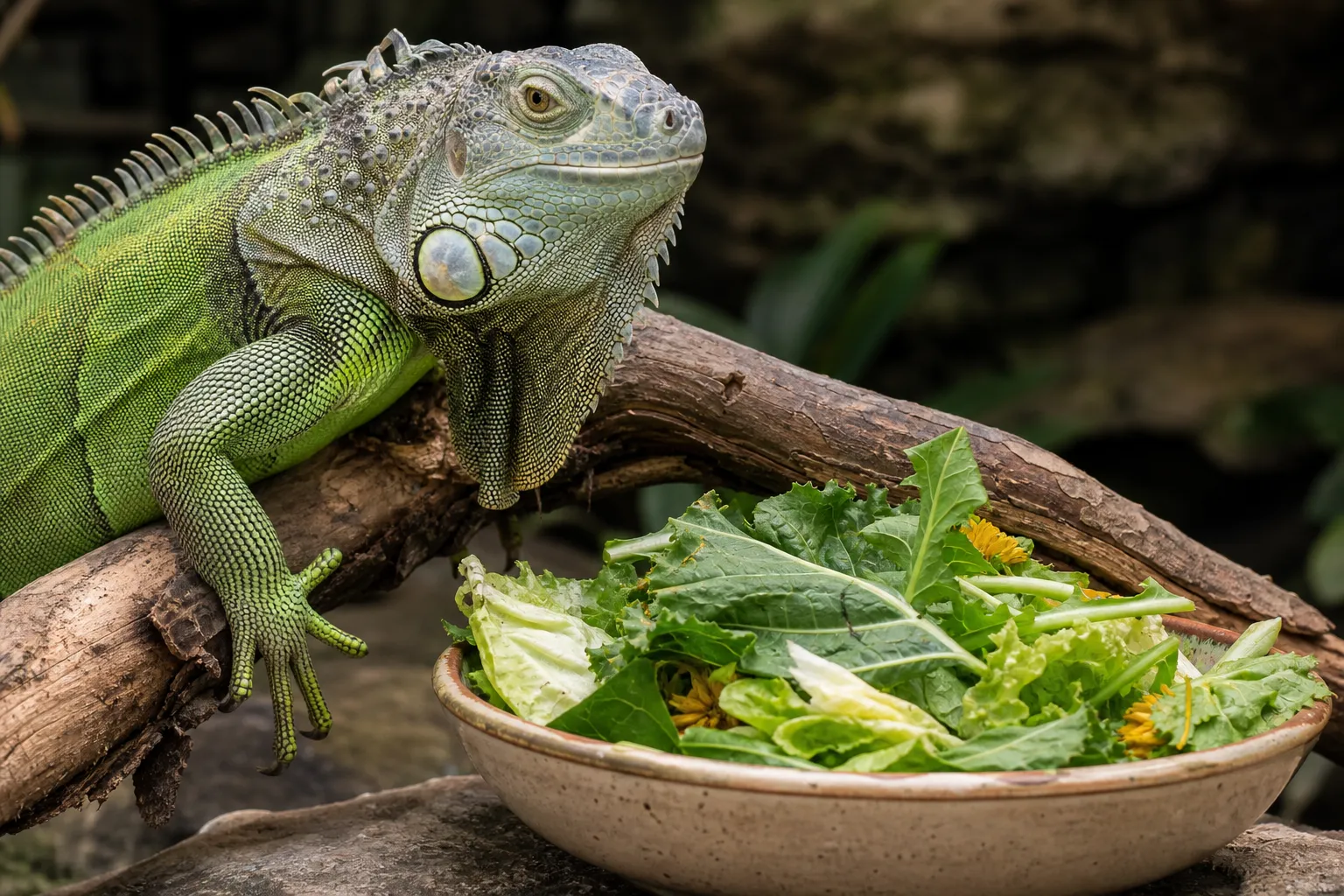
Design salads around three roles: staple greens (high-fiber, calcium-rich), mixed vegetables (texture and micronutrients), and limited fruit/treats. Staple greens should make up most of the adult diet; VCA and Lafeber list collards, dandelion, bok choy, and romaine among good choices. Fruits supply water and taste but are nutrient-poor and should be fed sparingly. Iguanas are herbivores and hindgut fermenters, so plant fiber is essential to their digestion and overall health .
Percentages And Portion Targets
Most veterinarians recommend roughly 80–90% dark leafy greens and 10–20% other vegetables and fruits combined for adults. VCA specifies dark greens as the bulk and advises fruits be a small percentage; Lafeber emphasizes dark leafy greens as the majority. Young, growing iguanas eat more often and may tolerate a slightly higher percentage of legumes or protein sources under guidance from a vet. Avoid dog and cat foods; animal proteins are generally too high for adults .
Rotate Greens Weekly
Rotation prevents mineral imbalances and overexposure to substances like oxalates and goitrogens. Plan a weekly cycle that features at least three different staple greens (for example, collards, dandelion, romaine) rotated daily. Include small amounts of brassicas (kale, mustard) only a few times per week because they contain goitrogens. Balance swiss chard or spinach with other calcium-rich leaves rather than relying on them exclusively, since they can impair calcium absorption .
Salad Composition And Meal Prep
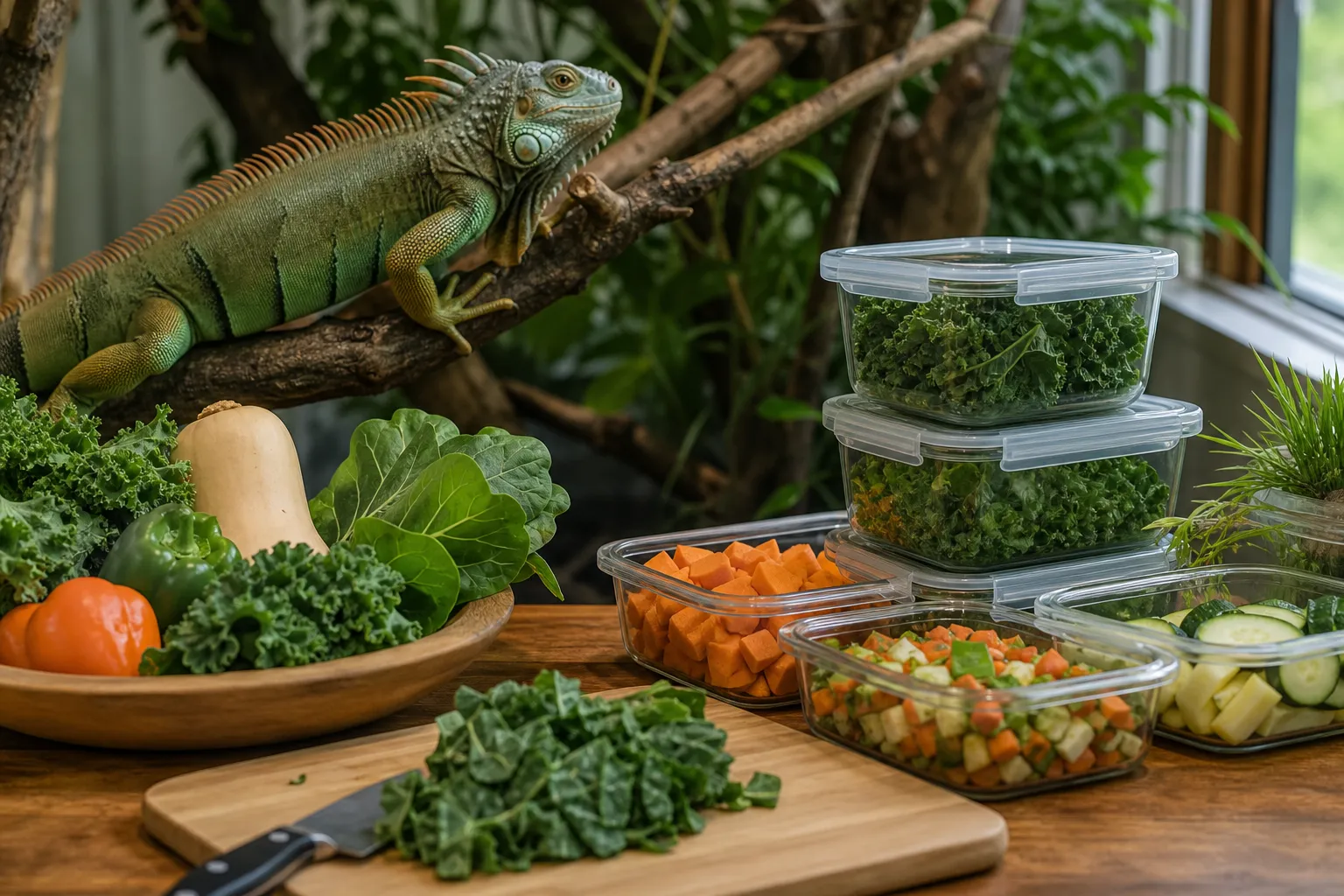
Construct salads with chopped leafy base (70–80%), shredded or diced mixed vegetables (15–25%), and a light fruit or flower garnish (0–5%). Raw is preferred because cooking reduces some nutrients. Rinse all produce thoroughly to remove dirt and pesticides. Offer fruit as a top dressing rather than a bulk ingredient. Young iguanas may accept lightly cooked legumes occasionally but limit these to small percentages .
Supplements And Lighting Considerations
Because iguanas require high dietary calcium and appropriate vitamin D for bone health, husbandry and supplements both matter. Provide full-spectrum UVB or natural unfiltered sunlight when possible to help vitamin D synthesis. For supplementation, vets commonly recommend age-based schedules: young iguanas typically receive calcium powder more frequently, while many adults are dusted weekly. Choose phosphorus-free calcium powders and consult your veterinarian for a regimen matched to your setup .
Storage, Hygiene, And Batch Planning
Plan grocery trips around perishable greens: buy firm heads for the week and leafy bundles for day-by-day use. Wash and dry leaves, then store loosely wrapped in paper towels inside breathable containers to keep them crisp. Clean feeding dishes daily, and replace soiled food quickly to avoid bacterial growth. Batch-prepare chopped salads for 3–5 days to save time, but keep dressing (fruit toppers, soft items) separate until serving.
Tools, Practical Problems, And Selectors
Useful tools solve time, portioning, and storage problems. A digital kitchen scale helps track portions; shallow, heavy ceramic or stainless bowls resist tipping; airtight containers extend leafy life. For options, search feeding bowls, airtight food storage, and kitchen scales: reptile feeding bowls on Amazon, food storage containers on Amazon, digital kitchen scales on Amazon.
Recordkeeping And When To Contact A Vet
Keep a simple feeding log noting foods offered, supplements given, and body condition. Adjust feeding frequency for adults (daily or every other day) based on weight and activity. If you see persistent weight loss, lethargy, swollen joints, or abnormal stools, consult a reptile veterinarian. Nutritional imbalances can lead to serious conditions like metabolic bone disease, so timely vet input is important .
Sample Weekly Menu And Shopping List
Use a simple weekly rotation to cover nutrients without overusing any single plant. Example staples to buy: collard greens, dandelion greens, bok choy, romaine, beet greens, turnip greens, and a small amount of kale or mustard for variety. Mixed vegetables to include across the week: squash, broccoli, bell pepper, green beans, peas, carrots, and sweet potato. Fruits for sparing use: papaya, melon, banana, mango, or apple as a light top dressing. These suggestions draw from VCA’s lists of recommended greens, vegetables, and acceptable fruits; keep fruit under the advised small percentage of the diet .
Hydration, Water Bowls, And Hygiene
Provide a water bowl large enough for soaking; green iguanas will often soak and can defecate in their water, so clean and refill daily. Mist the enclosure regularly to support humidity and encourage drinking. Rinse produce thoroughly and, where possible, choose organic or wash items carefully to reduce pesticide residues before feeding .
Feeding Frequency, Growth, And Weight Monitoring
Young iguanas usually need daily feeding; adults can be offered food daily or every other day and overweight animals may be fed every other or every third day. Track body condition and adjust frequency rather than relying on fixed meal sizes. If in doubt about supplements or protein for juveniles, confirm a plan with your veterinarian .
For more general care basics and species details, see the iguana care resources: Iguana Care and species notes at Green Iguana. You can also explore broader topics at Explore Topics.