As an Amazon Associate I earn from qualifying purchases.
Veterinary visits can be stressful for iguanas and for owners. Good preparation helps the visit run smoothly, protects staff and your pet, and preserves useful clinical information. This guide explains what records to bring, how clinics may examine your iguana, safe transport choices, and practical steps to reduce stress before and during the visit.
Prepare Accurate Records And Baseline Data
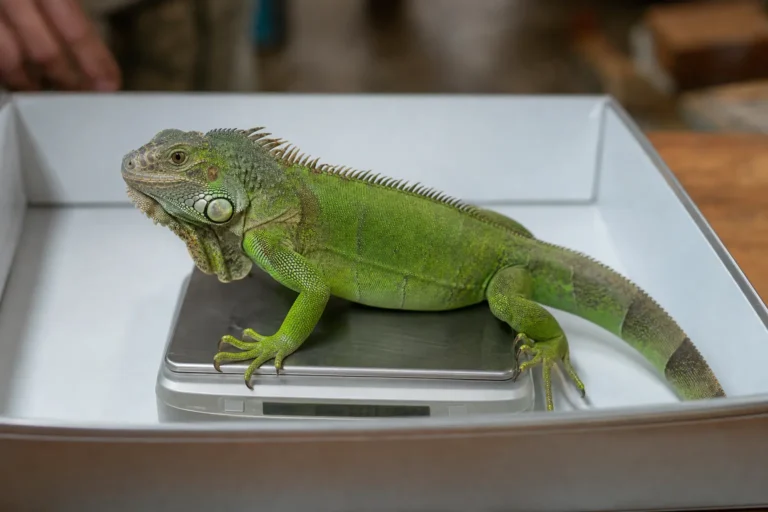
Bring any previous medical records, recent weights, and a short timeline of symptoms or behavior changes. Serial weight measurements are especially valuable because they help the clinician judge growth, response to treatment, and disease progression. If you have photos of the enclosure or of abnormal behavior, include them. Clear, concise records let the veterinarian compare past and present findings and make better treatment choices.
Choose A Secure Transport Carrier
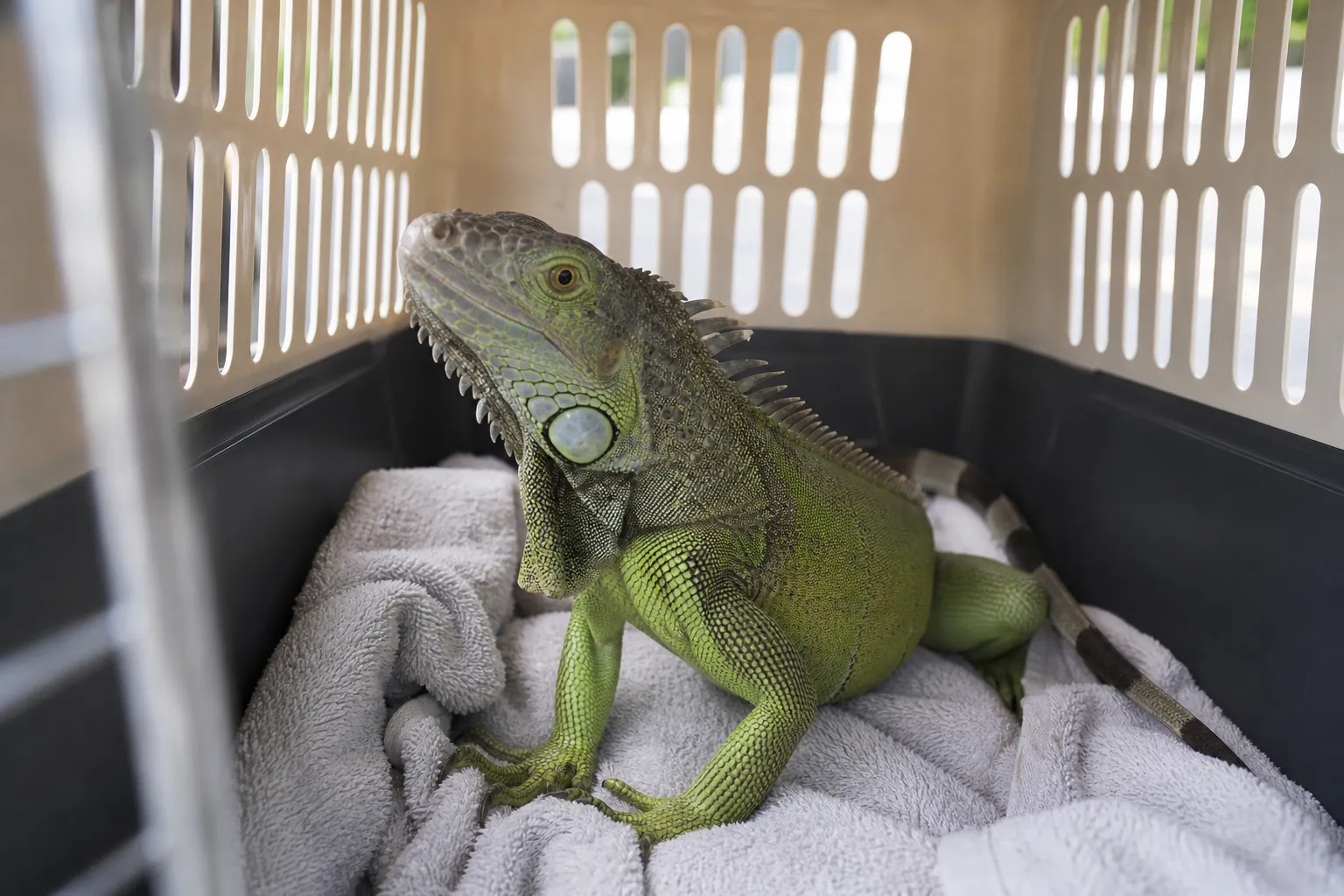
Use a carrier that keeps your iguana safely contained without excessive restraint. For many reptiles, a plastic ventilated carrier or a sturdy box lined with a towel works well. Covering the carrier can reduce visual stress by limiting stimuli during travel. Search for reptile travel carriers suitable for iguanas. Transport choices should prioritize safety, ventilation, and minimal handling.
Perform Simple Home Checks Before Leaving
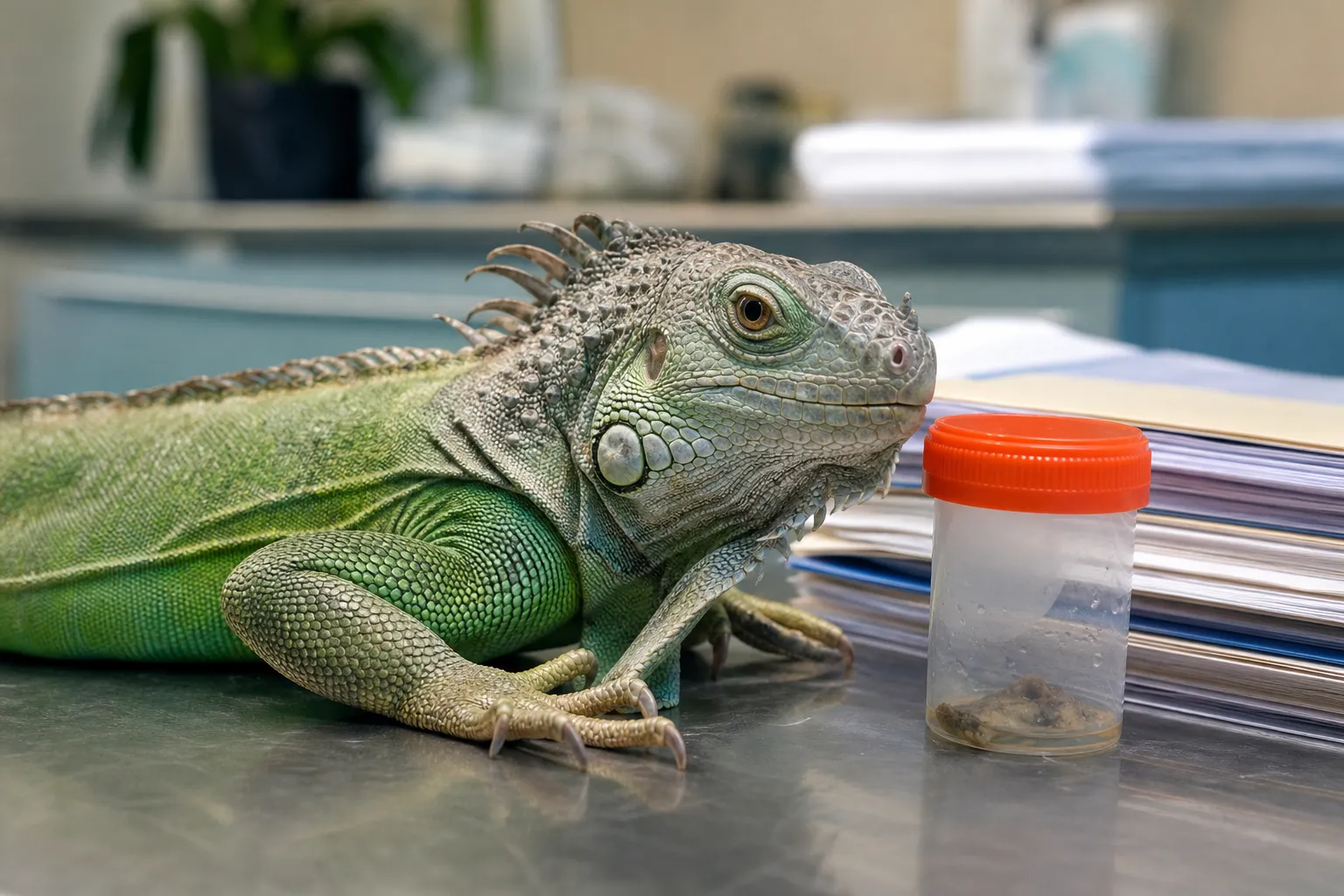
Observe your iguana in its usual environment before you travel. Veterinarians value observing natural posture, locomotion, and appetite because examination findings can change under stress. Note whether your iguana is eating, defecating normally, or showing changes in movement or demeanor. Collect fresh stool if the clinic requests it; such samples help assess parasites and enteric pathogens. Keep handling to a minimum just before departure to reduce additional stress.
Call Ahead And Coordinate
Call the clinic before your appointment to describe your iguana’s species, approximate size, and temperament. Let staff know if you can provide recent weights or a stool sample, and ask whether the planned exam or procedures are likely to require chemical restraint. Clinics use this information to prepare appropriate personnel and equipment. Discussing sedation options ahead of time helps you understand risks and how testing or timing might be affected by sedatives or anesthesia.
Bring Practical Items And Samples
Bring a short printed list of diet items and supplements, a history of recent behaviors, and any current medications. If possible carry a recent weight measurement so the clinician can compare serial weights quickly; accurate weights are critical for dosing and monitoring. If the clinic requested a fecal sample, bring it in a sealed clean container. For home weighing or clinic reference, owners sometimes use small digital scales to track changes over time — search for digital reptile scales.
Handling And Restraint Expectations
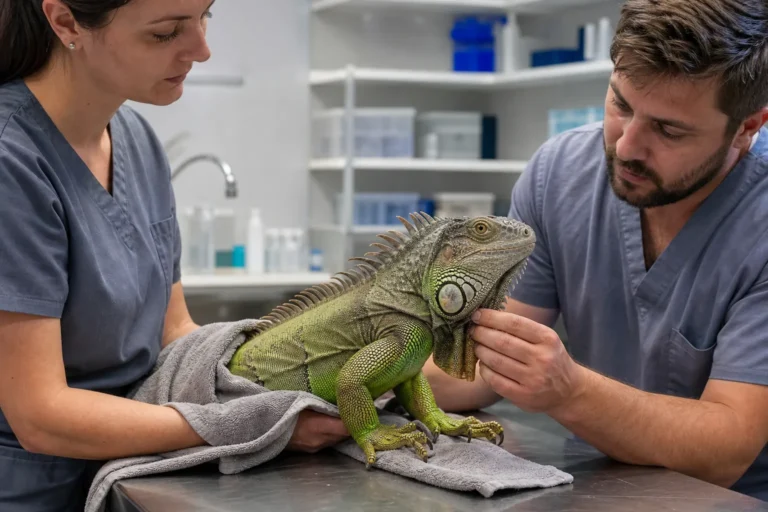
Clinics use species-appropriate restraint. Nervous or aggressive reptiles are often restrained with towels, restraint tubes, or clear containers; gauntlets may be used for large lizards when needed. Veterinary staff balance firm restraint with minimal stress. For large or potentially dangerous animals, clinics may opt for chemical restraint to protect both the iguana and handlers. Discuss restraint plans with the clinic beforehand so they can prepare appropriate equipment and personnel.
Sedation, Anesthesia, And Diagnostic Effects
Sedation or anesthesia can make difficult procedures quicker and less stressful for the reptile. Modern sedation techniques have improved safety and can be a good option for some examinations or procedures. Owners should know, however, that sedatives and anesthetics can affect clinical test results—especially hematology—and veterinarians take this into account when interpreting results. Your clinician will discuss risks and benefits when recommending chemical restraint.
What The Clinic Will Likely Do
The veterinary team will usually begin with observation and a physical exam. They will weigh the iguana because accurate weight is critical for drug dosing and monitoring treatment. Auscultation (listening to body sounds) can be difficult in reptiles, so staff may use Doppler ultrasonography to assess heart rate. For smaller reptiles, techniques like transillumination may be used to visualize coelomic structures; staff adapt methods to species size and temperament.
Aftercare Communication
Before you leave, confirm follow-up plans and ask how to monitor recovery. A short written summary from the clinic with weight, medications, and next-check dates is helpful to track progress. Ask whether any recent sedation could affect bloodwork timing and whether repeat tests are needed. Call the clinic promptly if your iguana stops eating, shows marked weakness, or has other worsening signs.
Minimizing Stress During Transport And Visit
Keep travel time as short as possible and avoid unnecessary stops. Limit handling to what is needed to place the iguana in its carrier. When you arrive, follow clinic instructions about where to wait and how to hand over the animal. If the clinic plans sedation or a prolonged procedure, ask beforehand how they will minimize stress and monitor your iguana. Good communication with staff reduces surprises and helps maintain calm for you and your pet.
Hygiene And Zoonosis Precautions
Reptiles can carry zoonotic organisms, including Salmonella. Basic hygiene reduces risk: wash hands thoroughly after handling the iguana, its carrier, or any soiled materials. Clinics also follow protocols to protect staff and clients. Ask the clinic about any aftercare hygiene steps to take at home following an exam or procedure.
Related reading: Iguana Care Overview, Green Iguana Species Guide, Explore Iguana Topics.
Sources And Further Reading
THE JUNGLE SUPPLY EDIT
Shop This Article
Practical Tools For Care Records And Daily Checks
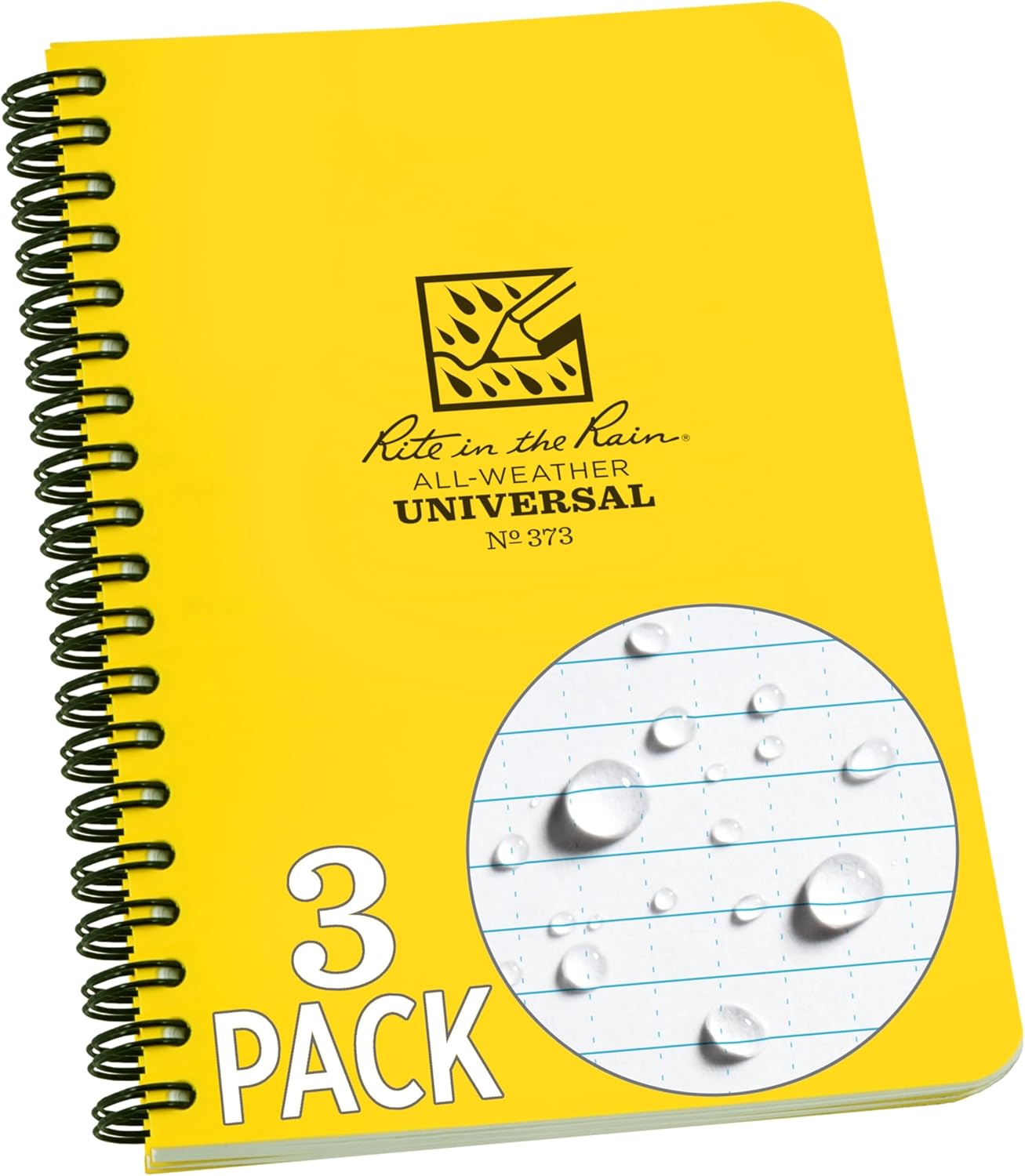
Rite In The Rain Notebooks · 3 Pack
Weatherproof notebooks for temperature logs and daily care observations.
Use for records to discuss with your reptile veterinarian when needed.
View On Amazon (opens in a new tab)
Etekcity Stainless Steel Kitchen Scale
A digital scale for measuring meal ingredients and tracking portions.
Check capacity and platform size; it is not suitable for weighing every reptile.
View On Amazon (opens in a new tab)
Zoo Med Digital Combo Gauge
Remote-probe temperature and humidity monitoring in one unit.
Place each probe as instructed; keep the display away from splashes.
View On Amazon (opens in a new tab)
OXO Deep Clean Brush Sets · 3 Pack
Detail brushes for reaching corners on removable care equipment.
Dedicate brushes to reptile cleaning and store apart from food-prep tools.
View On Amazon (opens in a new tab)Compare sizes, compatibility and current availability on Amazon. Choose what fits your existing setup.