As an Amazon Associate I earn from qualifying purchases.
Intro: What This Plan Does And Does Not Promise
This guide gives a clear, staged routine for the first 30 days after you bring home a green iguana. It focuses on observation, environment, feeding, and slow introduction to handling. It does not promise a set taming timeline. Every iguana adjusts at its own pace.
Before You Bring Your Iguana Home
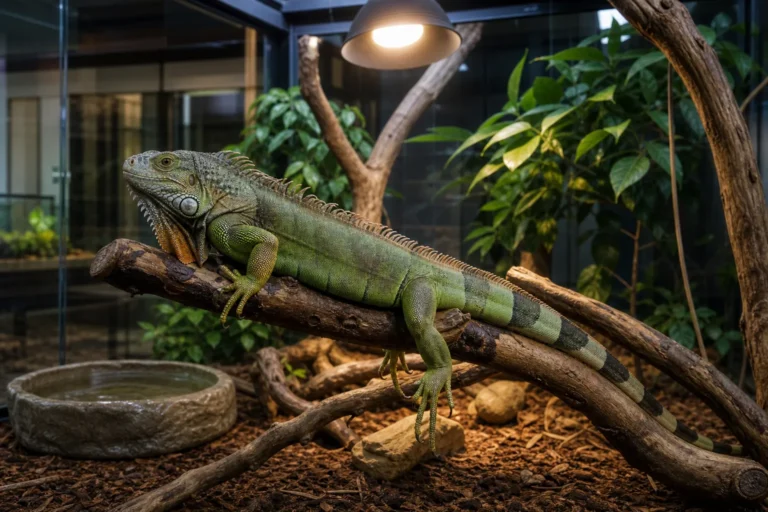
Set up a quiet enclosure before arrival. Adult green iguanas are arboreal and can grow large; many owners build or buy very large vertical enclosures (examples cited for adults include about 6 x 3 x 6 ft) so plan to upgrade as the animal grows.
Choose an easy-to-clean floor covering such as newspaper, butcher paper, recycled paper pellets, or artificial reptile turf. Avoid sand, gravel, wood shavings, and other loose materials that can be swallowed or cause obstruction.
Essential Environmental Targets
Provide a temperature gradient so the iguana can thermoregulate. Aim for a preferred optimal temperature zone near 80–88°F (27–31°C) with a basking spot reaching about 92–95°F (33–35°C). Use a dedicated basking bulb and verify temperatures with accurate thermometers placed in the warm and cool zones.
Make monitoring part of your setup budget. Choose readable instruments and plan where you will measure the warm zone, cool zone, and humidity before buying. Compare thermometer and humidity gauge options. Check the manufacturer’s placement instructions and keep a simple record so you can spot changes rather than relying on how the enclosure feels.
Maintain relatively high humidity for this rainforest species. Regular misting and a large water bowl for soaking support hydration and humidity. Clean water and soaking bowls daily.
Set up UVB full-spectrum lighting for calcium metabolism and bone health. Place climbing branches and a basking area near the UVB and heat source so the iguana can sit and bask safely. Avoid hot rocks, which can burn.
Choose the UVB system with the enclosure layout in mind. Review the lamp and fixture manufacturer’s distance, screening, and replacement guidance before deciding where the basking branch will go. Browse UVB fixture options as a starting point. Confirm suitability for your own setup; a product listing alone does not establish that a lamp is appropriate for your iguana.
Days 1–7: Observation And Low-Stress Routine
Keep the enclosure in a quiet room during the first week. Limit loud noises and heavy foot traffic. Run normal day/night lighting and heat cycles so the iguana can follow a regular rhythm.
Daily checklist for week 1:
- Check basking and cool-zone temperatures twice daily with your thermometers.
- Confirm UVB and heat bulbs are functioning on schedule.
- Offer fresh dark leafy greens each day and note how much is eaten.
- Mist daily and clean the water bowl every day.
- Keep interactions minimal and predictable—speak quietly and move slowly near the enclosure.
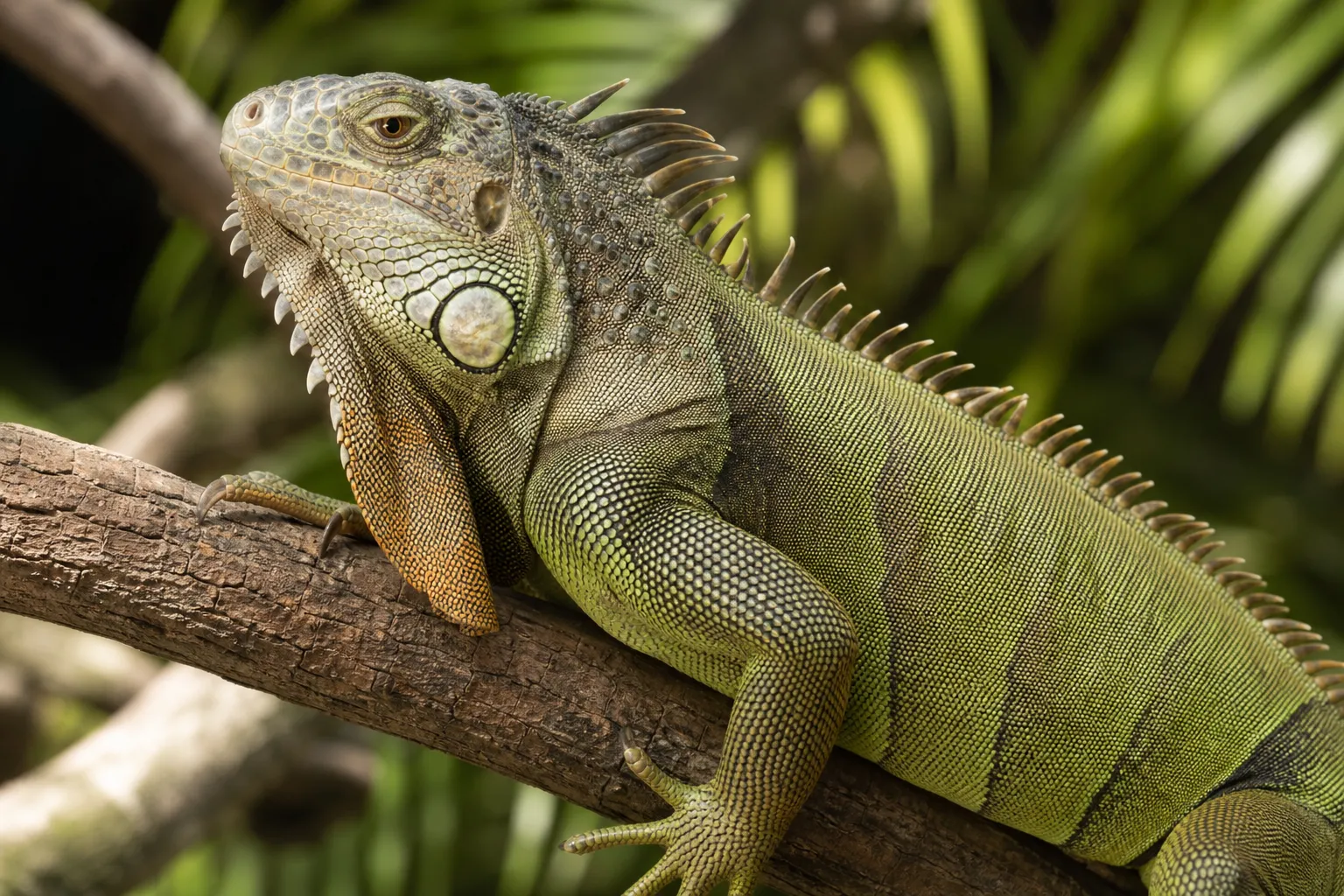
Weeks 2–4: Settle Into A Steady Routine And Gentle Choice-Based Handling
If the iguana eats, basks, and produces normal droppings, you can start very short, calm enrichment sessions and choice-based handling. Choice-based handling means the iguana chooses to approach or step onto your hand or platform; never force contact. Use firm support beneath the body and never grab the tail—tail loss (autotomy) can occur if the tail is grasped.
Keep handling brief and predictable. Offer food or a secure branch to encourage voluntary climbing and movement. Increase session length slowly only if the iguana stays calm.
Feeding And Supplements
Make dark leafy greens the core of the diet. Useful greens include collard greens, kale, romaine, dandelion, turnip, mustard, beet greens, bok choy, Swiss chard, spinach, chicory, and escarole. Mix in other vegetables; limit fruit to a small portion of the overall diet. For many adults, adding a calcium supplement with a low phosphorus level (aim for a minimum Ca:P ratio of about 2:1) once weekly is commonly recommended—follow your veterinarian’s specific advice.
Cleaning, Hygiene, And Health Checks
Spot-clean feces daily and do a more thorough cleaning weekly. Use soap and water for routine cleaning; diluted household bleach (about 1 part bleach to 10 parts water) can be used for disinfection but must be rinsed thoroughly.
Check the iguana daily for wounds, abnormal swellings, or irregular shedding. If your iguana stops eating, shows persistent lethargy, or you notice concerning lumps, contact a veterinarian experienced with reptiles.
One-Month Calendar And Daily Rhythm
Track lighting, temperature checks, misting, feeding, and behavior notes on a simple calendar. Example daily rhythm:
- Morning: turn on UV/heat, check temps, offer fresh greens.
- Midday: mist for humidity; observe basking and activity.
- Evening: remove uneaten food, clean bowls if needed, switch to night cycle.
Keep concise daily notes. Clear records make it easier to spot changes and to share useful information with a veterinarian if needed.
Resources And Next Steps
For general care guidance, review our site pages and species profiles: Iguana care, the green iguana profile at Green iguana, and broader topics at Explore topics. For husbandry details cited above, see the VCA, Merck Veterinary Manual, and Lafeber care sheet.
Equipment Checklist
- Appropriate-sized arboreal enclosure with sturdy climbing branches.
- Full-spectrum UVB light and a separate basking bulb.
- Two thermometers (warm and cool zones) and a humidity gauge.
- Large water bowl for soaking; clean daily.
- Safe, easy-to-clean substrate such as newspaper or reptile turf.
Use this staged plan as a baseline. Adjust based on your iguana’s individual responses. Quiet, consistent care and careful observation during the first 30 days lay the groundwork for long-term health.