
Affiliate disclosure: This post contains paid links. As an Amazon Associate I earn from qualifying purchases.

Owning a green iguana is a long-term commitment. A baby may fit in your hand, but its housing, equipment and care needs will grow with it. Plan the adult habitat and ongoing costs before bringing one home.
1. Build A Safe Shelter
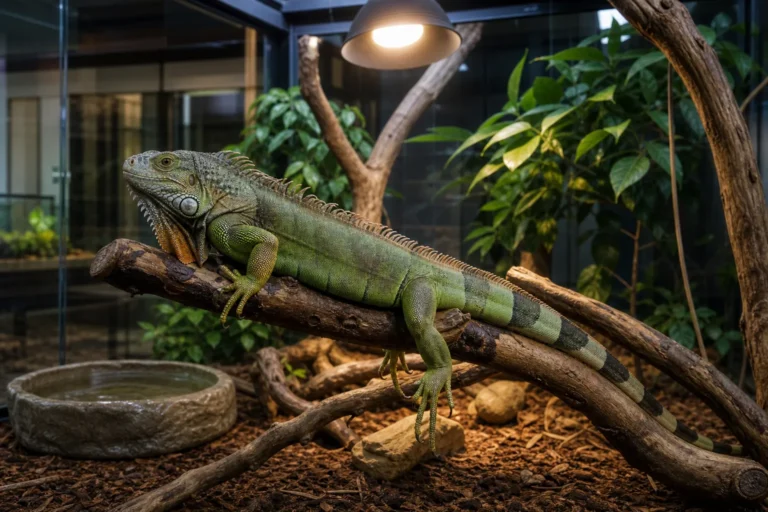
Provide both walking space and height for climbing. Secure sturdy branches and resting platforms so they cannot shift or fall. Check that every support can carry the animal’s weight. See our enclosure guide before buying a cage or climbing accessories.
Choose a floor that can be cleaned easily. Plain paper is a simple option while monitoring a new arrival. Flooring does not provide heat: heating equipment must be chosen and controlled separately. Keep the enclosure secure and well ventilated.
2. Monitor Warmth And Provide UVB
A single room-temperature reading does not tell you whether the habitat is suitable. Measure warm and cool areas, maintain a basking zone and check overnight conditions. A Zoo Med Digital Thermometer and Humidity Gauge (paid link) helps monitor temperature and humidity, with additional probes for different zones.
Use an appropriate thermostat with compatible heating equipment and prevent contact with hot surfaces. Green iguanas also require regular UVB exposure; a heat lamp alone does not provide it. Follow the lamp maker’s distance, fixture and replacement guidance. Our cage article explains the equipment choices and temperature ranges.
3. Feed A Varied Plant-Based Diet
Make leafy greens the foundation of the diet, with a variety of suitable vegetables and only small amounts of fruit. Wash produce and cut it into pieces the animal can manage. Fresh drinking water should always be available.
Do not follow the old advice to add extra phosphorus. Iguanas need more dietary calcium than phosphorus. Ask a reptile veterinarian to set a calcium and vitamin plan for the animal’s age, diet and UVB setup. Adding supplements is not a substitute for suitable lighting, and more vitamin D3 is not automatically better. Avoid dog and cat food.
4. Arrange Routine Veterinary Care
Find a veterinarian experienced with reptiles before there is an urgent problem. Discuss diet and habitat at the first visit, and track appetite, weight and behavior between visits. Equipment can help you maintain the habitat, but it cannot diagnose illness.
Care references: VCA: Iguana Housing; VCA: Feeding Iguanas. Updated October 20, 2026.