As an Amazon Associate I earn from qualifying purchases.
Adult green iguanas grow large and remain arboreal, so planning an enclosure now saves stress and expense later. Focus on usable climbing surfaces, secure materials, easy access for cleaning and veterinary care, and modular upgrades. This article walks through practical choices and placement so an enclosure works for both the iguana and the keeper as the animal reaches adult size.
Usable Climbing Space: Measure For Movement
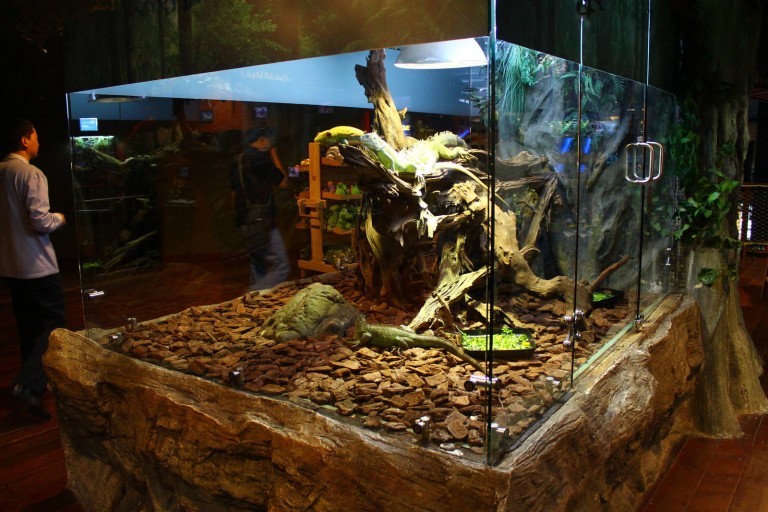
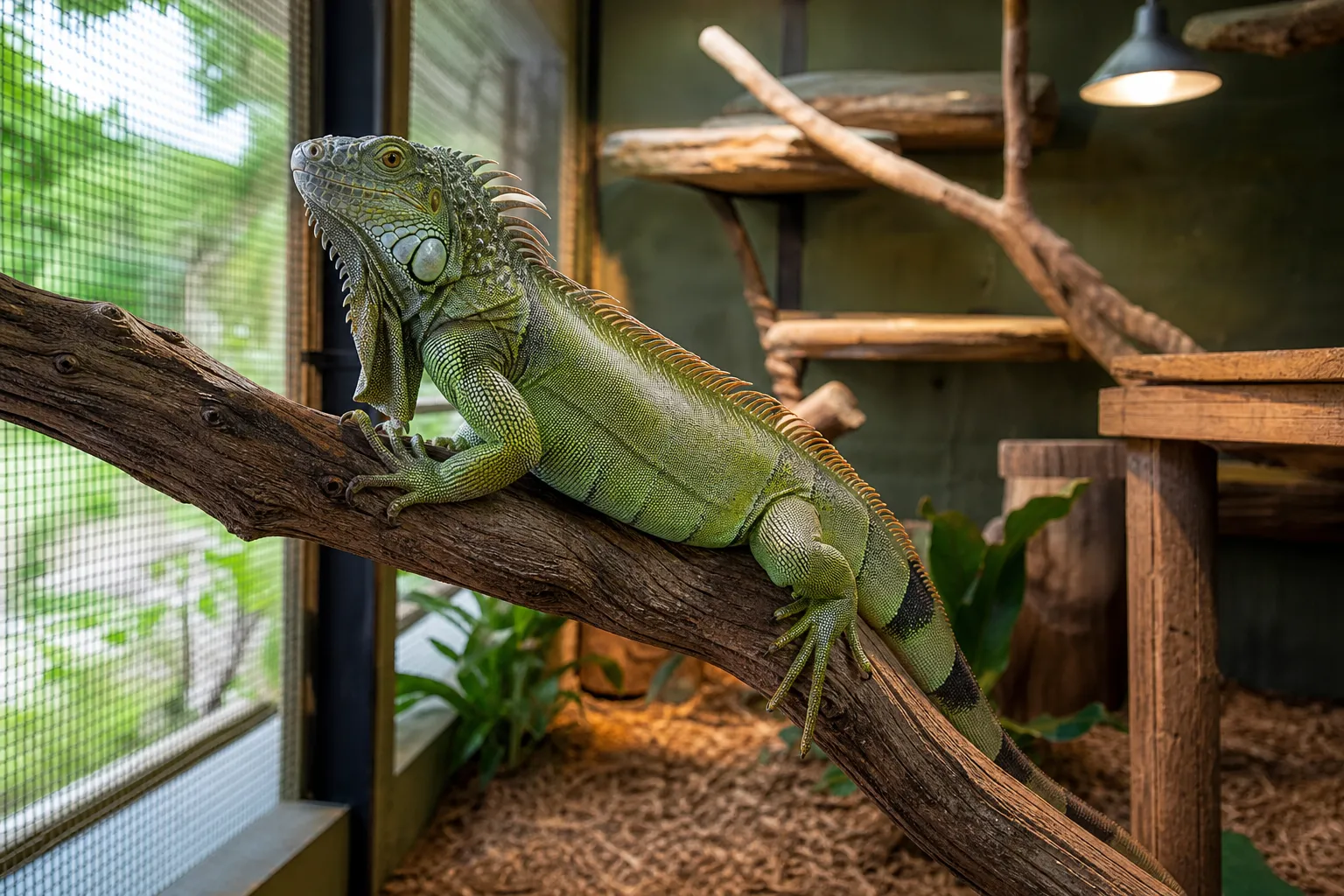
Green iguanas need both horizontal room to walk and vertical structures to climb and bask. Plan branches and ledges that support the full weight and length of an adult (many indoor pets reach 3–5 ft; large males can be larger), and place those routes near basking areas so the iguana can thermoregulate while perched. Provide continuous, stable pathways rather than isolated perches so the animal can move safely without jumping long distances.
Balancing Vertical And Horizontal Zones
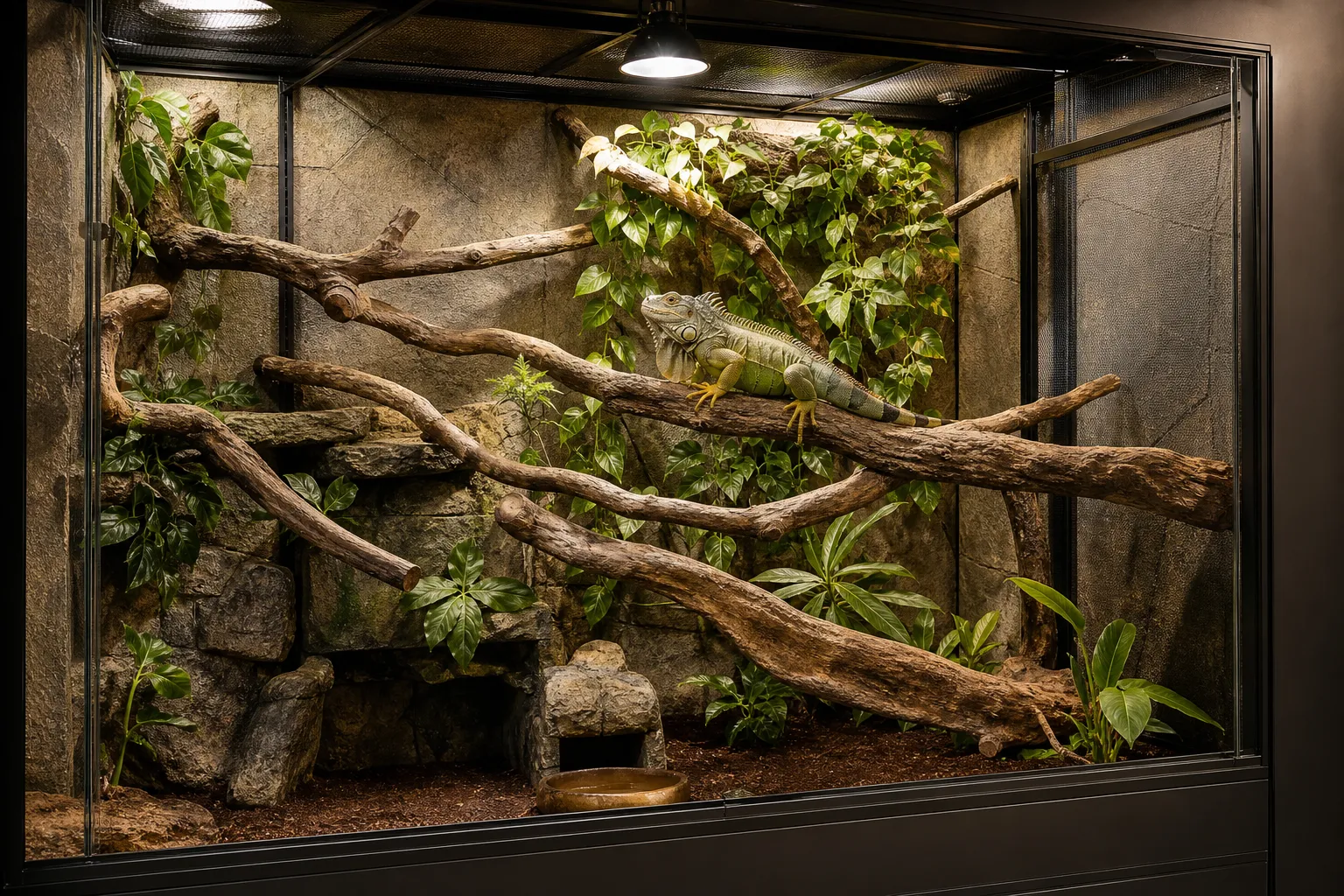
Design a footprint that combines a clear floor area for feeding and defecation with tall climbing zones. A good layout slopes branches from low to high and leaves an unobstructed floor path. Heat and UV should be positioned so both vertical and horizontal zones have useful gradients — the iguana should be able to move from a cooler end to a warm basking spot without squeezing past obstacles. This dual-zone planning prevents stress and keeps daily routines simple.
Access: For Cleaning, Feeding And Veterinary Care
Place doors or removable panels where you can reach deep into the habitat without stretching over the iguana. Wider front access simplifies cleaning and feeding and reduces the chance you’ll have to disturb a resting animal. Consider a removable lower tray or a front-opening panel that lets you remove substrate and swap hides. Easy access also matters for vet exams — your veterinarian will appreciate a cage that permits quick, safe removal when needed.
Secure Materials And Construction
Use strong, non-toxic materials that resist chewing, scratching, and humidity. Glass or acrylic enclosures with ventilation are acceptable; galvanized wire mesh is another durable option. Fasten branches and shelves so they won’t slip or fall. Avoid substrates that an iguana can ingest or that harbor bacteria; choose easily cleaned floor materials. Smooth edges and recessed fasteners reduce injury risk. If you use natural wood, disinfect and cure it thoroughly before installation to remove pests and pathogens.
UVB, Heat, And Basking Placement
Green iguanas require UV-B to metabolize calcium properly. Position UVB lighting and heat sources so basking branches receive direct exposure while allowing escape to cooler areas. Keep bulbs the recommended distance from the basking spot to prevent burns; most setups place UV and heat fixtures above the climbing zone and allow a gradient across the enclosure. For monitoring, consider a reliable digital thermometer and hygrometer to check temperature and humidity regularly.
Substrate, Hygiene, And Cleanability
Choose a substrate that’s non-toxic and easy to remove. Newspaper, reptile carpet, or reusable artificial turf are practical because they clean and disinfect easily. Avoid loose substrates like sand, wood shavings, or nut-based litters that can cause impaction if ingested. Design the floor so you can remove and sanitize components—removable trays or disposable liners speed routine care and reduce pathogen buildup.
Upgrade Path: Modular Builds And Future-Proofing
Plan upgrades into your design. Use modular shelving, clamp-on branches, and removable panels so you can expand height or floor space as the iguana grows. Building a frame that accepts extra panels or swapping a single wall for a taller section is easier than full replacement. Keep a sketch of cable routes and light positions so you can add fixtures safely. Modular thinking saves money and prevents sudden rehoming when the pet outgrows a juvenile setup.
Safety For Handling, Socialization, And Long-Term Care
Make handling optional and low-stress: provide hiding spaces and let the iguana choose contact. Large males can be territorial; a secure lid and sturdy locks prevent escapes. Design the enclosure so you can remove the animal safely for cleaning or vet visits with minimal force. Good planning also supports long-term health by making it easier to maintain UV exposure, temperature gradients, and cleanliness — all essential for adult iguana care.
Choosing Useful Monitoring And Lighting Equipment
Choose monitoring equipment before finalizing the enclosure layout. A digital thermometer and humidity gauge helps you compare conditions where the iguana actually rests, rather than measuring only near the door. Browse thermometer and humidity gauge options, and decide where the sensors will go before ordering. Review mounting instructions and make instruments easy to read during daily checks.
For lighting, compare UVB fixture options against the enclosure dimensions and the manufacturer’s placement guidance. A search result is a starting point, not proof of compatibility. Keep lamp specifications and replacement instructions with your care notes. Our Iguana Care guide and Green Iguana profile offer further context.