As an Amazon Associate I earn from qualifying purchases.
Proper escape-proofing begins with routine inspection. Iguanas need enclosures that allow climbing, basking and safe movement while preventing unintended exits. This guide gives a short, practical checklist and explains the common weak points found on homemade and commercial cages. Use it alongside care resources to keep your pet secure and healthy.
Quick Inspection Checklist
Walk around the enclosure and look for gaps, loose mesh, weak hinges, and unsecured cables. Check the top screen or lid—VCA recommends a screened top to prevent escapes while maintaining ventilation. Note any rust, warped frame parts, or chewing marks. Test doors by applying light pressure at multiple points to see if they flex or lift. Record issues and prioritize fixes that remove direct exit routes or allow the iguana to lever open a seam.
Doors And Hinges: Where Escapes Start
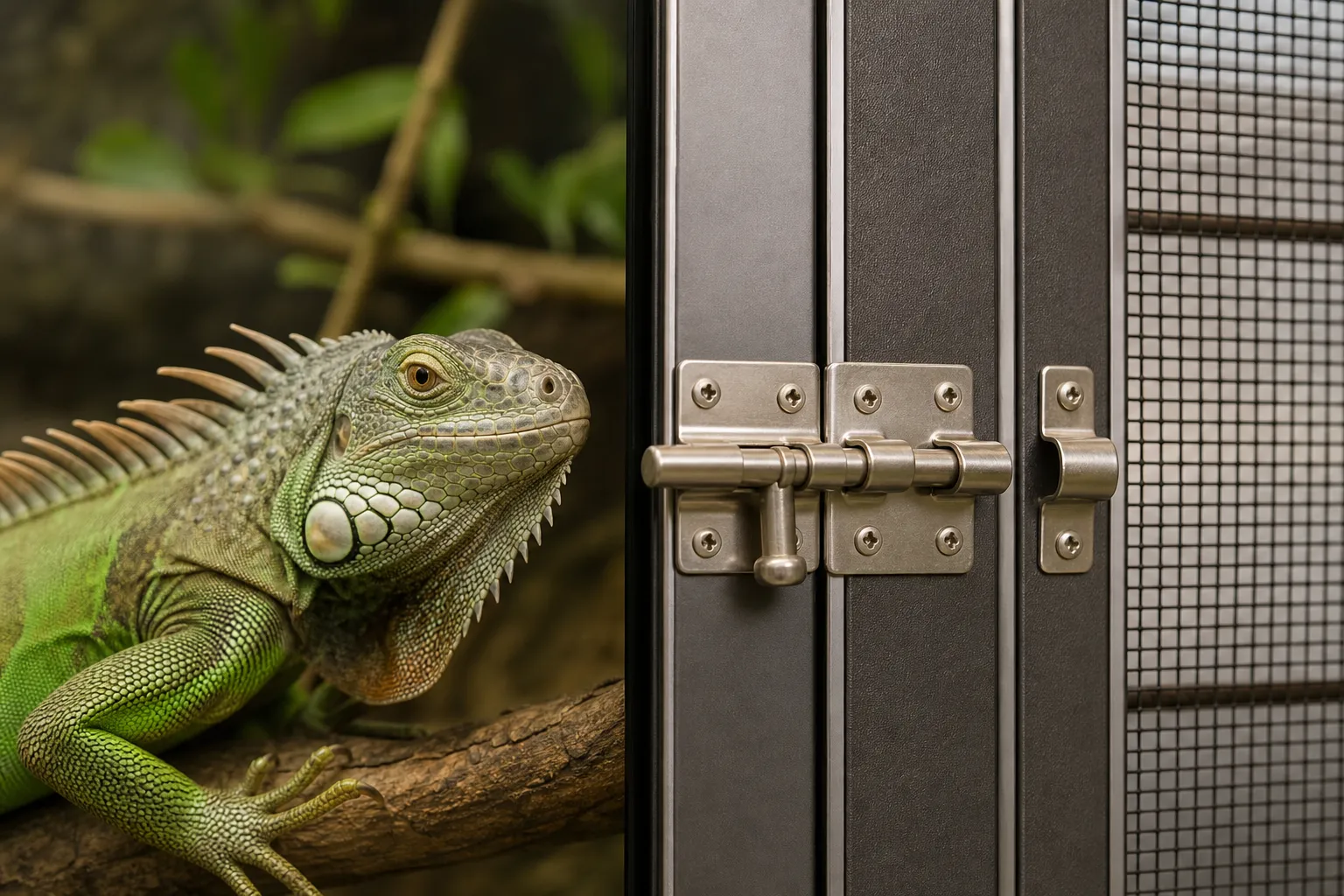
Doors are the most common escape point. Hinges that sag or brackets that bend will create gaps over time. Use sturdy hinges and make sure the door sits flush in its frame. If the enclosure is glass or Plexiglas, a framed screen door or a reinforced metal door keeps climbing iguanas from pushing edges inward. Securely fastened hinges and regular inspections prevent gradual loosening that a curious animal can exploit.
Vents And Mesh Panels: Balance Security With Airflow
Good ventilation is essential, but vents and mesh panels can be weak spots if the mesh is too large or poorly attached. Merck Veterinary Manual notes that mesh tops can reduce ventilation if not specified properly, so choose mesh with openings too small for the iguana to pass and fasten it continuously to the frame. Reinforce cutouts with hardware cloth or welded wire and check attachment points where panels meet the frame; these joints take the most stress.
Cable And Utility Openings: Keep Cords Escape-Proof
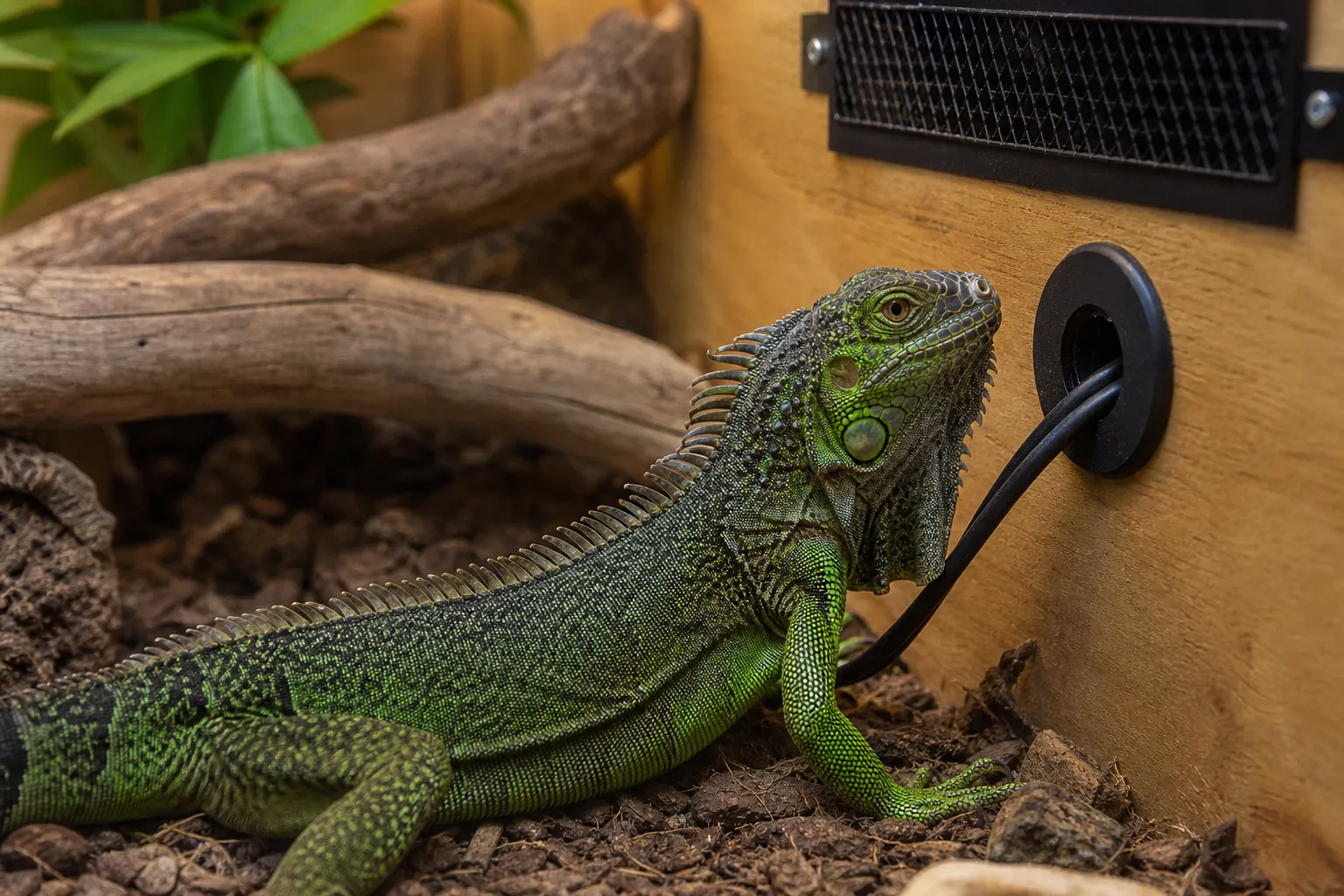
Cables for lights, heaters, and sensors must pass through the enclosure without leaving a gap. Rather than leaving a raw notch, create a sealed pass-through: drill a snug hole and use a rubber grommet or a fitted collar so the iguana cannot work the cord loose or squeeze through. Secure cords on the outside of the enclosure and avoid loose loops inside where an animal could tangle or pull at the opening.
Latches And Fasteners: Choosing What Won’t Fail
Choose latches that resist nudging and cannot be pried open by a tail or snout. Corrosion-resistant hardware is best because rust weakens fasteners. For DIY or retrofit projects, consider multiple independent fastenings (for example, a primary latch plus a secondary clip) so a single failure does not equal an escape. Search Reptile Latches
Frame Seals, Edges And Gaps: Small Openings Matter
Even narrow gaps around a frame can allow a determined iguana to lever or wedge free. Inspect corner joints, seals between panels, and the perimeter where the bottom meets the walls. Glass or Plexiglas setups should include visual breaks at eye level to reduce repetitive rubbing that can damage seals. Fill or reinforce gaps with trim, sealant compatible with reptiles, or metal edging that resists chewing and wear.
Interior Fixtures And Climbing Furniture
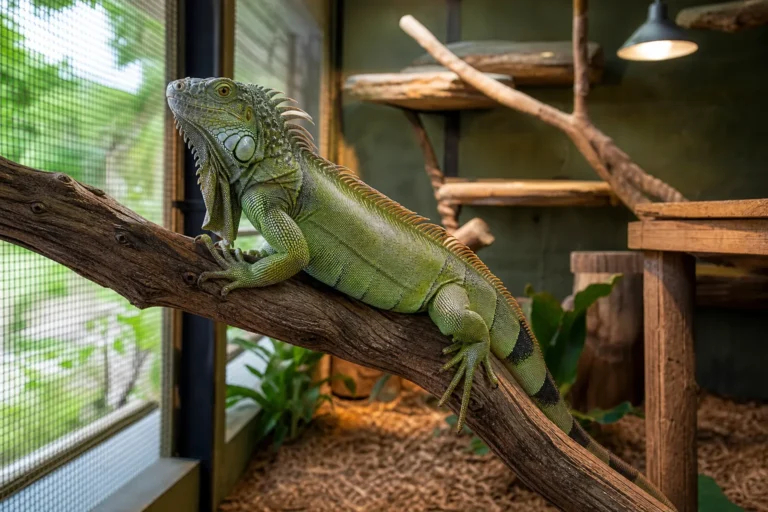
Branches, platforms and hides must be secured so they cannot be used as leverage to force doors or panels. VCA recommends sturdy branches that will not fall; anchor climbing furniture to the structure rather than simply resting it on the floor. If a branch meets a screen or door, add clearance or a guard so the iguana cannot apply force directly against an enclosure seam.
Routine Checks And Recordkeeping
Make a simple log: check doors, vents, latches, and cable pass-throughs weekly and after any strong weather event or move. Note corrosion, loosening, or new chew marks. Keep photos and a short repair history to spot recurring failures. Pair these checks with regular husbandry routines from care pages like Iguana Care and species pages such as Green Iguana for a complete maintenance plan.
Practical Fixes And Where To Look Next
Start with quick fixes: tighten screws, replace rusty fasteners, and add a secondary latch. For recurring problems, upgrade mesh, refit the door frame, or replace worn panels. If you need parts, search for corrosion-resistant latches, gasket materials, and cable grommets. Explore Topics for additional habitat ideas and resources that work with your enclosure type.
Conclusion
Escape-proofing is a mix of good design, routine inspection, and simple repairs. Focus on doors, vents, and cable openings, and document changes so small problems don’t become escapes. Use secure materials and maintain ventilation and climbing needs to keep your iguana safe and comfortable.
Sources And Further Reading
- VCA Animal Hospitals — Know Your Pet Iguanas Housing
- Merck Veterinary Manual — Reptiles Management And Husbandry Of Reptiles
THE JUNGLE SUPPLY EDIT
Shop This Article
Useful Checks And Finishing Touches For Your Setup

Zoo Med ReptiTemp Infrared Thermometer
Quick surface spot checks on basking branches and platforms.
Measures surfaces, not air temperature. Follow the distance guidance.
View On Amazon (opens in a new tab)
Master Lock 630D Combination Lock
A small lock to compare for compatible cabinet or enclosure hardware.
Check shackle fit; a lock cannot make an unsuitable enclosure escape-proof.
View On Amazon (opens in a new tab)
VELCRO ONE-WRAP Green Ties · 6 Pack
Reusable ties for tidying equipment cords outside the habitat.
Keep ties and bundled cables outside chewing reach; do not support climbing loads.
View On Amazon (opens in a new tab)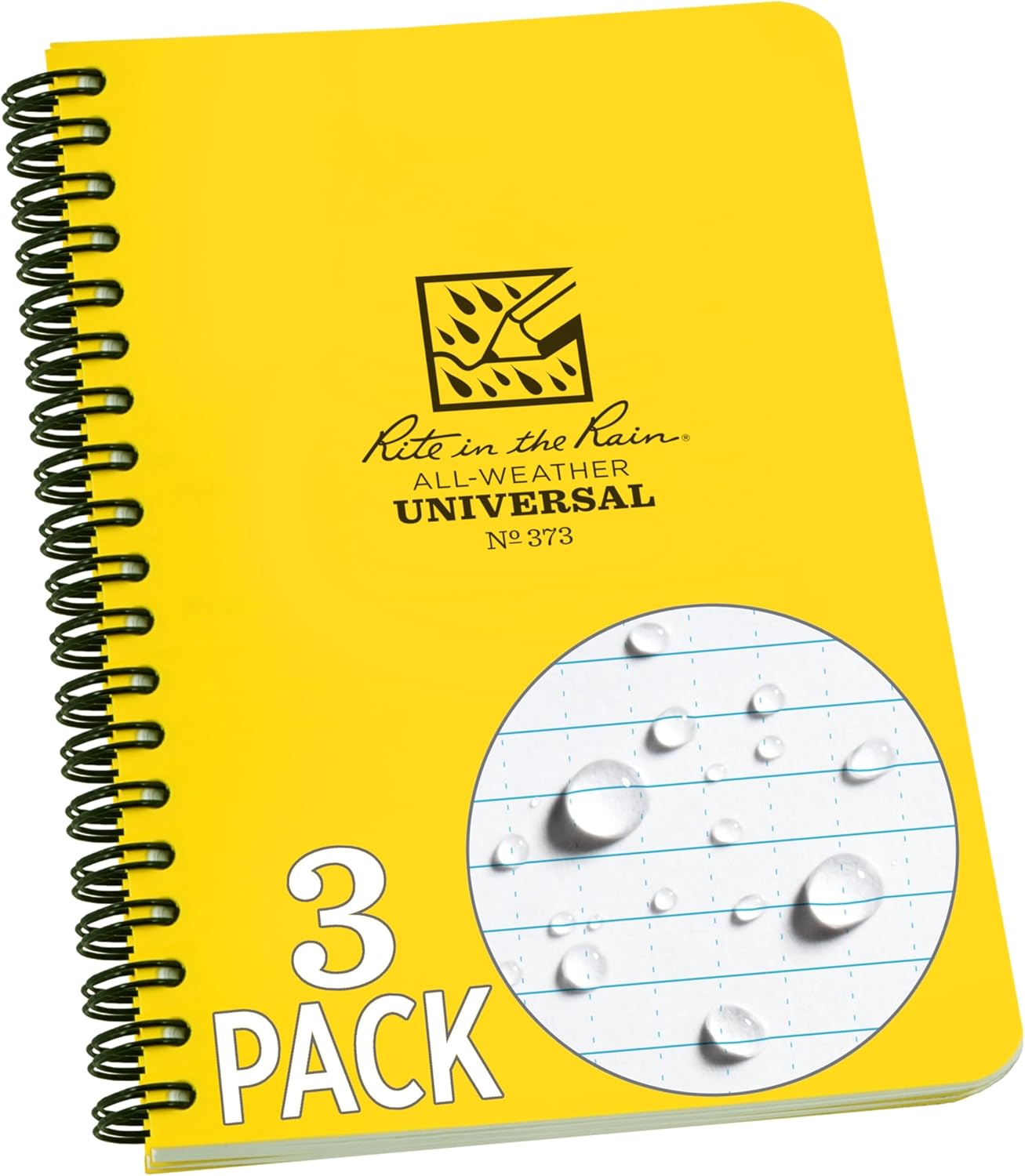
Rite In The Rain Notebooks · 3 Pack
Weatherproof notebooks for temperature logs and daily care observations.
Use for records to discuss with your reptile veterinarian when needed.
View On Amazon (opens in a new tab)Compare sizes, compatibility and current availability on Amazon. Choose what fits your existing setup.