Introduction
Choosing the right thermostat helps keep an iguana’s enclosure stable and safe. This guide covers control types you’ll commonly see, where to put sensors for reliable readings, and simple failure checks to catch problems early. Use this advice alongside general habitat guidance and UV-B needs so your pet can bask and digest properly. Iguana care basics are a good place to start.
Why Precise Temperature Control Matters
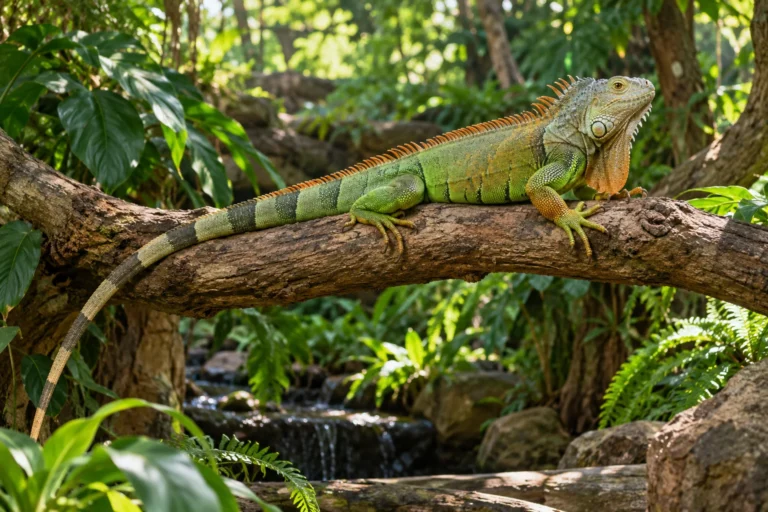
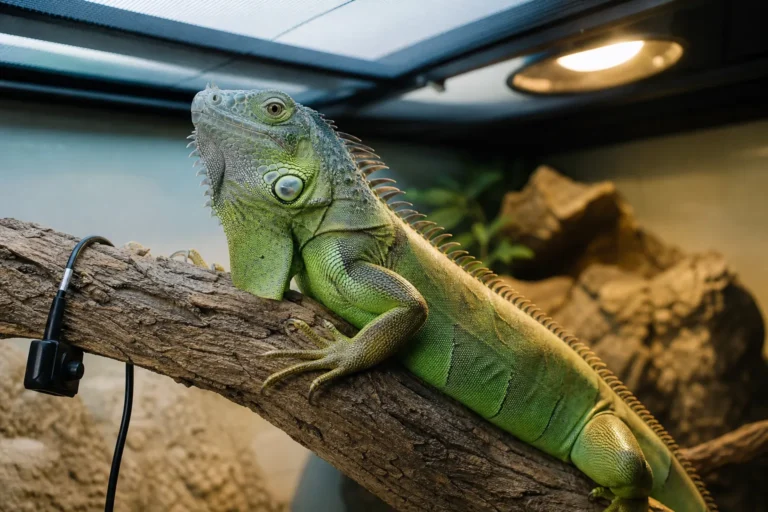
Iguanas are ectotherms: they rely on external heat to regulate their body temperature. A dedicated heat source and a thermal gradient let them move between warm and cooler zones as needed. Keeping a stable warm basking area and a cooler retreat supports normal activity and appetite. For enclosure setup reminders and the need for UV-B light to aid calcium absorption, see VCA’s care guidance. .
Compatible Thermostat Types
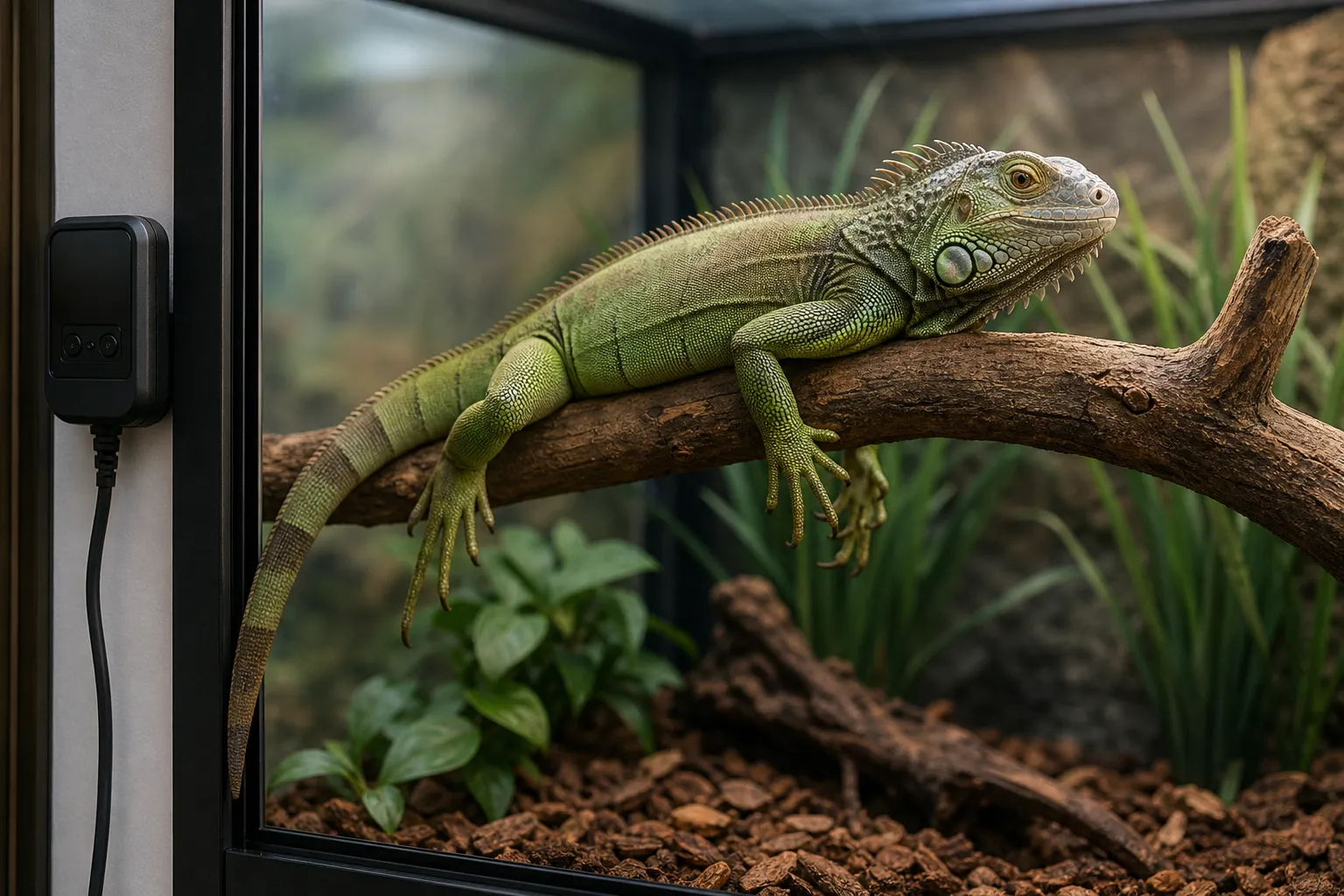
Common control styles include simple on/off thermostats that switch power to a heater at a set temperature and digital models that use a separate probe to sense enclosure temperature. Digital units often offer finer set points and clearer displays. Choose a control that is rated for the type of heater you use and that can read a remote probe placed at the basking site. Example: Digital Reptile Thermostat
Matching Controls To Heat Sources
Decide the control by the heat source. Ceramic heat-emitting bulbs and heat pads are both commonly used; VCA lists ceramic bulbs and under-tank pads as viable heat options and warns against hot rocks. Make sure any thermostat you use is compatible with the heater type and its electrical load. If you need help choosing fixtures or climbing branches for basking, check size and load suitability before mounting a heat source near the branch. .
Sensor Placement For Accurate Readings
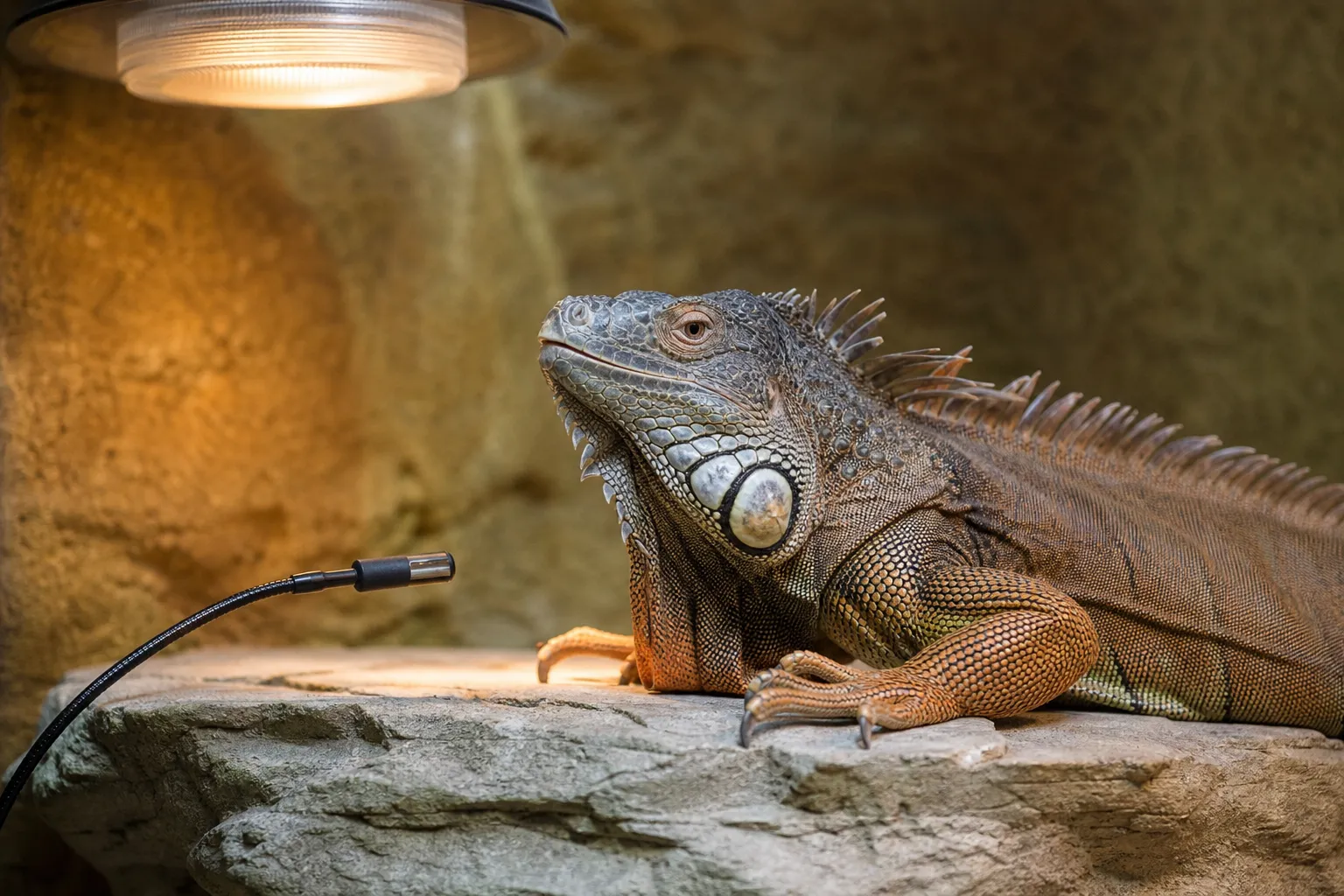
Where you put the thermostat probe is as important as the device itself. Place the sensor at the height and location of the intended basking spot so the thermostat reads the temperature your iguana feels. Keep the probe out of direct contact with the bulb or heat element and avoid trapping it in substrate; VCA recommends spacing heat bulbs 10–12 inches from the top of the cage to prevent burns, a useful reference when positioning fixtures and probes. Use a branch or platform near the warm zone so the sensor and animal share similar microclimates.
Creating And Monitoring A Heat Gradient
Set up a warm basking zone and a cooler area so your iguana can thermoregulate. VCA advises a heat source and a gradient in the enclosure and suggests monitoring temperatures closely with thermometers. Use at least two temperature checks—one in the warm area and one in the cool area—to confirm the gradient is stable. Place one thermometer at the basking site and another near the cooler end to verify the thermostat is producing the intended zones.
Failure Checks And Redundancy Steps
Routine checks reduce the risk of sudden temperature failures. Verify that the heater cycles when the thermostat setting changes and compare the probe reading against an independent thermometer. Keep an eye on enclosure behavior: if readings jump or the animal acts unusually, power down and inspect wiring and connections. Consider a secondary thermometer or a spare heat source you can switch on quickly in an outage. VCA emphasizes regular monitoring of cage temperature as part of proper housing care.
Common Failure Signs To Watch For
Iguana behavior often signals thermal problems. VCA notes iguanas slow down in cooler temperatures and are more active when warmer. Watch for prolonged lethargy, refusal to bask, or seeking oddly warm or cold spots—these changes can indicate thermostat or heater failure. Also inspect for heat-related injuries by ensuring bulbs are kept at safe distances from the animal to prevent burns.
Maintenance And Replacement Recommendations
Check thermostat probes and wiring periodically for damage or corrosion. Clean probes gently if dusty, and re-check calibration against a trusted thermometer. Replace any controller that shows inconsistent on/off cycling or fails to hold a stable temperature. Regular monitoring and a plan for backup heat keep an iguana’s environment stable and reduce stress to the animal.
Conclusion
A careful thermostat choice, correct probe placement at the basking spot, and routine failure checks will help your iguana maintain healthy thermoregulation. Pair these steps with proper UV-B and habitat setup for the best outcomes. For more on general iguana care and species specifics, explore additional resources below.
Sources And Further Reading
- VCA Animal Hospitals — Know Your Pet Iguanas Owning
- VCA Animal Hospitals — Know Your Pet Iguanas Housing
THE JUNGLE SUPPLY EDIT
Shop This Article
Tools For Measuring And Managing Your Habitat

Zoo Med ReptiTemp Infrared Thermometer
Quick surface spot checks on basking branches and platforms.
Measures surfaces, not air temperature. Follow the distance guidance.
View On Amazon (opens in a new tab)
Zoo Med Digital Combo Gauge
Remote-probe temperature and humidity monitoring in one unit.
Place each probe as instructed; keep the display away from splashes.
View On Amazon (opens in a new tab)
Inkbird ITC-308 Temperature Controller
An on/off temperature controller to compare for compatible equipment.
Not a dimming thermostat. Confirm heater compatibility and probe placement.
View On Amazon (opens in a new tab)
Rite In The Rain Notebooks · 3 Pack
Weatherproof notebooks for temperature logs and daily care observations.
Use for records to discuss with your reptile veterinarian when needed.
View On Amazon (opens in a new tab)Compare sizes, compatibility and current availability on Amazon. Choose what fits your existing setup.
As an Amazon Associate I earn from qualifying purchases.