As an Amazon Associate I earn from qualifying purchases.
Fruit is appealing to many green iguanas but should not replace leafy greens. Wild green iguanas eat mostly leaves, with some fruits and flowers; captive feeding should reflect that balance. This article clarifies why fruit is a minor component, summarizes differing veterinary guidance on portions, and gives practical, vet-sourced tips for offering fruit safely and sensibly.
What Fruit Looks Like In The Wild Diet
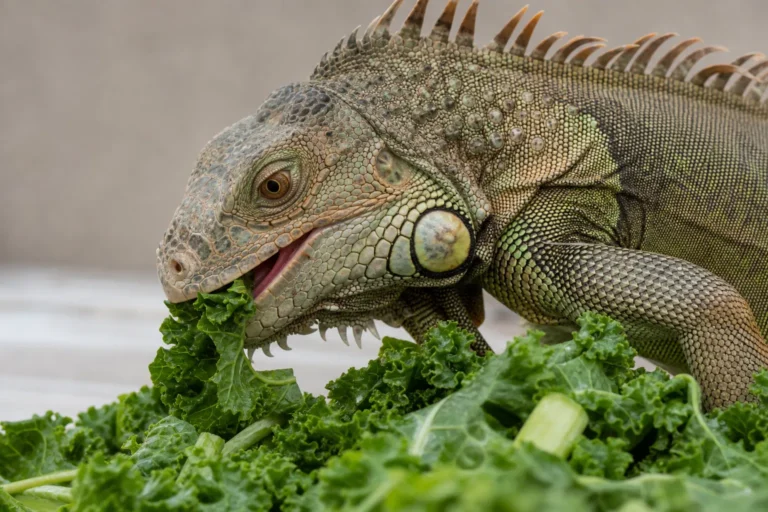
Green iguanas are folivores — animals that primarily eat leaves — and in nature they consume leaves, plus some fruits and flowers. Offering occasional fruit in captivity imitates that natural variety but should not change the fundamental leaf-heavy pattern of feeding. For this natural-history perspective and feeding context, see VCA Animal Hospitals and LaFeber’s green iguana guidance.
Why Dark Leafy Greens Should Remain The Bulk
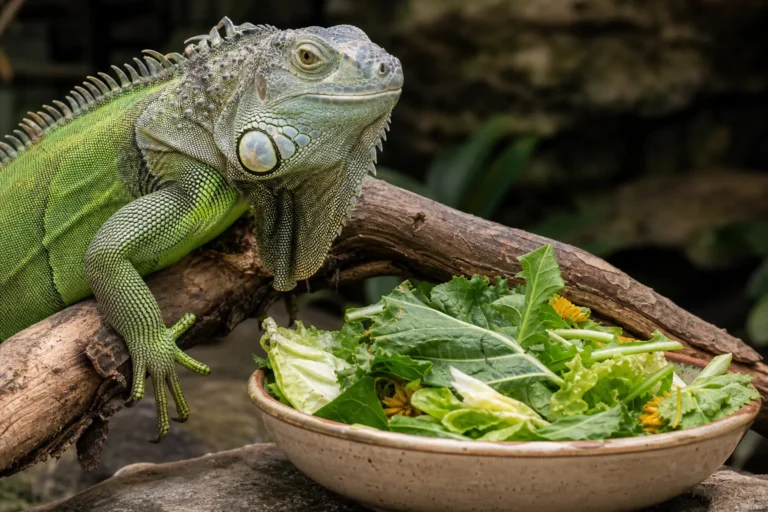
Veterinarians advise that most of an adult green iguana’s diet be dark green leafy vegetables. These leaves provide the fiber and mineral profile iguanas rely on and support hindgut fermentation, the microbial digestion system iguanas use to extract nutrients from high?fiber diets. Keep dark leafy items as the primary plate components, with fruit as an accent, not a staple.
How Veterinarians Define “Treat” — And Why Guidance Varies
Veterinary sources do not all give the same numeric limit for fruit. One clinical guide advises fruit should be under about 20% of the total diet, while another, species-focused sheet recommends a much smaller share (around 5%). Both agree: fruit is a minority component. These differences show clinical judgment varies; use your veterinarian’s recommendation for your individual iguana.
Fruit Nutritional Limits: Water-Rich, Often Nutrient-Poor
Many fruits are high in water and lower in the vitamins and mineral balance iguanas need compared with dark greens. For that reason, veterinarians suggest limiting fruit and preferring nutrient-dense greens. Where fruit is offered, select those noted as acceptable by reptile-care sources and treat fruit as a topping on vegetable mixes rather than a main course.
Serving Style: Top Dressing, Texture, And Palatability
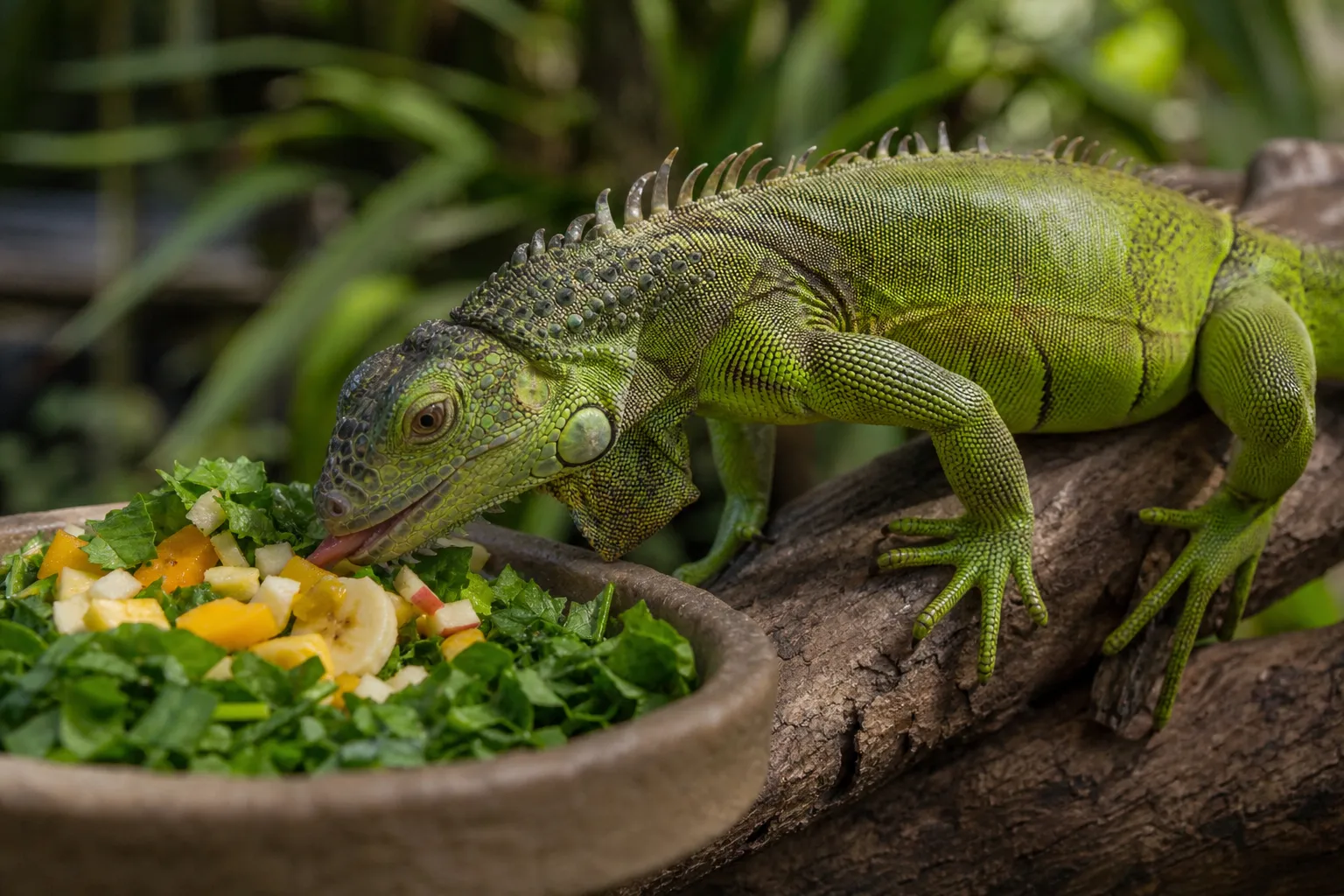
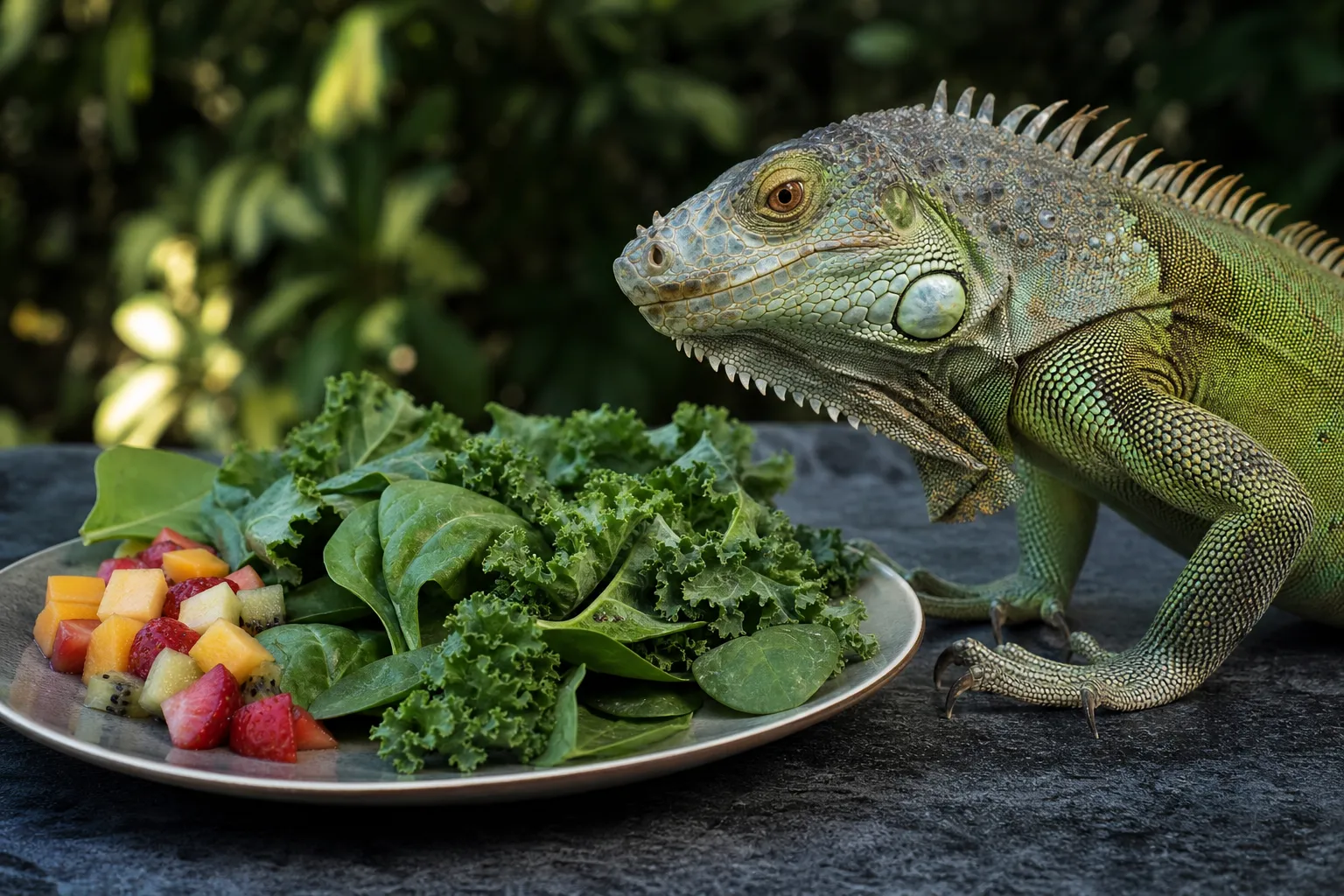
Fruit is best presented as a small top dressing: a thin layer of chopped fruit over a bowl of greens. This encourages iguanas to sample the fruit while still eating leaves. Edible flowers may also be offered occasionally as enrichment. Always wash produce before serving to remove debris and contaminants.
Age Differences: Juveniles Need Focused Nutrition
Young, growing iguanas have different needs than adults. Clinical guidance notes juveniles often require more frequent feeding and careful calcium supplementation to support bone growth; some professionals allow small amounts of legumes or formulated foods for growing lizards. Follow age-specific veterinary advice and ensure housing, temperature, and UVB are optimized because husbandry affects appetite and nutrient use.
Choosing Fruits And Monitoring Your Iguana
When you do offer fruit, pick items that appear on veterinary lists and rotate them to avoid reliance on one sweet food. LaFeber highlights nutrient-dense choices such as papaya, melon, and banana as acceptable fruit options; VCA provides a broader list that includes apples, pears, mango, grapes, and berries. Use those lists as a reference for variety, and keep portions visibly small compared with the greens beneath. Present fruit as enrichment, not a core food, and keep flower treats occasional.
Practical Monitoring, Tools, And Range Of Expert Opinion
Track how your iguana responds to treats by watching appetite, stool quality, activity, and body condition. Good husbandry—temperature, UVB, and reduced stress—directly affects feeding behavior and nutrient use, as described in reptile nutrition guidance. Because clinical recommendations differ (for example, VCA notes fruit may be less than about 20% while LaFeber recommends a much smaller 5% share), use those ranges as context and work with your veterinarian to set a plan for your individual animal. A simple kitchen scale helps record portion choices and monitor weight trends over time; shallow dishes that place fruit on top of greens encourage leafy consumption first.
Common Misunderstandings And Risks
People sometimes assume iguanas can safely eat any human food or that fruit makes an acceptable daily snack. Veterinarians warn against diets high in animal protein or commercial pet foods for carnivores; these can deliver inappropriate protein and minerals. Fruit should not displace calcium-rich greens or proper UVB exposure, both essential to prevent nutritional disease.
Practical Tools, Portioning Help, And A Small Product Note
Small tools make it easier to manage treats: a compact digital kitchen scale helps track portions, and shallow, sturdy feeding dishes separate fruit from greens so the iguana must feed through leaves to reach sweet items. Search options: Digital kitchen scales for portion control. For broader care context, see the general care guide on this site: IguanaSale — Iguana Care and the species overview: IguanaSale — Green Iguana.
Conclusion
Fruit can be a safe, enriching treat for a green iguana when used sparingly and presented atop a plate of dark leafy greens. Veterinary sources disagree on exact percentages, but all emphasize that leaves remain the core diet and that husbandry and calcium support are essential. Talk with your reptile veterinarian to set a diet plan for your individual iguana.
Sources And Further Reading
- VCA Animal Hospitals — Know Your Pet Iguanas Feeding
- lafeber.com — Vet Basic Information Sheet For Green Or Common Iguana
- Merck Veterinary Manual — Nutrition Exotic And Zoo Animals Nutrition In Reptiles
THE JUNGLE SUPPLY EDIT
Shop This Article
Practical Tools For Preparing And Serving Greens

OXO Good Grips Salad Spinner
A useful prep tool for washing and draining leafy greens.
Keep reptile-care tools separate from equipment used for people’s meals.
View On Amazon (opens in a new tab)
OXO Vegetable And Onion Chopper
A prep tool for cutting suitable vegetables into manageable pieces.
This is a chopper, not a food recommendation; choose ingredients by species.
View On Amazon (opens in a new tab)
OXO Silicone-Head Tongs · 2 Pack
Kitchen-style tongs for portioning greens and arranging food in dishes.
Use for meal preparation; do not use them to restrain or force-feed a reptile.
View On Amazon (opens in a new tab)
Zoo Med Repti Rock Food Dish · X-Large
A broad food-dish option for comparing feeding space and placement.
Confirm dimensions on Amazon and choose a stable, accessible position.
View On Amazon (opens in a new tab)Compare sizes, compatibility and current availability on Amazon. Choose what fits your existing setup.