
Meet your remarkable reptile neighbours
Tree climbers, island specialists and impressive rock iguanas: there is more than one way to be an iguana. Meet six species featured on IguanaSale, learn what sets them apart, and find the right guide to explore next.
This is a species introduction, not a shopping list. Appearance alone cannot confirm an animal’s identity, care needs or suitability for your home.
The tree climber
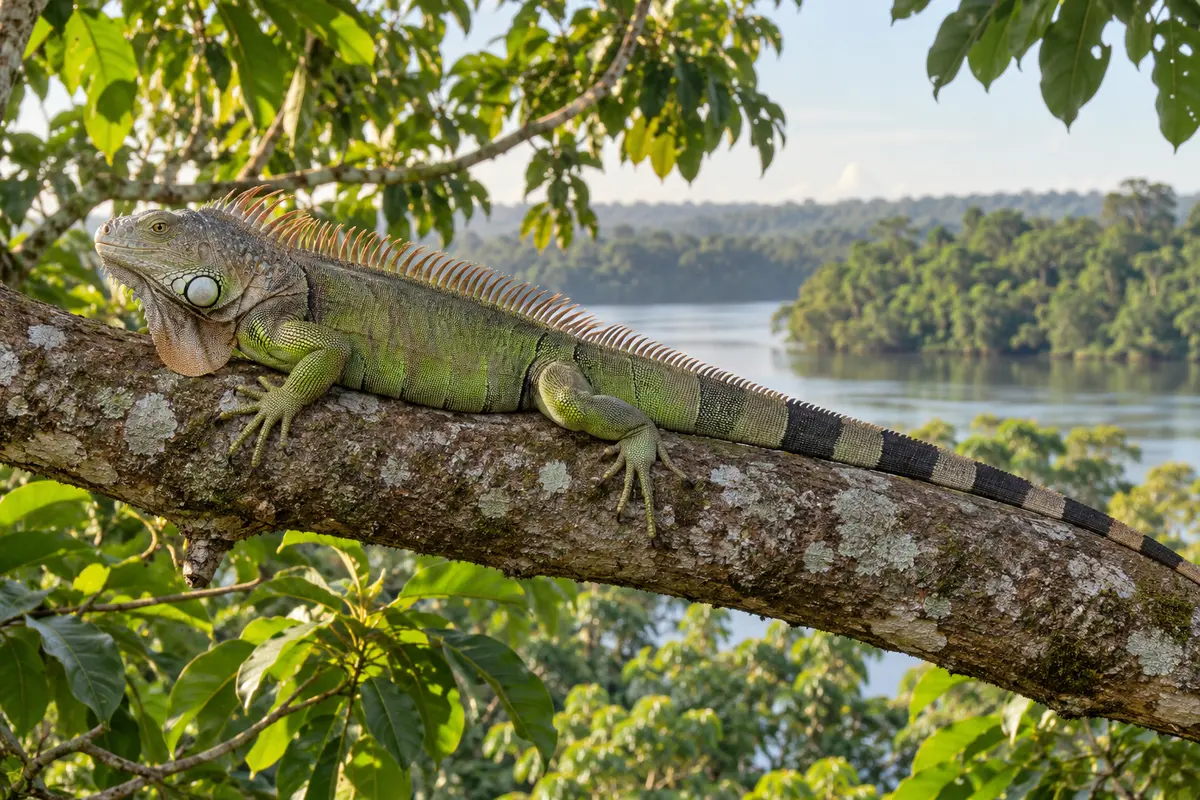
Green Iguana
Iguana iguana
A long tail, a dorsal crest and an impressive climbing ability make this familiar iguana distinctive. Green iguanas come from tropical parts of the Americas and are arboreal: trees and elevated resting places are central to their way of life.
For keepers, the important questions are adult space, usable climbing height, appropriate heat and UVB, and a consistent plant-based diet. A small juvenile becomes a substantial long-term responsibility.
Explore the Green Iguana guide →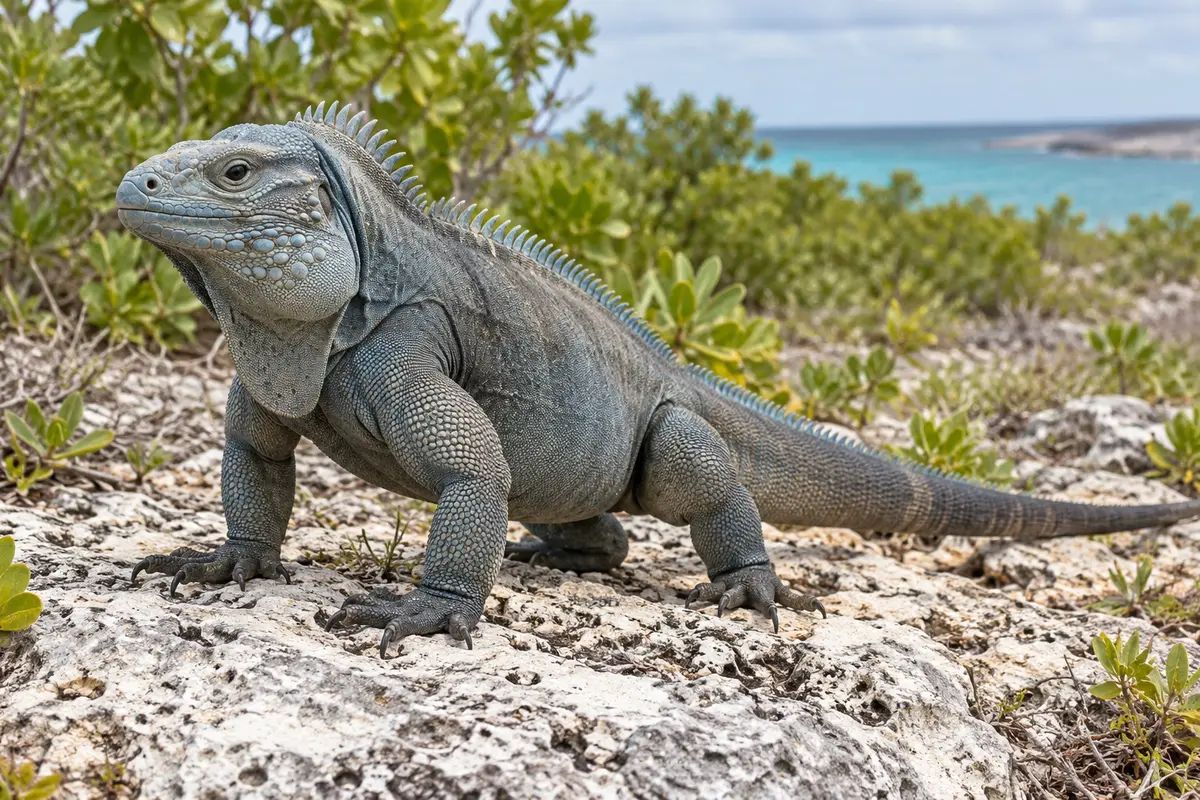
The island specialist
Blue Iguana
Cyclura lewisi
The Grand Cayman blue iguana is a heavy-bodied, ground-dwelling rock iguana found naturally only on Grand Cayman. Its colour can range from grey to striking blue; it inhabits dry, rocky landscapes and spends time basking in the sun.
This endangered species has an important conservation story. Learning about habitat protection and recovery work is a better starting point than assuming every blue-looking lizard is the same species.
Explore the Blue Iguana guide →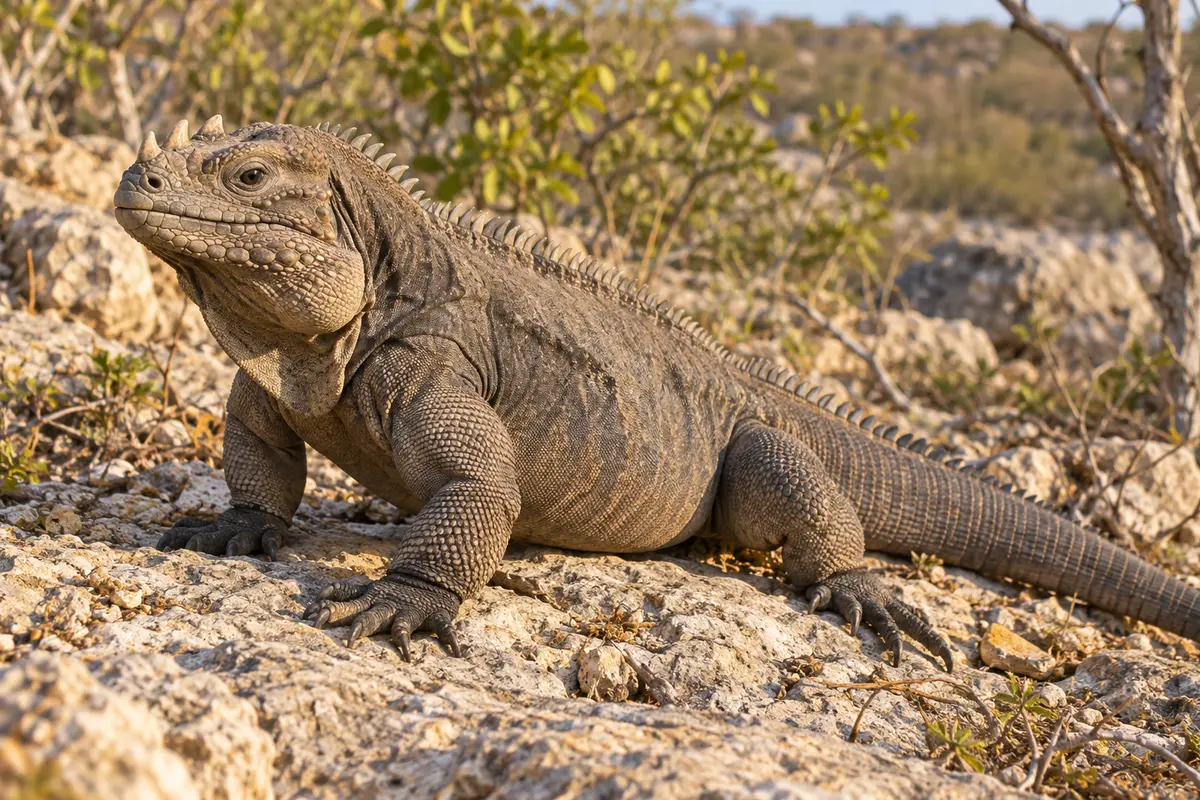
The rock iguana
Rhinoceros Iguana
Cyclura cornuta
The rhinoceros iguana is native to Hispaniola, the island shared by Haiti and the Dominican Republic. It lives in rocky habitats, including dry forest, scrub and coastal areas, using natural shelter such as rock crevices.
Its sturdy appearance is memorable, but its wild future is fragile. Habitat loss, hunting and introduced animals are among the threats described by the International Iguana Foundation.
Explore the Rhinoceros Iguana guide →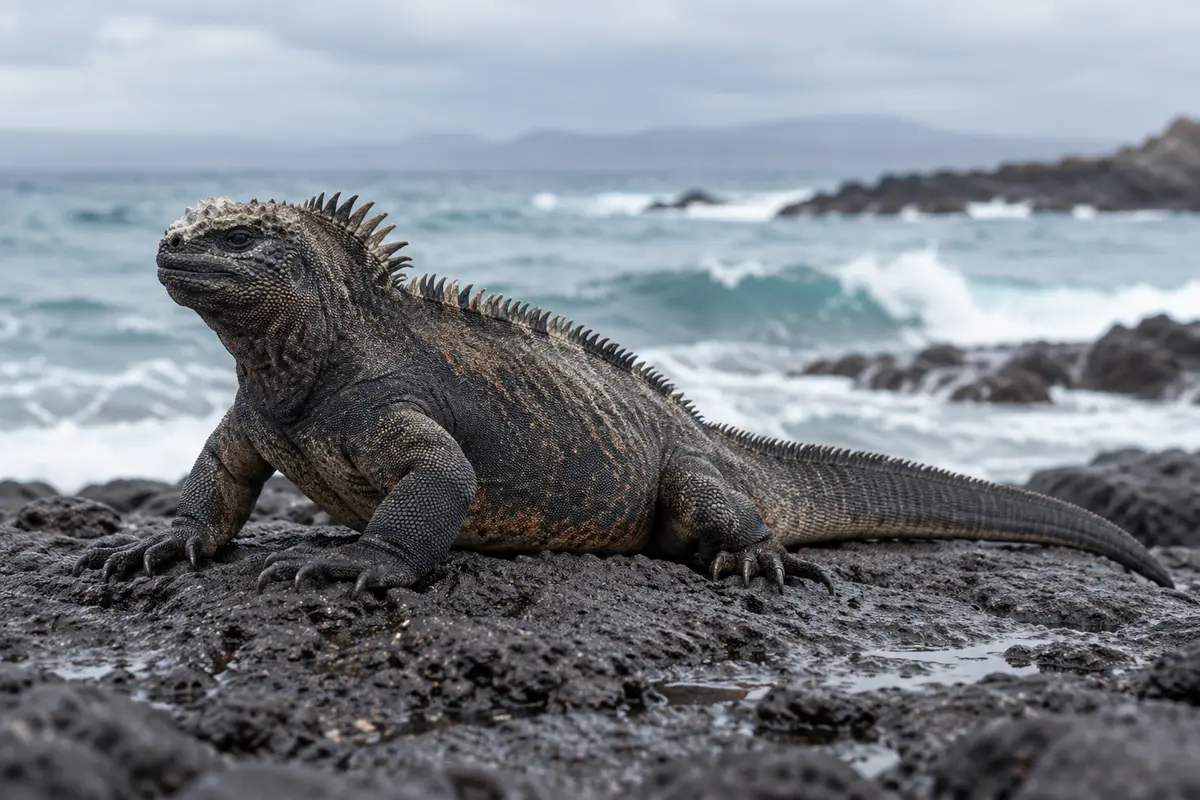
The ocean forager
Marine Iguana
Amblyrhynchus cristatus
Found naturally in the Galápagos Islands, this remarkable iguana feeds on marine algae. Its flattened tail helps it swim, while strong claws grip the rocky shore. After feeding in cool water, it warms up by basking on sunlit lava.
Marine iguanas show how specialised an iguana can become. Explore their coastal world and the conservation work protecting it, rather than treating them as ordinary pet reptiles.
Explore marine iguana conservation →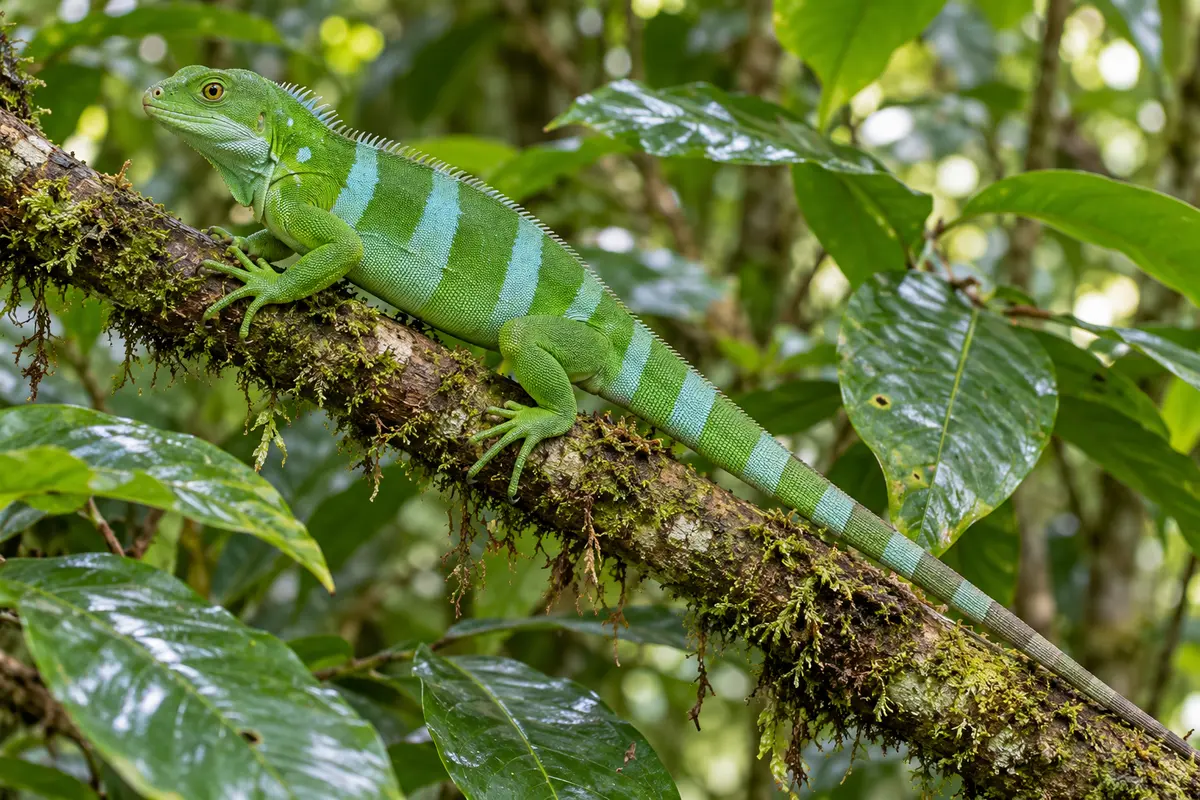
The Pacific branch dweller
Lau Banded Iguana
Brachylophus fasciatus
The banded iguanas of Fiji introduce a different branch of the iguana family. Male Lau banded iguanas are known for their green colouring and pale bands. These slender animals spend much of their time among trees and leafy vegetation.
Fiji has several distinct iguana species, so precise names matter. San Diego Zoo Wildlife Alliance describes the Lau banded, Fiji banded and Fiji crested iguanas separately, alongside work to protect their island populations.
Explore Fiji’s iguanas with San Diego Zoo →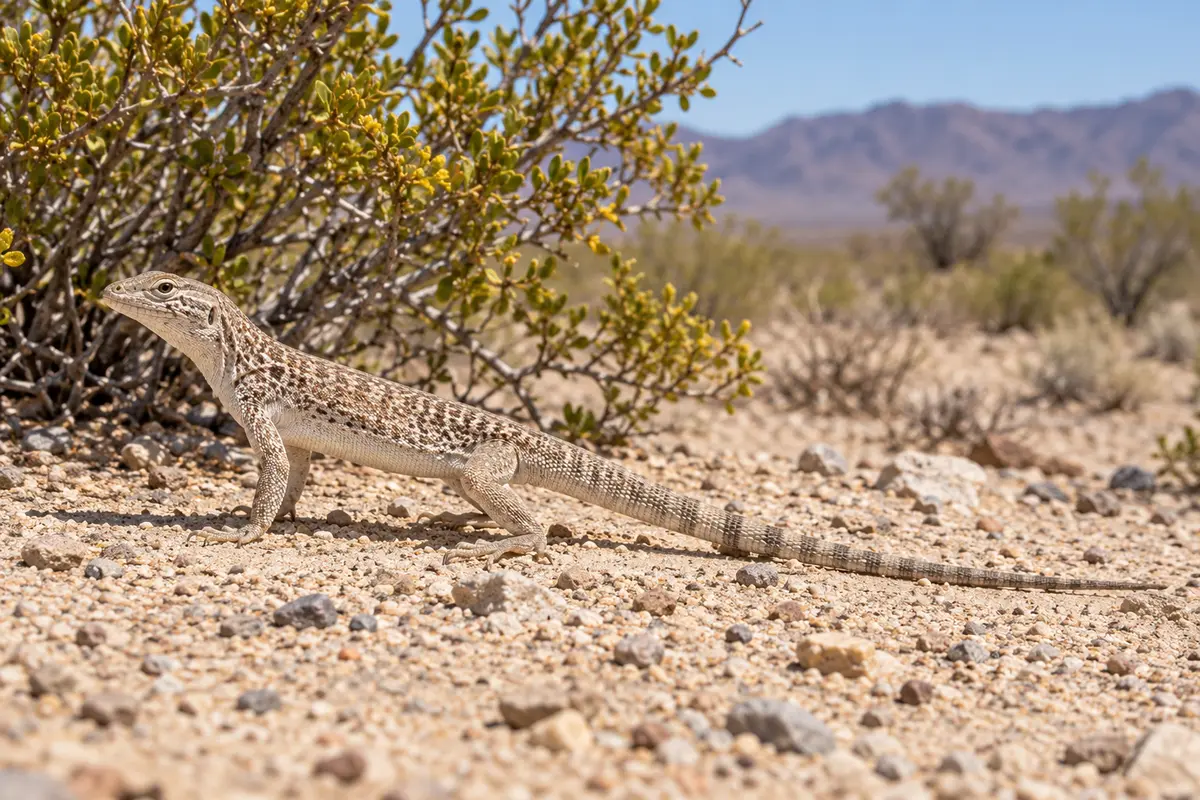
The desert specialist
Desert Iguana
Dipsosaurus dorsalis
Pale colouring, subtle brown patterning and a long tail help distinguish this desert dweller from the large tropical species. It lives in the southwestern United States and northwestern Mexico, often in sandy places with creosote bushes.
The Arizona-Sonora Desert Museum describes a lizard that uses shrubs for food and shelter and burrows to escape extremes. Its dry-land lifestyle is another reason a single care recipe cannot fit every iguana.
Explore the Desert Museum’s species guide →“Blue iguana” is a common name for Cyclura lewisi, but a colour label by itself is not enough to identify an animal. Ask for a scientific name and reliable origin information. Do not apply a green-iguana care plan to a rock iguana simply because their colours look similar.
Six species at a glance
| Species | Natural setting | What to explore |
|---|---|---|
| Green Iguana Iguana iguana | Tropical Americas; tree-dwelling | Climbing space, adult size and everyday care |
| Grand Cayman Blue Iguana Cyclura lewisi | Grand Cayman; rocky ground and dry forest | Island ecology, identification and conservation |
| Rhinoceros Iguana Cyclura cornuta | Hispaniola; rocky dry forest and scrub | Rock-iguana habitats and protection of wild populations |
| Marine Iguana Amblyrhynchus cristatus | Galápagos Islands; volcanic shores and coastal waters | Algae feeding, swimming and coastal conservation |
| Lau Banded Iguana Brachylophus fasciatus | Pacific islands of Fiji; leafy tree habitats | Banded-iguana identity and island conservation |
| Desert Iguana Dipsosaurus dorsalis | Southwestern United States and northwestern Mexico; sandy scrub | Creosote-bush habitats and desert adaptations |
Preparing a home for a Green Iguana?
Affiliate disclosure: This page contains paid links. As an Amazon Associate I earn from qualifying purchases.
Start with the Iguana Care Guide and enclosure planning guide before choosing equipment. A Zoo Med Digital Thermometer and Humidity Gauge (paid link) can help monitor conditions. Compare warm and cool zones with additional probes.
For UVB planning, you can compare Zoo Med ReptiSun T5 HO UVB fixtures on Amazon (paid link). Match lamp output, distance and fixture size to your enclosure; these are green-iguana planning links, not a universal shopping list for the wildlife species above.
Get to know an iguana responsibly
Start with the scientific name. Compare the full animal, its history and reliable species information rather than relying on a single photograph or sales label.
Ask where the species lives and how it uses space. A tree-dwelling animal and a ground-dwelling island species should not be treated as interchangeable.
Work through space, ongoing costs, daily care and access to a reptile veterinarian. Check current local requirements and the animal’s lawful origin before making arrangements.
Enjoy them beyond the enclosure
You do not need to keep an iguana to appreciate one. Learn through reputable zoos, species guides and conservation organisations. Observe wild animals without feeding, chasing or handling them, and support work that protects their habitat. Never release a pet into the wild.
For Grand Cayman blue iguanas, the National Trust for the Cayman Islands describes ongoing conservation work. The International Iguana Foundation provides background on rhinoceros iguanas and the threats they face. These are useful next stops for readers interested in wild populations.
Species references
- VCA Animal Hospitals: Owning Green Iguanas
- Smithsonian’s National Zoo: Grand Cayman Blue Iguana
- National Trust for the Cayman Islands: Blue Iguana Conservation
- International Iguana Foundation: Rhinoceros Iguana
- Galápagos Conservation Trust: Marine Iguana
- San Diego Zoo: Iguanas, including Fiji’s banded iguanas
- Arizona-Sonora Desert Museum: Desert Iguana
Updated October 21, 2026.