As an Amazon Associate I earn from qualifying purchases.
Humidity is one part of a green iguana’s enclosure, not a reason to keep every surface wet. A useful routine combines readings with attention to airflow, temperature and clean, dry furnishings. The available VCA housing excerpt does not give a numerical humidity target, so ask a reptile veterinarian for a range suited to your animal rather than borrowing a number for a different species.
Start With The Right Species
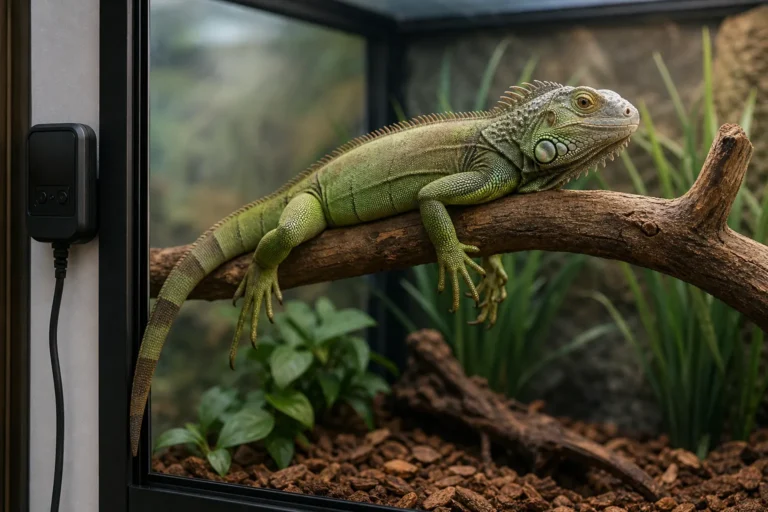
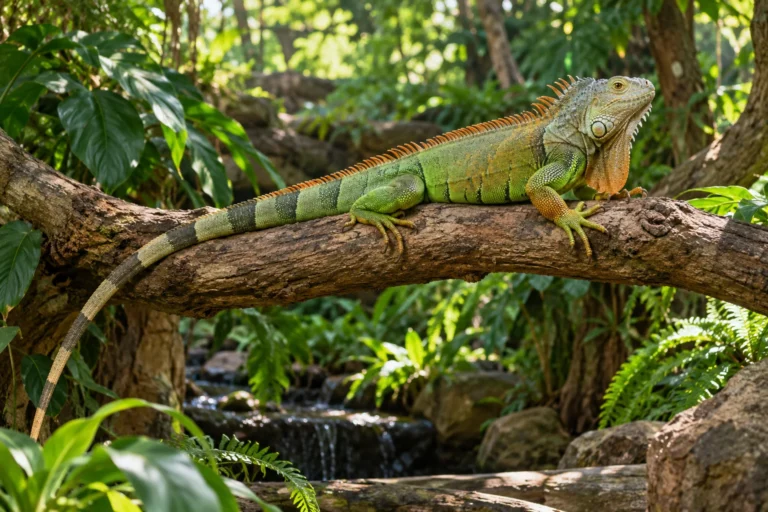
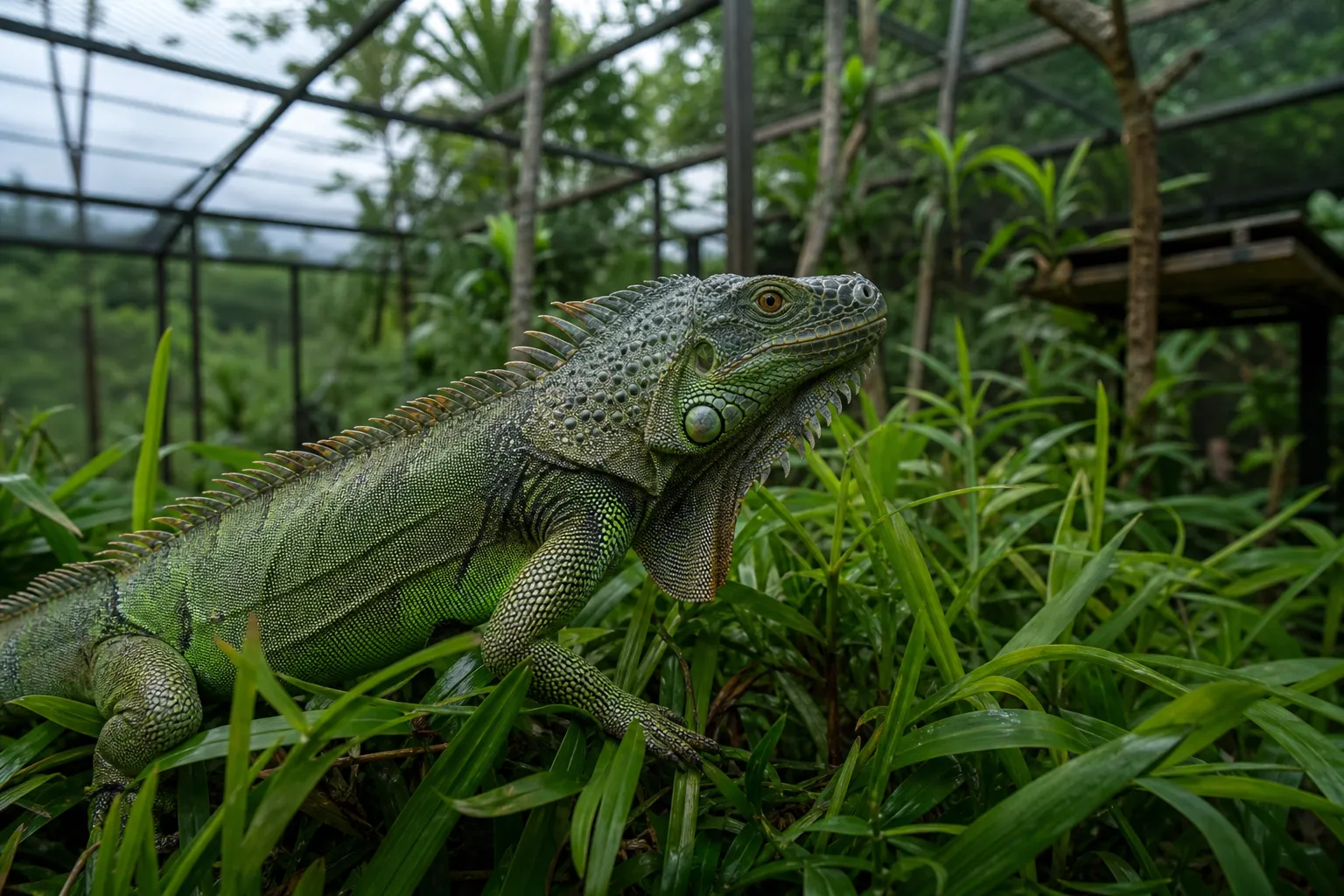
The common green iguana, Iguana iguana, is an arboreal lizard, meaning it lives in trees and bushes. It needs room to move horizontally and vertically, including a branch for climbing and basking. The describes its natural range from central Mexico to Brazil, including Caribbean islands.
Do not assume that a target for a green iguana applies to another iguana species. Confirm the animal’s identification and discuss its specific habitat needs with a reptile veterinarian. The green iguana guide is a useful starting point for species identification.
Make The Reading Useful
A humidity gauge reports relative humidity: how much water vapor is in the air compared with the amount the air could hold at that temperature. Record the number with the time and enclosure temperature. A single reading is only a snapshot; a short log helps you discuss patterns with your veterinarian.
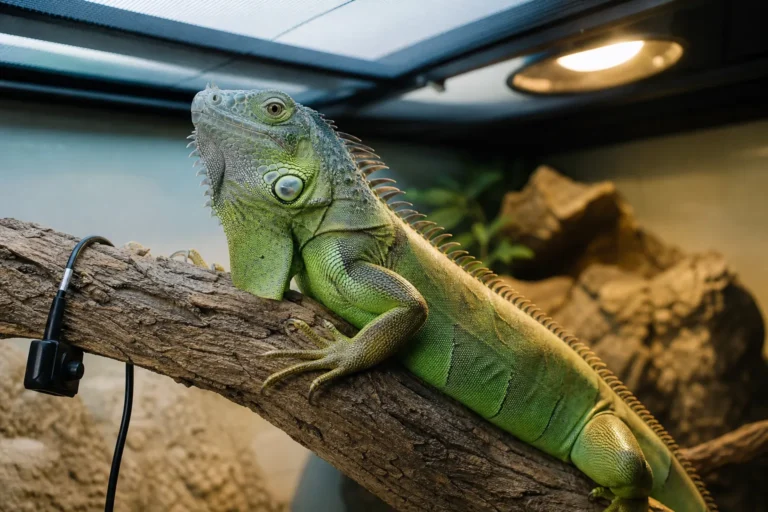
If you need a gauge, consider digital reptile humidity gauge options. Look for a display you can read easily and a sensor you can position where you want to measure. Check the instructions for placement and care.
Choose A Consistent Measuring Spot
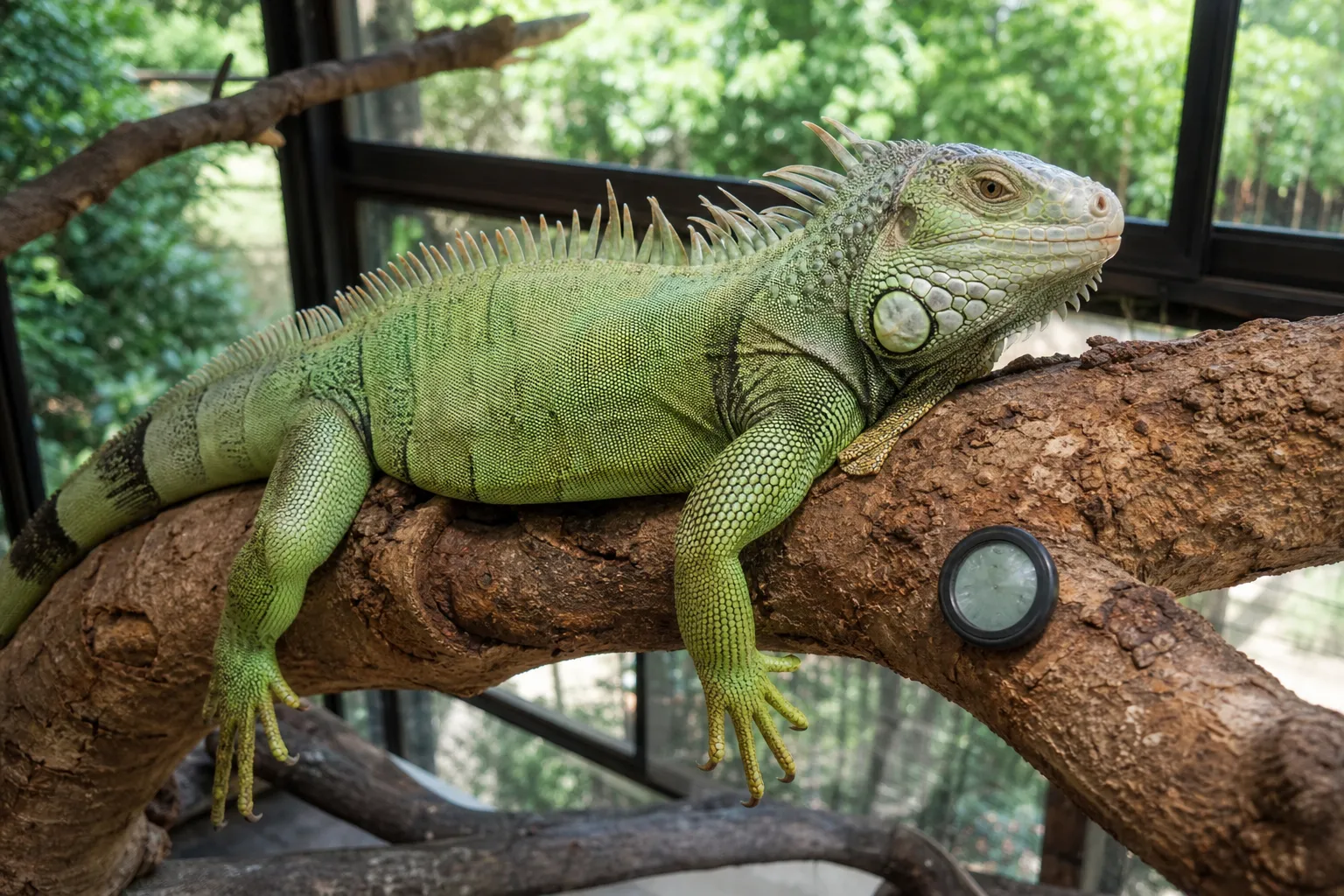
Place the sensor where it can measure the air around a regularly used area, without blocking the iguana’s movement or creating a loose item it could disturb. Keep its location consistent when comparing daily readings. If the enclosure has several levels, check another accessible area as well and note where each reading was taken.
VCA recommends space for both floor-level activity and climbing. A reading taken only near the floor therefore may not describe every area the animal uses. Treat differences as information to record, not as a reason to chase a single identical number everywhere.
Keep Ventilation In The Plan
VCA describes glass or Plexiglas enclosures with good ventilation as suitable and recommends a screened top that prevents escape while allowing some airflow. When adjusting an enclosure, preserve secure ventilation rather than sealing it simply to raise a gauge reading. Check that the screen and any openings remain secure.
If readings are outside the range your veterinarian recommends, share your log and describe the enclosure’s layout before making major changes. The also covers climbing space, heat and lighting, all of which belong in the overall setup.
Let Cleaned Furnishings Dry
Humidity in the air is not the same thing as a wet enclosure floor. VCA recommends a floor material that is non-toxic and easy to clean and disinfect. Its examples include newspaper, butcher paper, recycled paper pellets and reptile carpet. Avoid sand, gravel, wood shavings and other materials VCA lists as difficult to clean and indigestible if eaten.
For reptile carpet, VCA suggests keeping a spare piece ready. The soiled piece can be cleaned, rinsed thoroughly and hung to dry before its next use. This rotation keeps cleaning practical without putting a still-wet carpet straight back in the enclosure.
Read Humidity Beside Temperature
Temperature is important context for a humidity reading. VCA recommends a temperature gradient: a warmer area and a cooler area that let an iguana move to regulate its body temperature. The housing guide advises monitoring with a temperature gun or with thermometers in both zones.
Write down which zone you checked and when. If a humidity reading changes, compare it with your temperature notes before deciding what to adjust. Keep heat and UV light in the habitat plan; humidity monitoring does not replace either. The broader iguana care guide can help you organize those routines.
Use Observations, Not A Wetness Test
Check the enclosure as you take readings. Note the condition of the floor and furnishings, whether ventilation openings remain clear, and when the habitat was last cleaned. VCA says the cage bottom should be easy to disinfect and cleaned every few days. Its housing guidance also calls for an area where the iguana can eat, drink and defecate.
Iguanas normally shed skin in patches, according to VCA. Record observations about shedding for a veterinary conversation, but do not use a single patch or a damp-looking surface as a substitute for a humidity reading or a diagnosis.
Adjust With A Veterinarian’s Help
Bring your species identification, readings, temperature notes and enclosure description to a reptile veterinarian. Ask for a suitable humidity range and how to respond when readings fall outside it. The supplied VCA excerpts do not establish a numerical range, a misting schedule or a required drying interval, so those should not be guessed from this article.
Keep the routine manageable: measure consistently, maintain secure ventilation, clean the floor and let washed furnishings dry. These steps give you useful information while preserving the climbing, basking and temperature choices a green iguana needs.
Sources And Further Reading
- VCA Animal Hospitals — Know Your Pet Iguanas Owning
- VCA Animal Hospitals — Know Your Pet Iguanas Housing
THE JUNGLE SUPPLY EDIT
Shop This Article
Tools For A Measured Water And Humidity Routine

Govee H5075 Bluetooth Hygrometer
A connected temperature and humidity meter for tracking conditions.
Check the listing’s pack size; protect this indoor unit from water.
View On Amazon (opens in a new tab)
Exo Terra Spray Bottle · 2 Quarts
A hand-operated sprayer for controlled, targeted misting.
Reserve it for reptile care and check your species’ humidity needs.
View On Amazon (opens in a new tab)
Exo Terra Water Dish · X-Large
A natural-look water dish to compare with your reptile’s size and layout.
Check actual dimensions and stability; the XL label is not a fit guarantee.
View On Amazon (opens in a new tab)
Zoo Med ReptiRain Habitat Mister
An automatic misting option for suitable reptile habitats.
Tune the schedule to measured conditions rather than running it constantly.
View On Amazon (opens in a new tab)Compare sizes, compatibility and current availability on Amazon. Choose what fits your existing setup.