As an Amazon Associate I earn from qualifying purchases.
Green iguanas can benefit from simple changes in how food is offered without changing what they eat. Because reptiles—including iguanas—can carry Salmonella and contaminate surfaces, prioritize safety whenever you change feeding presentation. This guide pairs modest enrichment ideas with handling and cleaning steps to reduce infection risks and protect people in the home, especially young children and immunocompromised household members.
Why Feeding Presentation Should Include Hygiene
Reptiles, such as iguanas, can naturally carry Salmonella and shed the bacteria in their droppings and on body surfaces. That makes anything the animal touches potentially contaminated, including feeding areas and nearby surfaces. Because salmonellosis can cause diarrhea, vomiting, and fever and may be more serious in young children, pregnant people, older adults, and those with weakened immune systems, keeping feeding interactions clean is essential. Aim to make presentation changes that don’t increase contact between contaminated habitat items and household food-preparation areas.
Pick Dedicated Feeding Locations
Use one or two dedicated spots inside the enclosure for regular meals to limit contamination around the home. Dedicated feeding zones let you concentrate cleaning and disinfecting where food and droppings occur. Keep those spots separate from household counters and kitchen surfaces because Salmonella germs can get on countertops, utensils, and other kitchen items. If you vary presentation by moving food to a platform or ground level, still keep the items confined to the designated zone and clean afterward. This minimizes the chance that habitat materials reach food-prep areas.
Offer Movement-Friendly Presentations
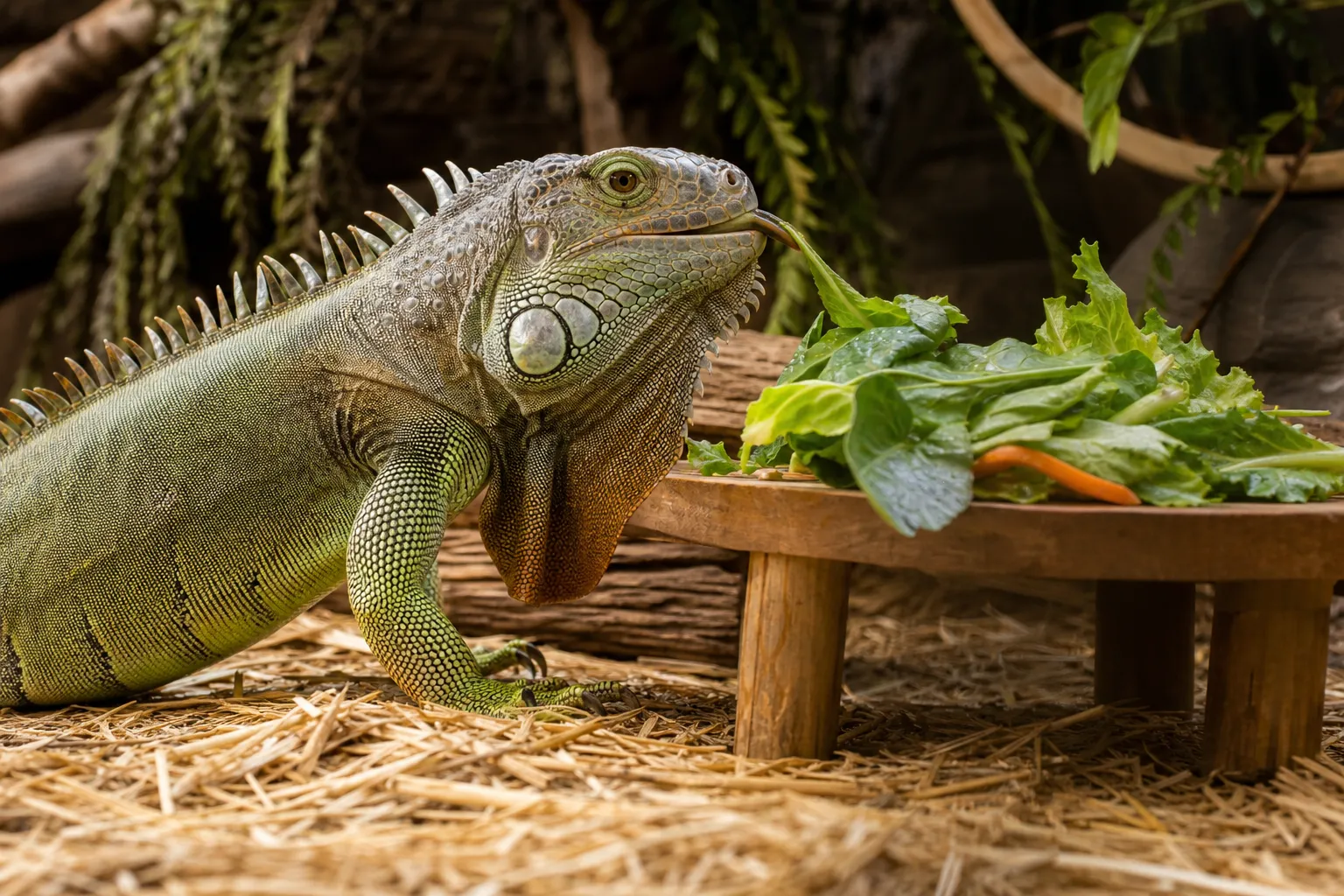
Encourage mild activity by placing familiar greens and vegetables in slightly different positions: on a low platform now, on the enclosure floor next time, or in a shallow dish. These small changes promote natural movement without altering diet composition. When using hands or feeding tools to position items, remember to treat the feeding area as possibly contaminated. Thorough handwashing after touching the animal or its habitat is crucial to prevent spreading bacteria. Handwashing should be with soap and water for at least 20 seconds to reduce risk.
Foraging And Puzzle Options That Use Regular Diet Items
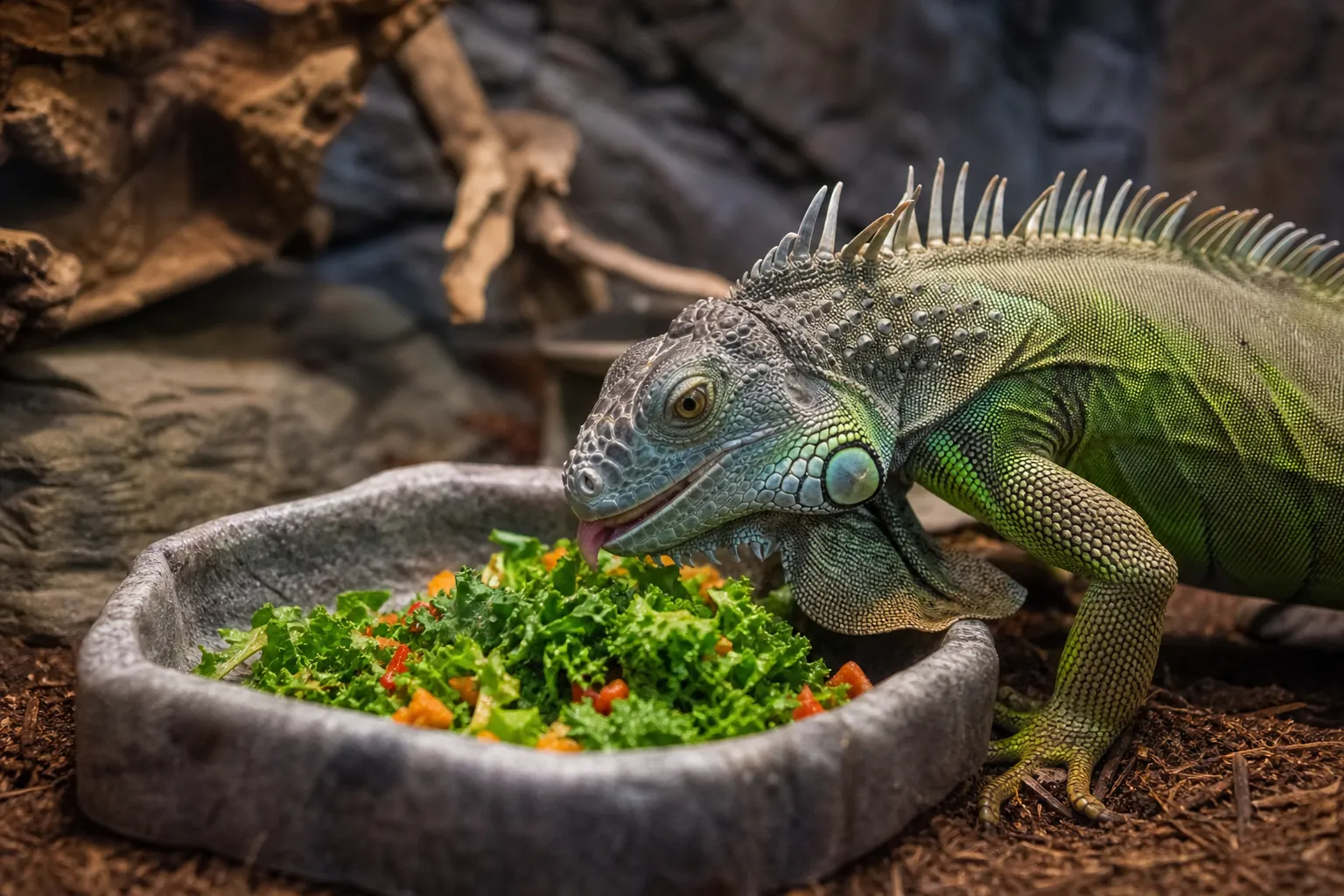
Create simple foraging opportunities using the same vegetables and greens your iguana already eats: tuck leaves behind safe branches or lay strips inside shallow, easy-to-clean containers. The goal is to change how food is found, not what is fed, so diet balance stays the same. After foraging sessions, clean any containers and the surrounding enclosure surfaces because animals can deposit bacteria where they eat. Treat housing items that touched food as potentially contaminated and disinfect them as part of routine maintenance.
Avoid Feeder Rodents Or Handle Them With Caution
Feeder rodents can carry Salmonella even when they look healthy. Freezing does not reliably kill Salmonella, so both frozen and live feeders may be contaminated. If you choose rodent-based items for species that need them, handle and prepare them as potential sources of bacteria and clean and disinfect everything that contacts them. Look for products labeled as treated by irradiation if you want reduced contamination risk; packaging will state “treated with radiation” when applicable. Always wash hands and clean surfaces after handling feeders.
Cleaning And Disinfecting Feeding Equipment
Cleaning removes dirt and germs; disinfecting kills remaining bacteria. The FDA notes a household bleach solution is an effective disinfectant. For smaller batches, one tablespoon bleach per quart of water is effective; for larger needs, a quarter cup bleach per gallon of water is listed as a guideline. Use soap and water first to clean surfaces, then apply disinfectant to reduce Salmonella risk. Always rinse items that will contact food for the animal and allow full drying before reuse. Keep cleaning tasks separate from kitchen chores.
Safe Storage And Preparation Practices
Consider anything that touches feeder animals or their food as potentially contaminated. That includes storage areas, preparation surfaces, and utensils used to thaw or handle frozen feeders. Clean and disinfect those areas after use. If a product is labeled as irradiated, it carries that marking and the Radura symbol according to guidance. Keep habitat supplies away from household food-prep zones, and wash hands after handling habitat items or feeding tools to reduce the chance of spreading bacteria around the home.
Practical Tools: Dishes, Foraging Gear, And Routines
Choose shallow, easy-to-clean dishes and simple foraging bowls so cleaning after feeding is quick. Use dedicated tools and containers for the enclosure and keep them out of the kitchen. If you need quick options, try a search for stainless steel feeding dishes or reptile foraging bowls: Stainless Steel Reptile Feeding Dishes and Reptile Foraging Bowls. Keep a short cleaning checklist near the enclosure to maintain consistent routines and reduce cross-contamination risks.
When To Call A Health Professional
If anyone in contact with the iguana develops symptoms like diarrhea, vomiting, fever, or severe stomach cramps, contact a health care provider and mention recent reptile contact. Salmonellosis symptoms usually start within a few days of exposure and can be more serious in high-risk people. Prompt communication with a provider helps ensure proper care. Routine monitoring of both the animal’s environment and human health in the household supports safer enrichment practices.
With modest presentation changes and strict hygiene, you can add variety to feeding without altering diet balance. Keep food preparation and cleaning separate from household kitchens, wash hands after handling, and focus on simple, repeatable routines to protect both your iguana and your family.
Related Iguana Resources: Iguana Care Guide · Explore Iguana Care Topics.
Sources And Further Reading
THE JUNGLE SUPPLY EDIT
Shop This Article
Practical Tools For Preparing And Serving Greens

OXO Good Grips Salad Spinner
A useful prep tool for washing and draining leafy greens.
Keep reptile-care tools separate from equipment used for people’s meals.
View On Amazon (opens in a new tab)
OXO Vegetable And Onion Chopper
A prep tool for cutting suitable vegetables into manageable pieces.
This is a chopper, not a food recommendation; choose ingredients by species.
View On Amazon (opens in a new tab)
OXO Silicone-Head Tongs · 2 Pack
Kitchen-style tongs for portioning greens and arranging food in dishes.
Use for meal preparation; do not use them to restrain or force-feed a reptile.
View On Amazon (opens in a new tab)
Etekcity Stainless Steel Kitchen Scale
A digital scale for measuring meal ingredients and tracking portions.
Check capacity and platform size; it is not suitable for weighing every reptile.
View On Amazon (opens in a new tab)Compare sizes, compatibility and current availability on Amazon. Choose what fits your existing setup.