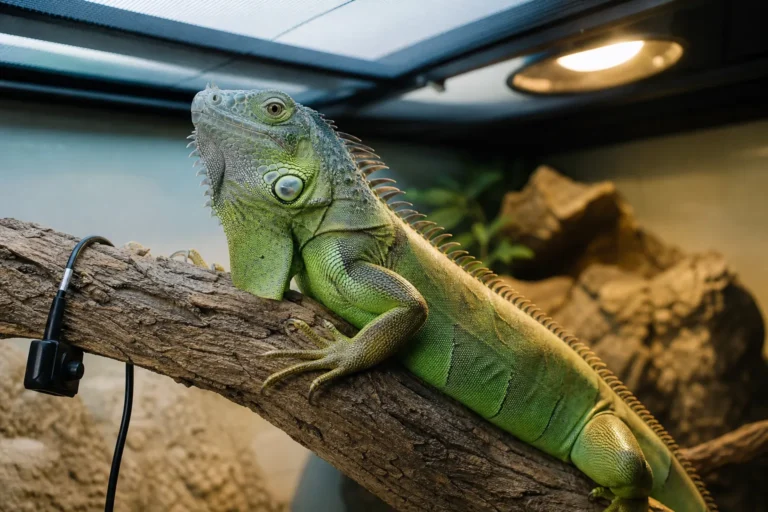
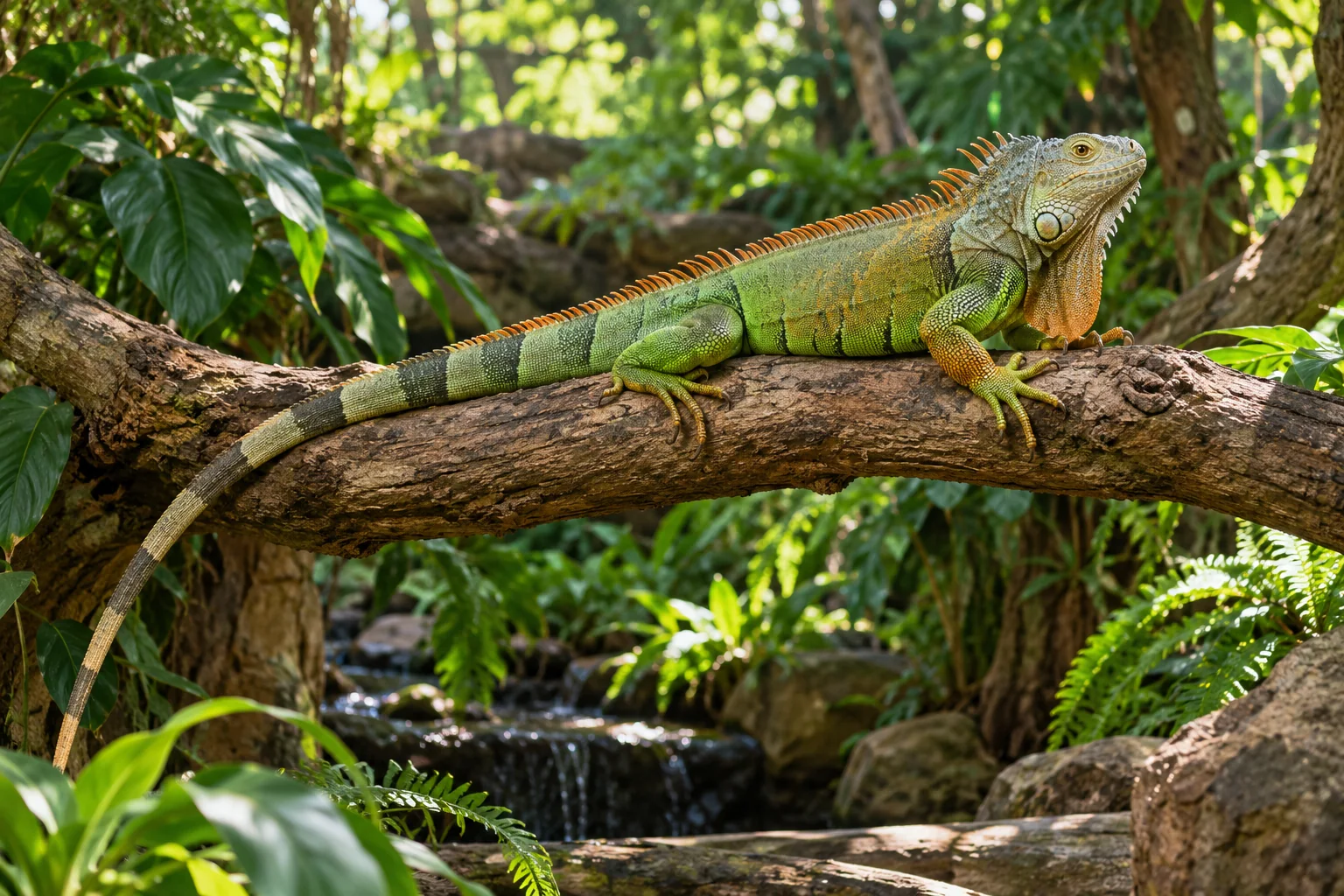
Proper UVB and heat setup keeps green iguanas active and able to absorb calcium. This article walks through placement, how screen materials affect UVB, and a simple replacement plan. Follow fixture-specific manufacturer instructions and monitor conditions in the cage to avoid burns or mineral deficiencies. Use vet-backed husbandry principles for layout and maintenance. Iguana care basics help newcomers match lighting to enclosure size.
Why UVB Matters For Iguanas
Green iguanas need UVB light to synthesize vitamin D3 in their skin. Vitamin D3 enables calcium absorption from food. Without reliable UVB, iguanas can develop metabolic bone disease or poor growth. Keep UVB available over the basking area where the animal will sit. For species-specific husbandry advice and general enclosure recommendations, consult veterinary resources on iguana housing and owning.
Fixture Placement And Basking Spots
Place the UVB fixture so the primary basking perch receives direct rays. Fixtures should be positioned where the iguana can climb and bask without obstruction. If you use natural branches, slope them toward the light so the iguana can choose height. Maintain a temperature gradient in the cage with a warm basking zone and a cooler area for thermoregulation. For distance guidance and general heater placement, refer to enclosure recommendations that pair heat and UVB for safe basking zones.
How Screens And Mesh Change UVB Delivery
Glass and plastic between a lamp and an iguana can prevent useful UVB exposure. Mesh can also reduce the UV reaching the basking area. Check the instructions for the exact lamp, reflector, and mounting arrangement you use; an unobstructed setup and one above mesh may require different placement. Do not add a clear cover or remove an escape barrier as a shortcut. Choose a secure installation the manufacturer permits, with ventilation and access to shade, then verify conditions at the animal’s basking position.
Measuring UVB And Temperature In The Cage
Use the right tool for each measurement. A reptile UV Index meter helps assess ultraviolet exposure, while temperature instruments check heat; one does not replace the other. An infrared thermometer measures surface temperature, while probe thermometers can monitor air temperatures in warm and cool areas. Record where readings were taken so later checks are comparable. Arcadia’s lighting guide bases its UV Index tables on measurements with a Solarmeter 6.5. Use the appropriate species guidance and the actual fixture instructions, rather than assuming a bright-looking lamp delivers suitable UVB.
Distance, Heat Sources, And Burn Risk
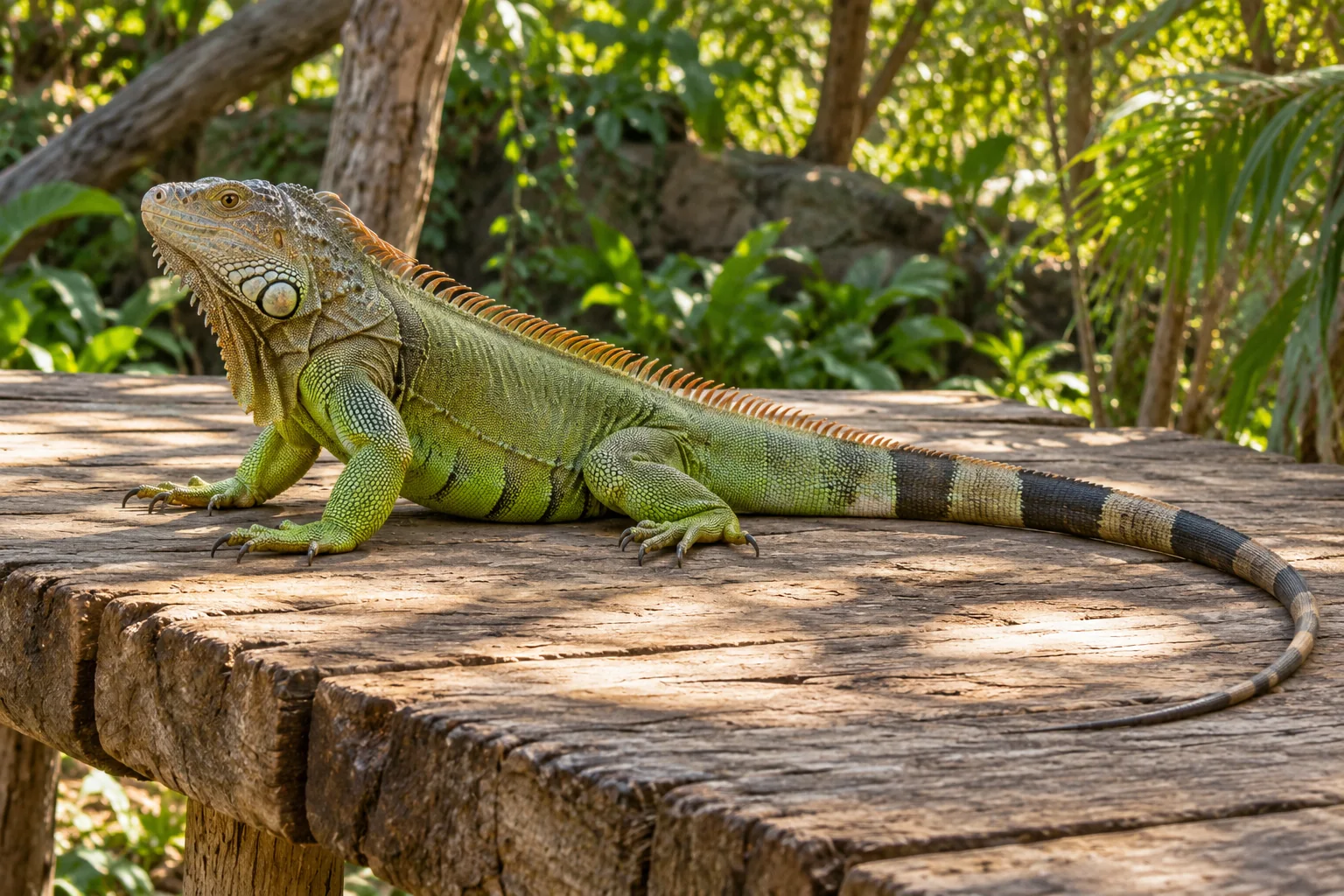
There is no single lamp distance that suits every enclosure. Lamp type, output, reflector, mesh, and the animal’s highest reachable position all affect placement. Measure clearance to the iguana’s back or head when it occupies the perch, rather than simply measuring to the cage floor. Keep the animal from touching hot equipment. Do not move a lamp closer, or farther away, by guesswork to solve a heat or UV problem. Follow fixture-specific instructions and ask a reptile veterinarian or the manufacturer if your arrangement cannot meet them safely.
Choosing Fixtures And Reading Manufacturer Instructions
Different fixtures and bulb technologies (fluorescent tubes, compact fluorescents, mercury vapor) behave differently. Always read the fixture and bulb instructions. Manufacturers specify mounting orientation, minimum clearances, and whether the lamp requires a reflector or ballast. Follow those directions exactly; they are the authoritative source for safe installation. For general care context and enclosure layout, combine manufacturer guidance with veterinarian-reviewed housing advice.
Replacement Planning And Bulb Lifespan
A lamp that still produces visible light is not proof of adequate UVB. Follow the replacement interval specified for the exact bulb and keep its installation date in a calendar or care log. Save the packaging or model number so the next bulb is a compatible replacement, not just a similar-looking one. Where you use a UV Index meter, compare repeat readings at the same position and with the same setup. Changing the reflector, mesh, or perch means the old readings may no longer describe the new arrangement.
Practical Setup Checklist And Product Options
Make a short checklist: confirm fixture clearance, verify UV transmission through any screen, install a stable basking perch, and monitor temps in two zones. If you need tools or replacement components, you can search reputable retailers for UVB fixtures, replacement bulbs, and timers. As an Amazon Associate I earn from qualifying purchases. Consider these search options: UVB fixtures, replacement UVB bulbs, and lighting timers. Also review local suppliers and vet recommendations before purchase.
Routine Maintenance And Record Keeping
Keep a short maintenance log of bulb installs, temperature checks, and any screen changes. Clean fixtures and ensure vents are clear of dust, which can reduce UVB output. Replace bulbs on schedule and inspect mounts and wiring for wear. If you relocate a fixture or change the enclosure layout, re-check UVB and temperatures. Routine records help you and your veterinarian track long-term trends in husbandry and respond quickly to problems.
With careful placement, a clear understanding of screen transmission, and a disciplined replacement plan, you can maintain effective UVB and safe heat for a green iguana. Combine fixture instructions with vet-backed housing principles for best results.
Related Iguana Resources: Explore Iguana Care Topics.