
As an Amazon Associate I earn from qualifying purchases.
Introduction
Measuring temperatures across an iguana enclosure keeps your pet safe and lets it thermoregulate properly. This guide explains surface versus air readings, where to place probes, how to log daily temperatures, and when to use spot infrared checks. Follow simple routines so you can spot swings and maintain the warm-to-cool gradient your iguana needs for digestion and activity. For the wider housing plan, see our Iguana Care guide.
Surface Readings Vs Air Readings
Surface readings measure the temperature of a material such as a basking rock, branch, or glass. Air readings measure the ambient air where the iguana breathes and moves. Both matter: surface temperatures show what the animal feels when resting, while air temperatures indicate general enclosure climate. Use a probe thermometer to record air temperature at head height when the iguana basks, For surfaces, use an infrared thermometer or a probe specifically rated for contact measurements. Always record which type you measured. Consistent labels prevent confusion between skin-level warmth and room air conditions.
Where To Place Air Probes
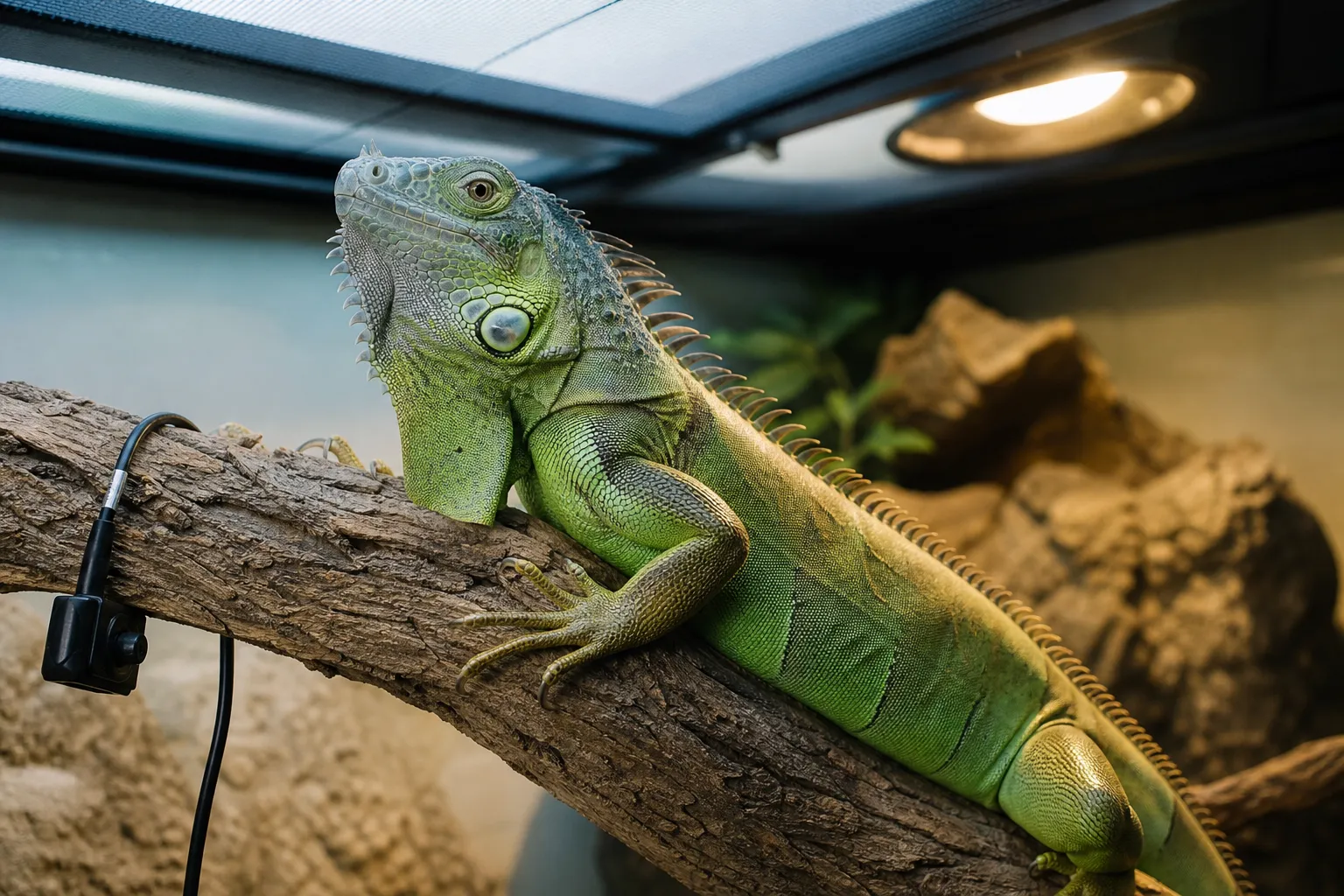
Place air probes at levels where your iguana spends time: near the basking branch, mid-level perches, and at the cool end of the enclosure. Mount probes roughly at the animal’s head height when it basks for the most meaningful basking-air reading. Avoid placing sensors directly in the path of a heat lamp or against a wall that traps heat. For large enclosures, use two or three air thermometers to map the gradient. Check position after rearranging branches or decor. Secure probes so the iguana cannot chew wires or dislodge sensors during climbing, and keep cords out of reach from juveniles.
Where To Place Surface Probes
Surface probes should contact basking surfaces the iguana uses, such as rocks, branches, or platforms. Place the probe where the animal typically lies to get an accurate basking-surface reading. Do not embed probes where moisture collects or where cleaning will damage them. If using an infrared thermometer, scan slowly and from the same distance each time to reduce variation. Record both the surface temperature and the scan distance or probe position so readings remain comparable. Replace worn mounting clips and inspect sensors regularly for corrosion or loose connections that could skew readings, and note the surface material daily.
Creating A Heat Gradient
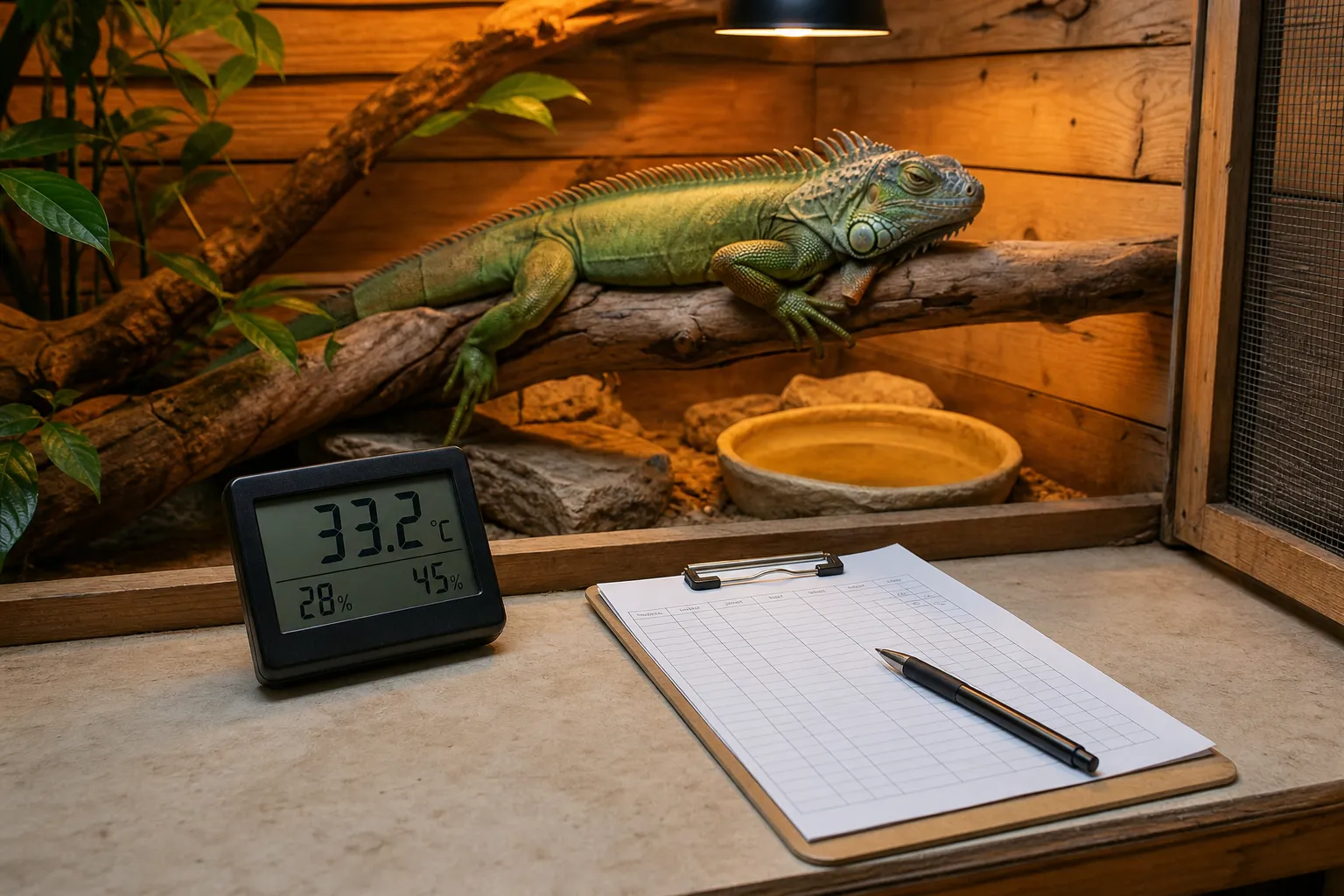
A proper gradient gives an iguana choice to warm or cool its body. Aim for a warm basking zone around 90–100°F (32–38°C) and a cooler zone about 70–75°F (21–24°C) during the day, using the housing guidance in the source below. Position heat bulbs at one end so heat concentrates there and declines toward the other end. Verify the slope with at least two air thermometers and a surface probe on the basking spot. Avoid hot rocks that can burn. Turn heat and UV off at night if appropriate for your setup, and check night temperatures to prevent chilling.
Daily Recording And Sample Log
A short daily log makes patterns obvious and alerts you to equipment failure. Record date, time, air temperatures at warm and cool ends, and surface temperatures at the basking spot. Note whether the lights and heat were on, any changes in placement, and the iguana’s behavior. Use a simple paper chart or a spreadsheet on your phone. A consistent format lets you compare days quickly and spot trends such as gradual cooling or overheating. Keep logs for weeks so you can show them to a veterinarian if you see prolonged abnormal temperatures or behavior. Also note humidity and room changes.
Choosing And Using Thermometers
Select a combination of instruments: wall-mounted digital thermometers for air, a surface thermometer probe for basking spots, and an infrared thermometer for quick checks. Digital thermometers with external probes offer continuous readings and are easy to log. An infrared gun is useful to spot-check surfaces without disturbing the iguana, but it measures only surface temperature. Calibrate devices if the manufacturer provides a method, and replace batteries on schedule. Place displays where you can read them without opening the cage. Keep spare probes or a second thermometer so you can cross-check readings if values look wrong. For options, consider a digital thermometer with probe and an infrared spot thermometer for quick surface checks.
Safe Probe Installation
Install probes so they are secure but accessible for cleaning. Use non-toxic zip ties or clips to fasten probes to branches and cage bars. Avoid sharp bends in probe wires that can cause breakage. Keep wiring routed away from pathways where the iguana climbs and where water may drip. Do not tape probes directly to surfaces the iguana will chew. If a probe must touch a basking surface, protect the connection with heat-resistant, pet-safe materials and check attachment daily. Clean sensors only as their manufacturer directs, keeping non-waterproof components dry. Replace damaged wiring at first sign.
When To Call A Vet Or Replace Equipment
Call a veterinarian if your iguana shows persistent lethargy, refusal to eat, or abnormal behavior that coincides with unusual temperatures. Before calling, review your log to confirm sustained temperature deviations and verify instrument calibration. Equipment failure signs include wildly fluctuating readings, dead displays, or sensors that read inconsistent values across identical spots. Replace failing items promptly since a broken heat source can harm thermoregulation. Keep records of repairs and replacements so you can track how long each device lasted. Bring logs to your appointment; they help the veterinarian assess environmental contributions to the problem and include photos of probe placement.
Conclusion
Regular, labeled temperature checks protect your iguana and clarify care decisions. Use both air and surface measurements, keep a simple daily log, and secure sensors safely. Cross-check instruments and replace faulty units promptly. Bring logs and photos to a veterinarian if concerns persist. Small habits prevent big problems every week.