As an Amazon Associate I earn from qualifying purchases.
Time outside the enclosure can give an iguana room to explore, but it works best as a planned, supervised activity. A safe room needs more than an open floor: check exits, climbing opportunities and household hazards before opening the enclosure. Keep the iguana’s normal habitat ready throughout the session. The goal is a manageable space where you can observe your pet and end the outing calmly.
Start With A Secure Room
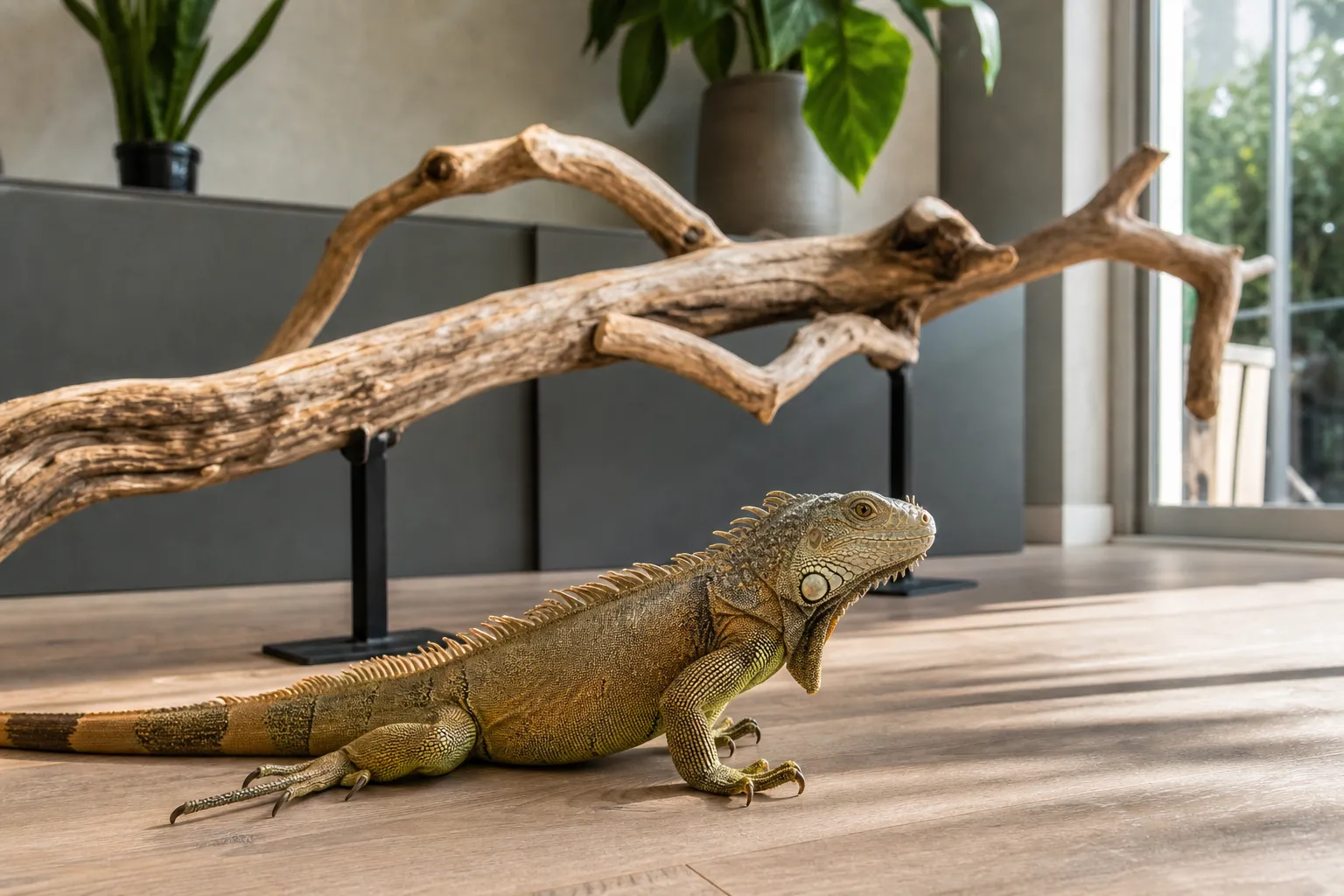
Choose a room you can close off and inspect from floor level as well as above. Shut doors and windows, and check screens and other barriers before your iguana comes out. Look for gaps behind furniture, openings around fixtures and routes into adjoining spaces. Block access to places where you could not safely reach the animal.
Consider the iguana’s full length, including its tail, when judging a route or hiding space. A clear room boundary also makes it easier to keep track of your pet. Secure housing remains important even when you offer supervised exploration; see our iguana care guide for the broader routine.
Remove Everyday Hazards
Walk through the room before each session. Put away small loose objects, cords, cleaning supplies and anything else your iguana might reach, swallow or become tangled in. Restrict access to appliances and hot surfaces. Check that furniture and other objects cannot shift or tip if your iguana climbs against them.
Keep other pets out of the room and let household members know the session is underway so a door is not opened unexpectedly. VCA advises against enclosure materials such as sand, gravel and cat litter because they can cause digestive obstructions if eaten. Apply the same caution to loose debris in the exploration area. See .
Make Climbing A Planned Activity
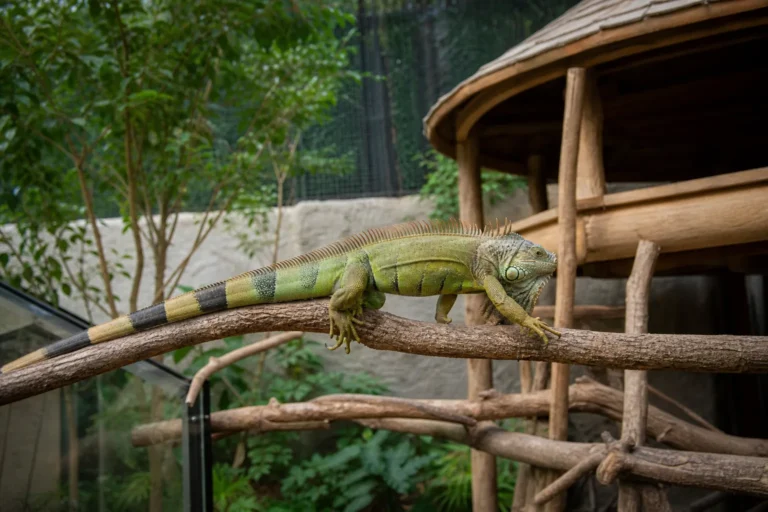
Iguanas are tree-dwelling animals, and VCA recommends space for both horizontal movement and climbing in their housing. In a room, offer a stable, appropriate climbing route rather than relying on whatever furniture happens to be available. Check that a branch or platform can support your iguana and cannot fall onto it. Keep the route within an area you can observe and reach.
If you need ideas, browse reptile climbing branches as options. Assess size, support and stability yourself; a search result is not a guarantee that a branch suits your animal.
Keep The Habitat Ready
Room time does not replace a properly equipped enclosure. Iguanas need heat, ultraviolet light and a range of temperatures in their habitat so they can move between warmer and cooler areas. Reptiles are ectotherms: they depend on external conditions to help regulate body temperature. Merck explains this need in its guide to .
Keep the normal enclosure available as the place for your iguana to return. Do not assume that a comfortable room provides the same conditions as its habitat. If you are unsure how an outing fits your iguana’s care, ask a reptile veterinarian.
Watch The Whole Session
Stay in the room and keep your iguana in view. Supervision means watching where it goes, not simply checking in from another room. Notice whether it can move freely and whether a climbing surface remains stable. If it approaches an unchecked gap or hazardous area, calmly guide the situation back toward the prepared space.
Observation is useful in its own right. Merck notes that observing a reptile can help reveal its demeanor and movement. End the outing if you cannot continue watching, or if the animal seems distressed. Discuss an injury or concerning change in movement with a reptile veterinarian.
Offer A Place To Hide
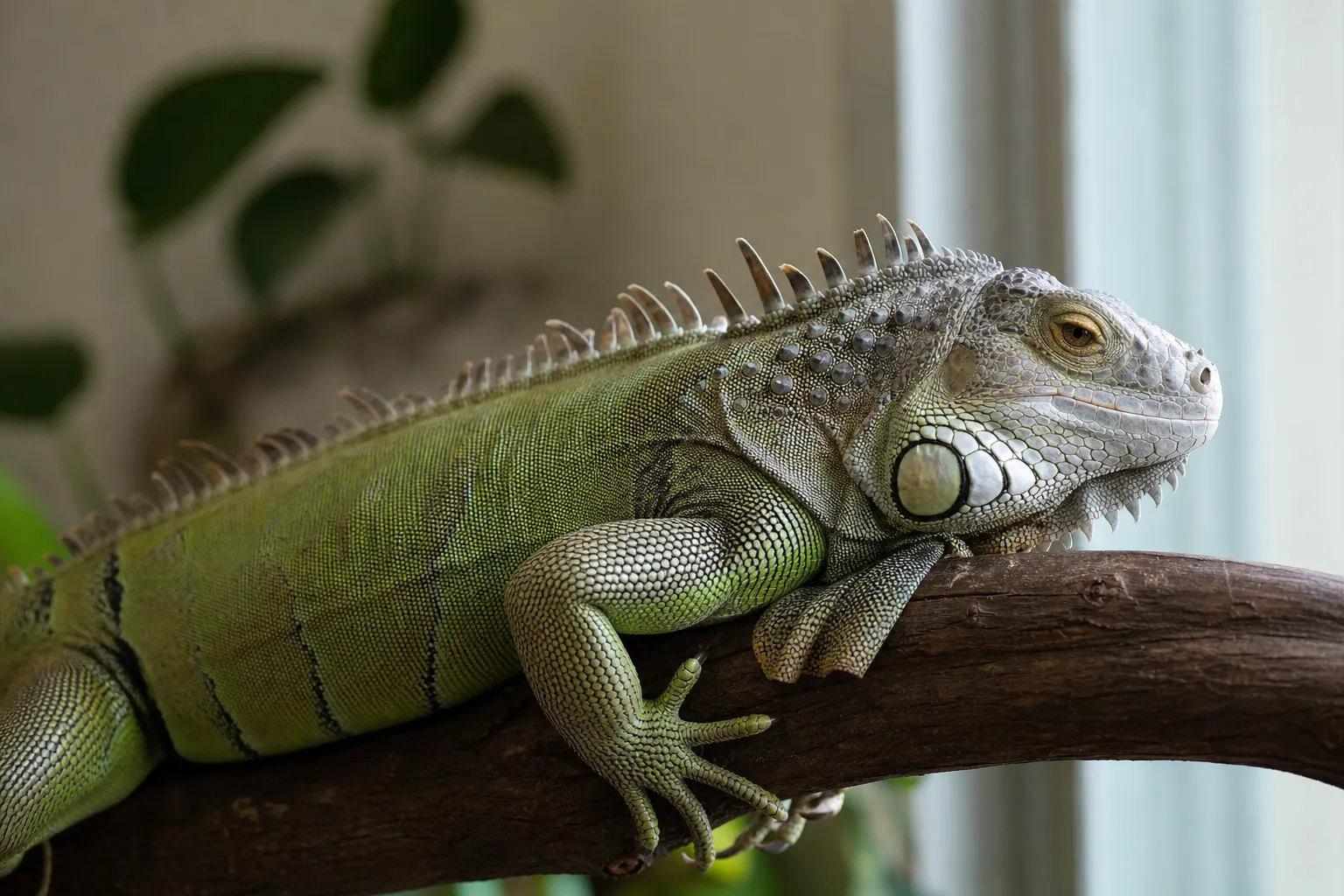
A prepared room need not be completely bare. Reptiles may feel nervous or insecure in captivity, and Merck notes that appropriate furnishings and hiding spaces can help. VCA also recommends a hiding place in iguana housing. A stable hide in the supervised area can give your pet a place to withdraw without disappearing into an inaccessible gap.
Choose a hide you can inspect and move safely if necessary. Keep the surrounding floor clear, and do not pull an iguana from a hiding place simply to prolong the session. Plan the room so returning to the enclosure is straightforward.
Finish With A Reset
Once your iguana is back in its enclosure, secure the enclosure and check the room for droppings or disturbed objects. Clean affected surfaces and wash your hands thoroughly after handling the iguana or items it has used. Merck identifies handwashing as a basic precaution against infections that can pass between reptiles and people; see its .
Before the next outing, repeat the room check rather than assuming nothing has changed. A moved chair, an open door or a loose item can alter the space. For more background on the animal’s needs, explore our green iguana guide.
Make Supervision A Routine
A successful outing starts before the enclosure opens and ends only after it is secured again. Prepare the room, provide stable places to explore and stay present. Keep the regular habitat ready, and tailor the session to what you can safely supervise and your iguana can comfortably manage.
Sources And Further Reading
- Merck Veterinary Manual — Reptiles Providing A Home For A Reptile
- Merck Veterinary Manual — Reptiles Clinical Procedures For Reptiles
- VCA Animal Hospitals — Know Your Pet Iguanas Housing
THE JUNGLE SUPPLY EDIT
Shop This Article
Useful Checks And Finishing Touches For Your Setup

Zoo Med ReptiTemp Infrared Thermometer
Quick surface spot checks on basking branches and platforms.
Measures surfaces, not air temperature. Follow the distance guidance.
View On Amazon (opens in a new tab)
Master Lock 630D Combination Lock
A small lock to compare for compatible cabinet or enclosure hardware.
Check shackle fit; a lock cannot make an unsuitable enclosure escape-proof.
View On Amazon (opens in a new tab)
VELCRO ONE-WRAP Green Ties · 6 Pack
Reusable ties for tidying equipment cords outside the habitat.
Keep ties and bundled cables outside chewing reach; do not support climbing loads.
View On Amazon (opens in a new tab)
Rite In The Rain Notebooks · 3 Pack
Weatherproof notebooks for temperature logs and daily care observations.
Use for records to discuss with your reptile veterinarian when needed.
View On Amazon (opens in a new tab)Compare sizes, compatibility and current availability on Amazon. Choose what fits your existing setup.