Keeping an iguana’s enclosure clean lowers disease risk and keeps the animal comfortable. This guide explains a simple, repeatable workflow that separates light spot cleaning from full sanitation. It uses definitions and steps grounded in shelter and veterinary guidance and points to safe disinfectants and tools you can use around iguanas.
Why Regular Cleaning Matters
Regular cleaning reduces the pool of microbes and organic matter that feed pathogens. In shelter medicine terms, cleaning removes visible dirt while disinfection kills microbes; sanitation pairs both to push infectious organisms below a disease-transmission threshold. Routine cleaning is more effective and less costly than reacting to an outbreak, and it also reduces stress by keeping odors and soiling under control. Follow trusted protocols so you balance hygiene with the animal’s welfare rather than overworking the enclosure.
Spot Cleaning Versus Full Sanitation
Spot cleaning means removing feces, soiled bedding, and spilled food while the iguana remains in its familiar space. This minimizes handling stress and keeps the enclosure tidy between full cleans. Full sanitation is required whenever the animal leaves the enclosure permanently or when a deep clean is scheduled. Full sanitation requires removing the animal, stripping the enclosure, and carrying out a multi-step wash and disinfection process to inactivate pathogens before reuse. For more on everyday care, see Iguana Care.
Four-Step Sanitation Workflow
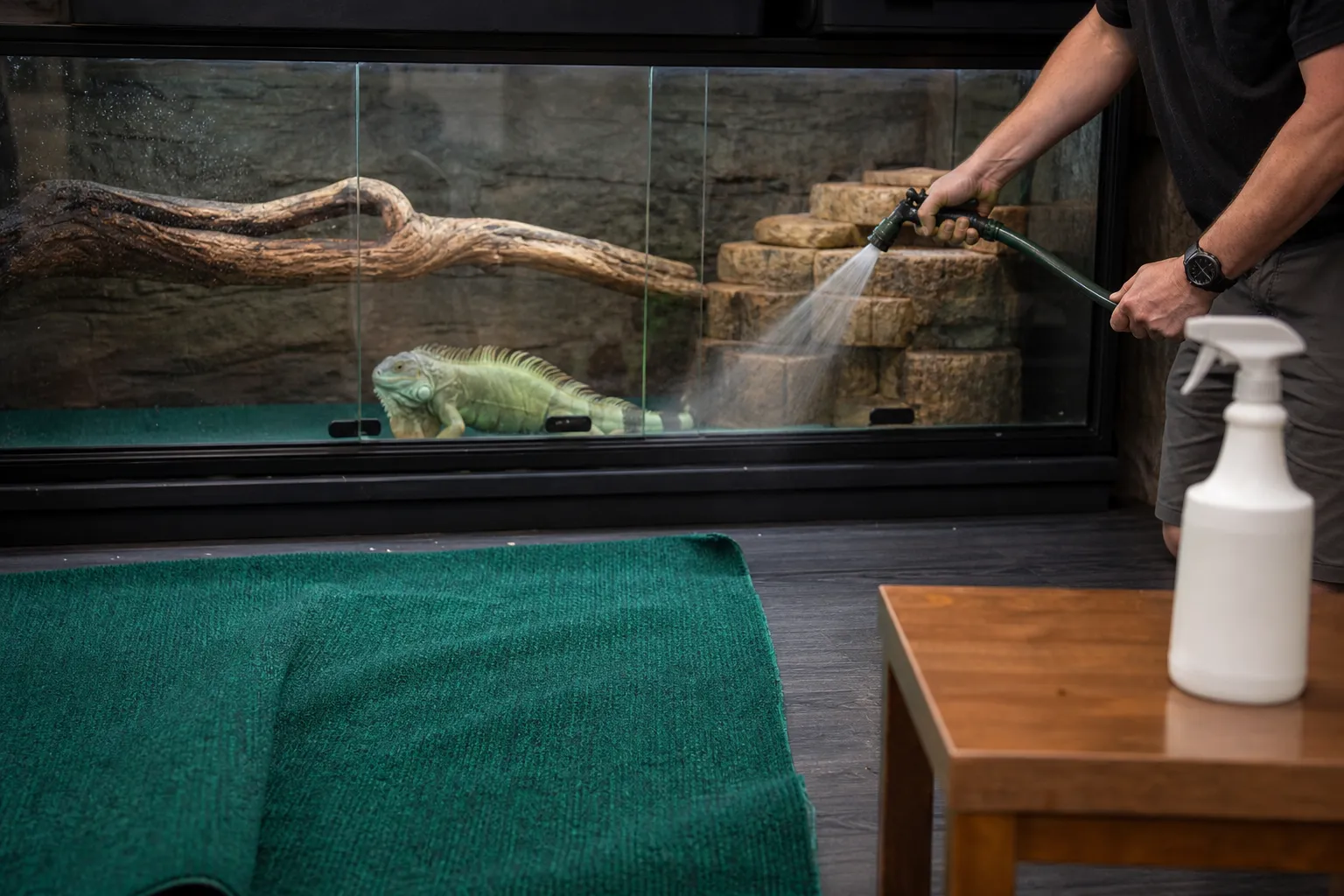
A practical sanitation sequence is: (1) tidying, (2) washing with detergent, (3) disinfecting at label contact time, and (4) drying and ventilating. Tidying removes bulk debris without stirring dust. Washing uses detergent and scrubbing to break biofilms and clear residues so disinfectants can work. Disinfectants must be diluted and left wet on surfaces for the time the label specifies. Finally, dry and ventilate the enclosure fully before returning the animal. Avoid high-pressure rinsing because it can aerosolize microbes that have not yet been inactivated.
Safe Disinfectant Choices
Choose disinfectants by the organisms you want to target and by safety for reptiles. Household bleach (sodium hypochlorite) is effective against many viruses and bacteria at recommended dilutions, and stronger bleach dilutions are needed against fungal spores such as ringworm. Bleach is caustic and can irritate respiratory tracts, so prepare and use it carefully and do not use undiluted. Ready-to-use terrarium disinfectants are available as alternatives; follow the product label for contact time and safety steps. Consider a terrarium disinfectant designed for reptile habitats like , and always follow the product label and safety data sheet.
Tools And A Dedicated Cleaning Station
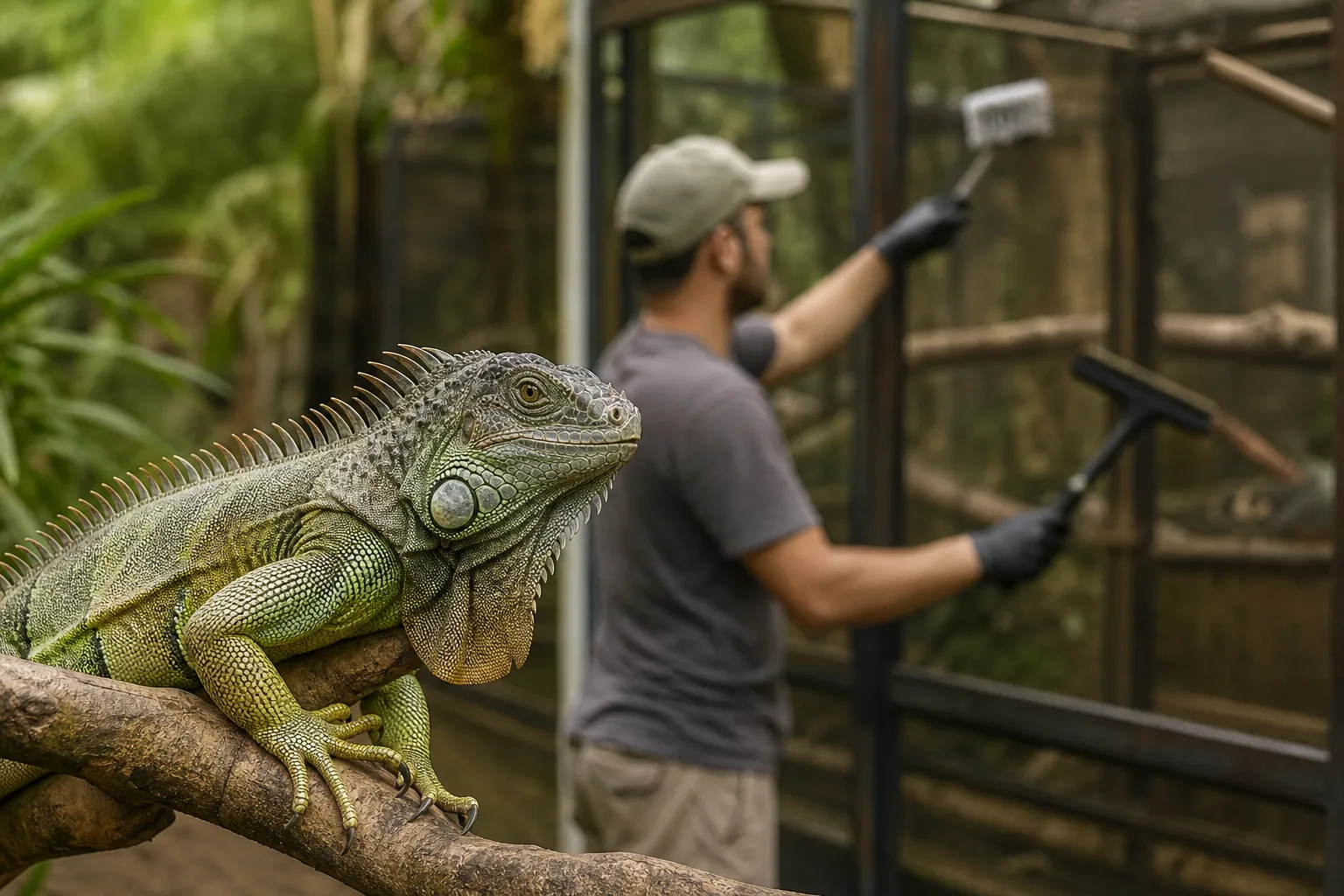
Keep a separate cleaning station away from living areas. Use rubber squeegees instead of brooms to limit dust. Use brushes with bristles for scrubbing and a low-pressure water source for rinsing. Avoid sharing buckets and rags between enclosures; these items can act as fomites and spread pathogens. While washing, also clean dishes, toys, and litter pans. Use foam applicators or squeeze bottles to apply detergent on upright or overhead surfaces when appropriate. Store cleaning tools so they do not recontaminate cleaned items.
Handling Furnishings, Substrates, And Branches
Remove and clean all removable items during full sanitation. Some substrates are easier to disinfect than others: newspaper, butcher paper, recycled paper pellets, or reptile carpet simplify cleaning. Avoid substrates that are hard to sanitize or ingestible by the animal. Reptile carpets can be washed with detergent and disinfected per label instructions; natural branches must be cleaned and disinfected (for example, treated with bleach and thoroughly dried or baked) before reuse to reduce parasites and fungi. For species-specific habitat needs, see Green Iguana.
Routine Schedule And Record Keeping
Establish a regular cleaning rhythm: spot clean daily as needed, refresh substrate or bedding every few days, and perform a full sanitation on a predictable schedule or when an enclosure is vacated. Keep a simple log of dates and tasks so you can track when deep cleaning, filter changes, or UV/heat lamp maintenance occurred. Logs help identify patterns if illness appears. Use the schedule to avoid overzealous cleaning that can stress reptiles and remove beneficial microbial balance unnecessarily.
Safety For You And Your Iguana
Never perform full sanitation with the animal inside. Remove the iguana, then apply detergent, rinse, and disinfect. Ventilate and allow surfaces to dry fully before returning the animal; some disinfectants require specific wet-contact times and can irritate respiratory tracts if fumes remain. Follow product labels and safety sheets for first-aid guidance and use gloves and eye protection when handling concentrated chemicals. For product-specific directions and warnings, consult manufacturer guidance and safety data sheets.
Conclusion
Follow a consistent, four-step sanitation workflow and use disinfectants chosen for safety and effectiveness. Maintain a supply of dedicated tools and a cleaning station. Routine spot cleaning and scheduled deep cleans reduce disease risk while limiting stress. Use labels, logs, and manufacturer instructions to keep both you and your iguana safe.
Sources And Further Reading
- Merck Veterinary Manual — Shelter Medicine Cleaning Disinfection And Sanitation In Shelter Medicine
- VCA Animal Hospitals — Know Your Pet Iguanas Housing
- zoomed.com — Wipe Out 1
THE JUNGLE SUPPLY EDIT
Shop This Article
Dedicated Supplies For Your Cleaning Routine

OXO Deep Clean Brush Sets · 3 Pack
Detail brushes for reaching corners on removable care equipment.
Dedicate brushes to reptile cleaning and store apart from food-prep tools.
View On Amazon (opens in a new tab)
Amazon Basics Microfiber Cloths · 36 Pack
Reusable cloths for wiping compatible enclosure surfaces and equipment.
Use as cleaning cloths, not bedding, and keep loose threads out of habitats.
View On Amazon (opens in a new tab)
Rubbermaid Deluxe Carry Caddy
An organizer for keeping dedicated cleaning supplies together.
Keep chemicals secured and separate from feeding tools and fresh food.
View On Amazon (opens in a new tab)
Zoo Med Wipe Out Terrarium Cleaner
A cleaning product to compare for empty-enclosure maintenance.
Remove animals, food and water; follow all label and re-entry directions.
View On Amazon (opens in a new tab)Compare sizes, compatibility and current availability on Amazon. Choose what fits your existing setup.
As an Amazon Associate I earn from qualifying purchases.